
I inherited my grandparents’ $900,000 estate, and my family received nothing. Enraged, they teamed up and told me I had until Friday to leave the house. My mother smirked and said, “Some people simply don’t deserve beautiful things.”
I smiled back and replied, “After everything I know about this family, you really thought I’d let that happen?” Two days later, they arrived with movers and smug faces—only to stop cold when they saw who was waiting on my porch.
My name is Clare Thompson. I am twenty-eight years old, and for most of my life, I was the invisible daughter. Not hated loudly. Not abandoned dramatically.
Just quietly pushed aside every time my sister Julia wanted something.
Julia was two years older than me, prettier in the way my mother liked, louder in the way my father respected, and shameless in the way people somehow mistook for confidence.
When we were children, if Julia broke something, I was careless for leaving it near her.
If Julia failed a test, the teacher was unfair.
If I earned an award, my mother would smile tightly and say, “That’s nice, Clare. But don’t make your sister feel bad.”
By the time I was sixteen, I had learned not to expect applause from my family.
But my grandparents were different.
Grandma Eleanor and Grandpa Walter saw me.
They remembered what books I liked.
They came to my school plays even when I only had one line.
They taught me to bake bread, balance a checkbook, prune roses, and stand up straight when someone tried to make me feel small.
Their house sat at the end of a quiet street lined with old maple trees, white fences, and porch swings.
To everyone else, it was just a beautiful old home.
To me, it was the only place where I had ever felt chosen.
When Grandma got sick, I moved in without hesitation.
At first, my parents praised me for it in public.
“Our Clare is so thoughtful,” my mother would tell neighbors.
“She’s always been the quiet helper.”
But behind closed doors, the truth was different.
Julia was too busy.
My father said he couldn’t handle hospitals.
My mother said it was emotionally difficult for her.
So I became the one who cooked, cleaned, managed medication, drove to appointments, slept in hallway chairs, and held Grandma’s hand during the long nights when pain made her cry.
Grandpa died first.
A stroke took him quickly one cold November morning.
Grandma lasted thirteen months after that.
Those months changed me.
They were painful, exhausting, and full of grief, but they also gave me conversations I still carry inside me.
One night, while rain tapped against the bedroom window, Grandma looked at me and said, “Clare, promise me something.”
I took her hand.
“Anything.”
“Do not let them take this house from you.”
I frowned.
“Grandma, nobody is going to take the house.”
Her eyes sharpened.
“Your mother has always believed love is something she can collect and spend. Julia believes anything pretty belongs to her. And your father follows whoever complains the loudest.”
I wanted to defend them.
Some old part of me still wanted to believe my family was better than that.
But Grandma squeezed my fingers.
“You think I don’t know what they say when they visit? You think I don’t see the way your mother looks at my china cabinet? The way Julia walks through this house measuring windows for curtains she hasn’t bought yet?”
I swallowed hard.
Grandma reached toward the nightstand and pointed to a blue folder.
“After I’m gone, call Mr. Hayes. Not your mother. Not your father. Not Julia. Mr. Hayes first.”
Mr. Hayes was my grandparents’ attorney.
He had handled their business, property, and personal legal matters for more than thirty years.
At the time, I thought Grandma was just anxious.
Grief and illness made people afraid of losing control.
But I promised.
And when she passed away three weeks later, I kept that promise.
I called Mr. Hayes before anyone else.
He came to the house the next morning wearing a gray suit and carrying a leather briefcase that looked older than me.
He was calm, polite, and direct.
“Your grandparents updated their estate documents two years ago,” he told me as we sat at the kitchen table.
I remember the sunlight falling across Grandma’s empty chair.
I remember the smell of coffee I had brewed but could not drink.
He slid a folder toward me.
“They left the house, savings, investments, and remaining assets entirely to you.”
I stared at him.
“All of it?”
“All of it.”
“What about my parents? Julia?”
His expression did not change.
“They were intentionally excluded.”
The words hit harder than I expected.
Not because I thought my family deserved the estate.
But because I knew what would happen when they found out.
Mr. Hayes seemed to read my face.
“Your grandmother anticipated conflict,” he said. “That is why the will includes a no-contest clause, additional affidavits, medical competency records, and video statements from both your grandparents.”
“Video statements?”
“Yes. They wanted there to be no misunderstanding.”
Then he looked me straight in the eye.
“Clare, your grandmother was very clear. She believed your family might try to pressure you, manipulate you, or challenge the estate. She wanted you protected.”
I did not cry until after he left.
Not because of the money.
Not because of the house.
I cried because someone had loved me enough to prepare for the battle before I even knew there would be one.
The funeral was small and tense.
My mother wore black lace and performed grief like a stage actress.
Julia dabbed her eyes with a tissue every time someone looked her way, though I never saw a tear.
My father stood near the casket with his hands folded, accepting condolences as if he had spent the last year caring for Grandma instead of visiting twice for twenty minutes.
After the burial, we returned to the house.
I had barely taken off my coat when my mother cornered me near the dining room.
“So,” she said softly. “When is the lawyer reading the will?”
“Tomorrow.”
Her eyes flicked toward the staircase.
“And the house?”
I looked at her.
“What about it?”
“Well, obviously we need to discuss what happens now.”
“There is nothing to discuss yet.”
Julia appeared beside her, holding a glass of wine from a bottle she had opened without asking.
“Don’t be weird, Clare. We’re family.”
That was always the phrase they used before taking something.
We’re family.
It meant forgive insults.
It meant share what you earned.
It meant accept disrespect.
It meant Julia’s needs came first.
The next afternoon, the will was read in Mr. Hayes’s office.
My parents sat on one side of the conference table.
Julia sat between them in a cream designer coat, her diamond earrings flashing whenever she turned her head.
I sat alone.
Mr. Hayes read the will clearly.
The estate was left to me.
The house.
The accounts.
The investments.
Grandma’s jewelry.
Grandpa’s antique watch collection.
Everything.
For three full seconds after he finished, the room was silent.
Then Julia laughed.
Not a happy laugh.
A sharp, disbelieving sound.
“That’s obviously a mistake.”
My mother’s face had gone pale.
My father leaned forward.
“Walter and Eleanor would never cut us out.”
Mr. Hayes folded his hands.
“They did not cut you out impulsively. The documents were prepared carefully.”
My mother turned to me.
“What did you do?”
I blinked.
“What?”
“What did you say to them?” she demanded. “You were living with them. You had access to them. You must have influenced them.”
The old Clare would have panicked.
The old Clare would have tried to explain, apologize, make them understand.
But grief had burned something soft out of me.
“I took care of them,” I said. “That’s what I did.”
Julia slammed her palm on the table.
“I’m their granddaughter too.”
Mr. Hayes looked at her calmly.
“Yes. And they acknowledged that in the estate documents.”
Julia’s eyes narrowed.
“What does that mean?”
He opened another page.
“They stated that while they loved their family, Clare was the only person who provided consistent care, support, and companionship during their final years. They also stated they had already given substantial financial assistance to other relatives during their lifetime.”
My mother stiffened.
“That is private.”
“It became relevant when you questioned their intentions,” Mr. Hayes replied.
My father’s jaw tightened.
“This isn’t over.”
Mr. Hayes did not blink.
“I expected you might feel that way.”
The next few months were ugly.
My mother called constantly.
Sometimes she cried.
Sometimes she screamed.
Sometimes she spoke gently, which was worse.
“Clare, be reasonable.”
“Clare, your sister needs stability.”
“Clare, people will think you’re selfish.”
“Clare, your grandparents would be ashamed of this division.”
I stopped answering.
Julia sent messages at midnight.
Photos of furniture she said would “look perfect” in the house.
Links to contractors.
A screenshot of a nursery design, even though she was not pregnant.
Then came the threats.
You don’t deserve that house.
Everyone knows you manipulated them.
We’ll prove what you did.
You’ll regret embarrassing us.
I saved every message.
Every voicemail.
Every email.
Not because I wanted revenge.
At least, not at first.
I saved them because Mr. Hayes told me to.
“If they escalate,” he said, “documentation matters.”
And they did escalate.
Someone scratched the side of my car.
A week later, my mailbox was torn off its post.
Then a neighbor called to tell me she had seen Julia walking around the property taking pictures of windows and side doors.
When I confronted my sister, she smiled.
“I’m just keeping track of what should have been mine.”
That night, I changed the locks.
I installed security cameras.
I added motion lights.
I filed a police report.
My mother called me dramatic.
My father called me paranoid.
Julia posted a vague quote online about “greedy people showing their true colors after a death in the family.”
I did not respond.
For two years, I rebuilt the house slowly.
I kept Grandma’s roses alive.
I repaired the porch swing Grandpa had built.
I turned the small sunroom into a reading room.
I donated clothes, organized papers, paid taxes, maintained insurance, and learned how to manage investments I never asked for but refused to waste.
The estate was worth about $900,000.
To my family, that number meant power.
To me, it meant responsibility.
It meant my grandparents’ lives had substance after they were gone.
It meant their work, savings, home, and memories had landed with someone who would protect them.
But I never forgot Grandma’s warning.
Do not let them take this house from you.
So when strange letters started arriving two years later, I knew.
The first letter looked official.
It claimed there was an outstanding debt connected to my grandparents’ estate.
The second mentioned a lien.
The third came from a company I had never heard of, demanding immediate settlement.
I called Mr. Hayes.
He asked me to scan everything.
Two days later, he called back.
“These documents are suspicious,” he said.
Suspicious was lawyer language.
I knew that by then.
“What kind of suspicious?”
“The debt appears to reference a business loan your grandfather never took. The company listed did not exist at the time the loan was supposedly issued.”
My stomach turned cold.
“So someone made it up.”
“That is what it looks like.”
“Who?”
“I cannot prove that yet.”
But I knew.
Of course I knew.
A month passed.
Then two.
Nothing happened.
Mr. Hayes continued investigating quietly.
I continued living carefully.
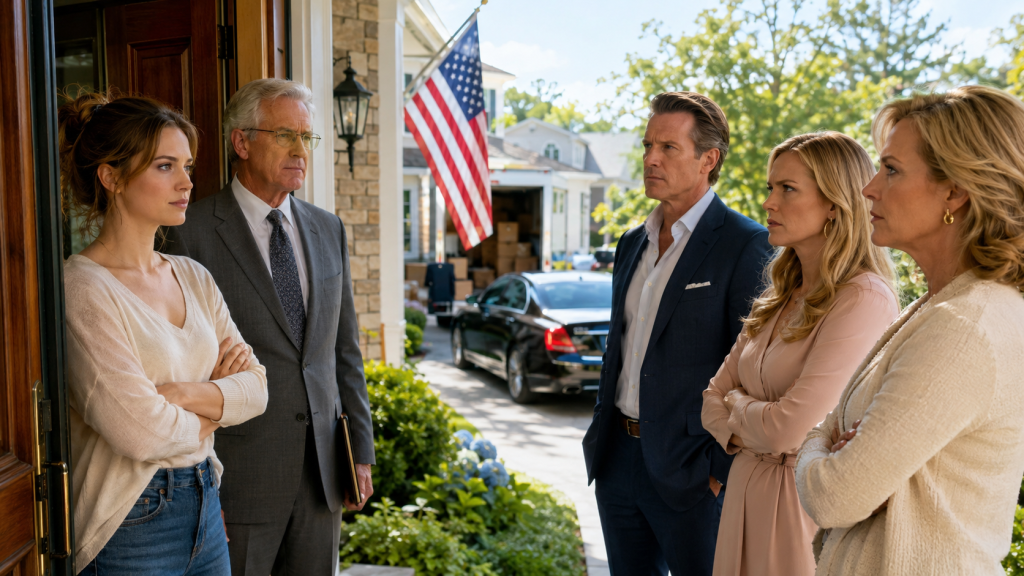
Then last Wednesday, I came home from work and found Julia and my mother standing outside my front door.
Both wore the same satisfied smile.
The kind people wear when they believe they have already won.
Julia’s hair was curled perfectly.
My mother wore a navy coat and pearls I recognized from Grandma’s old jewelry box.
Not real ones.
Copies.
But close enough to feel cruel.
“Hi, Clare,” Julia said sweetly, though there was nothing kind in her voice. “We need to talk.”
Against my better judgment, I opened the door.
They walked into my living room as if they were inspecting a house that already belonged to them.
My mother ran her fingers along the back of Grandma’s old armchair.
Julia looked at the fireplace, the curtains, the framed photographs on the wall.
“What is this about?” I asked.
Julia turned toward me, smiling wider.
“Well, Clare, we have some important news,” she said, pulling a polished folder from her expensive handbag. “The house has been legally transferred into my name. You need to be gone by Friday.”
For a moment, I could only stare at her.
“What?”
“You heard her,” my mother said, stepping closer with cold eyes. “This house belongs to Julia now. Some people don’t deserve beautiful things, Clare.”
I forced myself to stay calm.
“And how exactly do you think you pulled that off?”
Julia gave a bored little shrug and looked at her nails.
“It wasn’t hard. We found old records proving Grandma and Grandpa had unpaid debts. Since you clearly weren’t managing the estate responsibly, we had to step in. The house was used to settle those debts, and I bought it properly. Everything is legal.”
“That’s impossible,” I said. “There were no debts.”
“According to who?” my mother snapped. “You? A twenty-eight-year-old girl who thinks she understands the real world? We hired actual lawyers, Clare.”
At that moment, my father walked in with the confidence of someone who had copied my key without permission.
My stomach tightened.
Not because he was there.
Because he had entered through the side door.
The old key should not have worked.
Unless someone had copied it before I changed the locks.
Or unless someone had tampered with the new lock.
“This place will be perfect for Julia,” he said casually. “She needs it more than you do. You’re young. You can rebuild your life.”
I looked at the three of them standing in my grandparents’ home.
The greed.
The entitlement.
The betrayal.
But instead of fear, a cold calm settled over me.
Because I had expected something like this.
And I had been ready for two years.
I smiled.
“You really thought I’d let that happen after everything I’ve learned about this family?”
Julia’s smirk faltered.
“What is that supposed to mean?”
“It means,” I said quietly, “you should have checked your paperwork more carefully.”
My mother’s eyes narrowed.
“Don’t try to act clever.”
“I’m not acting.”
Julia stepped closer.
“You have forty-eight hours. Pack whatever little sentimental things you need. But don’t touch the furniture, the silver, or the artwork. Those are part of the property now.”
I almost laughed.
Grandma’s silver.
Grandpa’s paintings.
The kitchen table where I had fed both of them soup when they were too weak to lift spoons.
Julia spoke about them like items in a store window.
My father crossed his arms.
“Be smart, Clare. Don’t make this harder than it needs to be.”
Something inside me finally went still.
For years, I had tried to understand them.
Why they ignored me.
Why they favored Julia.
Why love in our family always came with conditions.
But standing there, watching them attempt to steal the last thing my grandparents left me, I understood something simple.
Some people did not need understanding.
They needed boundaries.
I walked to the front door and opened it.
“Leave.”
My mother gasped.
“How dare you speak to us like that?”
“Leave,” I repeated.
Julia laughed.
“Enjoy your last two nights.”
They stormed out, warning me again that I had until Friday.
My father paused at the porch.
“You’ll regret this attitude.”
I looked past him at the security camera above the door.
“No,” I said. “I really don’t think I will.”
The moment their car left, I locked the door and called Mr. Hayes.
He answered on the second ring.
“They came today,” I said.
“I expected they might.”
“They claim Julia owns the house.”
“She does not.”
“They said they’ll come Friday with movers.”
There was a pause.
Then his voice became very calm.
“Good.”
I frowned.
“Good?”
“Clare, listen carefully. Do not argue with them again. Do not threaten them. Do not let them inside unless I am present. Keep your cameras working. Save all messages. I am going to make a few calls.”
“Are they going to get away with this?”
“No,” he said. “But we need them to show their hand.”
That night, I barely slept.
Not because I doubted him.
Because the house felt full of ghosts.
I walked from room to room touching pieces of my grandparents’ lives.
Grandma’s blue teapot.
Grandpa’s old reading glasses.
The hallway mirror where I used to check my hair before school while Grandma told me I looked lovely.
In the dining room, I opened the cabinet and found the small stack of letters Grandma had written during her last year.
I had read them before.
But that night, I found one I had missed.
It was tucked inside a recipe book.
The envelope had my name on it.
My hands shook as I opened it.
My dearest Clare,
If you are reading this, then I hope you are standing in our house and remembering that it is yours because you loved it, not because you wanted it.
People will say money reveals character.
That is not quite true.
Money gives character a stage.
Your mother and sister may one day perform on that stage.
If they do, do not mistake their anger for pain.
Pain can heal.
Greed only feeds itself.
Your grandfather and I made our decision with clear minds.
We loved you.
We trusted you.
And we knew you would protect what mattered.
Do not let anyone convince you that being kind means surrendering to cruelty.
With all my love,
Grandma
I sat on the dining room floor and cried.
Then I wiped my face, folded the letter carefully, and placed it in my pocket.
Thursday passed slowly.
Julia sent three messages.
First, a list of what she expected me to leave behind.
Second, a warning not to damage “her property.”
Third, a photo of a moving truck reservation.
My mother left a voicemail.
Her voice was syrupy and poisonous.
“Clare, I hope you don’t embarrass yourself tomorrow. This could have been handled peacefully if you had shown maturity. But you always were difficult.”
I forwarded everything to Mr. Hayes.
He replied with only four words.
We are ready now.
Friday morning arrived gray and cold.
The sky looked like wet cement.
At exactly 8:45 a.m., I made coffee, though my hands trembled too much to drink it.
At 8:55, a black sedan parked two houses down.
Mr. Hayes stepped out.
Beside him was a woman in a dark coat carrying a tablet.
Behind them came another car.
Two men got out.
One wore a county badge clipped to his belt.
The other was a detective.
My heart began pounding.
Mr. Hayes walked onto the porch.
“Good morning, Clare.”
“Good morning.”
His eyes softened for just a second.
“You are doing well.”
“I don’t feel like it.”
“Courage rarely feels calm from the inside.”
The woman beside him introduced herself as Ms. Patel, a forensic document examiner.
The detective nodded politely.
“We’ll stay out of sight until they make their claim,” he said. “Mr. Hayes explained the situation.”
I looked down the street.
At exactly 9:00 a.m., a moving truck turned the corner.
My family was punctual when theft was involved.
The truck stopped in front of the house.
My parents climbed out first.
Julia followed, glowing with triumph.
She wore white pants, a camel coat, and oversized sunglasses even though the sky was dark.
Beside them stood a man in a sharp suit carrying a briefcase.
Their so-called lawyer.
Two movers climbed down from the truck and waited near the curb.
Julia rang the doorbell like she was claiming a prize.
I opened the door.
“Good morning, Clare,” she said brightly. “I hope you’re ready to go.”
My mother lifted her chin.
“We tried to be generous.”
My father looked impatient.
“Don’t drag this out.”
The man in the suit stepped forward and raised a stack of papers.
“Miss Thompson, if you refuse to vacate immediately, we will contact the police and have you removed.”
I looked at their confident faces, so sure their fraud would work.
Then I glanced beyond them at the black sedan parked quietly behind the moving truck.
“Please,” I said, opening the door wider with a calm smile. “Come in. There’s someone you should meet before you try to throw me out.”
Julia laughed first.
But the sound died when Mr. Hayes stepped onto the porch behind me.
He was tall, silver-haired, and dressed like someone who did not waste words.
My mother’s face drained of color.
“Mr. Hayes?” she whispered.
My father took one step back.
Julia frowned.
“Who is that?”
I smiled.
“The real estate attorney my grandparents hired before they died.”
The man in the sharp suit looked irritated.
“This is a private legal matter.”
Mr. Hayes looked at him calmly.
“Then you should have no problem discussing it with another attorney.”
Julia recovered quickly.
“Oh, good. Perfect. You can explain to Clare that the house is mine now.”
Mr. Hayes opened his briefcase.
“No, Miss Thompson. I am here to explain the opposite.”
Julia blinked.
“What?”
He pulled out a certified copy of the deed.
“Clare Thompson is the sole legal owner of this property. There has been no lawful transfer of title.”
The fake lawyer’s jaw tightened.
“That is not accurate.”
Ms. Patel stepped forward.
“I examined the documents your client submitted to support the alleged lien and transfer.”
My mother looked at her.
“And who are you?”
“A forensic document examiner.”
The porch went silent.
Julia’s face changed.
Just slightly.
But I saw it.
Fear.
Ms. Patel continued.
“The debt agreement contains forged signatures. The notary stamp used on the supporting affidavit belongs to a notary who died six years before the document was supposedly signed. The company named as creditor was registered eighteen months ago, despite the claim that the debt originated nine years ago.”
My father’s mouth opened.
Then closed.
The fake lawyer shifted his briefcase to his other hand.
“I was given documents by my client.”
Mr. Hayes looked at him.
“Then you will want to cooperate fully.”
Julia’s voice rose.
“This is ridiculous. She’s lying. They’re all lying.”
“Julia,” my mother hissed.
But Julia was already unraveling.
“No. No, I paid for this. You said it would work.”
The porch went deadly quiet.
The fake lawyer turned toward her slowly.
“Miss Thompson—”
“You said once the paperwork was filed, she’d have to leave. You said nobody checks old estate debts that carefully.”
My mother grabbed Julia’s arm.
“Stop talking.”
But it was too late.
The detective stepped into view.
“Actually,” he said, “please continue.”
Julia froze.
My father’s face turned gray.
The movers looked at each other, then quietly stepped back toward the truck.
The detective introduced himself and asked everyone to remain where they were.
My mother’s voice changed instantly.
“Officer, there has been a misunderstanding.”
I almost admired how quickly she could transform.
One moment she was queen of the porch.
The next she was a frightened mother caught in confusion.
“We believed everything was legal,” she said. “We trusted the wrong person.”
The detective looked at her.
“Then you won’t mind answering some questions.”
My father pointed at the fake lawyer.
“He handled all of it.”
The man’s face hardened.
“I am not taking responsibility for instructions given to me by your family.”
“Instructions?” Mr. Hayes repeated.
The fake lawyer stopped talking.
Julia turned on me.
“This is your fault.”
That actually made me laugh once.
Softly.
“My fault?”
“You made them leave everything to you. You made us desperate.”
My mother’s eyes filled with sudden tears.
“Clare, sweetheart, we never wanted this to get ugly.”
I stared at her.
For years, those tears had controlled me.
They had made me apologize when I was hurt.
Give in when I was right.
Feel guilty for protecting myself.
But that morning, they did nothing.
“You came here with movers,” I said.
My mother pressed a hand to her chest.
“We were emotional.”
“You forged documents.”
“We didn’t understand what we were signing.”
“You copied my key.”
My father looked away.
The detective glanced at him.
“Copied her key?”
I reached into the small table beside the door and picked up the clear evidence bag I had prepared.
Inside was the key my father had dropped on Wednesday when he walked in through the side entrance.
“I changed the locks two years ago,” I said. “That key was made recently. My security camera also caught him entering the side porch without permission.”
My father’s voice exploded.
“She’s making me sound like a criminal.”
Mr. Hayes looked at him.
“You are doing that yourself.”
The detective asked for the key.
I handed it over.
Julia suddenly looked very young.
Not innocent.
Just young.
Like a child caught stealing jewelry from a drawer and furious the drawer had a lock.
“Clare,” she said, lowering her voice. “Can we talk inside?”
“No.”
“We’re sisters.”
“No.”
Her expression twisted.
“You think you’re better than me now because you got the house?”
I stepped onto the porch fully.
The cold air hit my face.
“No, Julia. I don’t think I’m better than you because I got the house. I think Grandma and Grandpa trusted me with it because I didn’t see them as a prize.”
She flinched.
My mother snapped, “Don’t you dare act holy. You enjoyed being their favorite.”
I looked at her for a long moment.
“I was not their favorite. I was present.”
That silenced her.
For the first time in my life, my mother had no immediate answer.
Mr. Hayes handed the detective copies of everything.
The forged documents.
The threatening messages.
The voicemails.
The camera stills.
The moving truck reservation.
Julia’s instructions about what I could and could not remove from “her” property.
Page after page of arrogance.
The detective asked my family to come to the station for questioning.
My mother cried harder.
My father demanded to call an attorney.
Julia kept looking at the house like if she stared long enough, it would still become hers.
Before they left, my mother turned to me.
“Clare, please. Don’t do this.”
I looked at the woman who had raised me to feel guilty for having needs.
The woman who had watched me care for her dying parents and then accused me of stealing from them.
The woman who had stood in my living room and told me I did not deserve beautiful things.
“I’m not doing anything,” I said. “You did this.”
The detective escorted them toward the cars.
The fake lawyer went separately, already talking fast into his phone.
The movers climbed into their truck and drove away without touching a single box.
When the street was quiet again, I realized my hands were shaking.
Mr. Hayes noticed.
“It’s over for today,” he said gently.
“For today?”
“There will be legal consequences. Investigations take time. But they cannot remove you from this house.”
I nodded.
That should have comforted me.
It did.
But grief is strange.
Victory can still hurt when the people losing are the people who were supposed to love you.
Ms. Patel shook my hand and left.
The detective promised to follow up.
Mr. Hayes stayed behind for a few minutes.
We stood on the porch, looking at the empty street.
“Your grandmother would be proud,” he said.
My throat tightened.
“I found a letter from her last night.”
His eyes softened.
“She wrote several.”
“She knew this would happen.”
“She feared it would.”
I looked at the porch swing.
“I keep wondering why they couldn’t just let me have peace.”
Mr. Hayes sighed.
“Because peace does not benefit people who survive on control.”
After he left, I went back inside.
The house felt different.
Not lighter exactly.
But clearer.
As if a storm had passed and left branches everywhere, but the roof was still standing.
I made tea in Grandma’s blue teapot.
Then I walked through every room.
The living room.
The dining room.
The hallway.
The sunroom.
The kitchen.
The bedroom where Grandma had made me promise to protect the house.
For the first time in two years, I stopped waiting for the next attack.
The following weeks were messy.
My family tried to rewrite the story.
My mother told relatives I had “called the police on my grieving parents.”
Julia claimed she had been scammed by a dishonest legal consultant.
My father said he only entered the house because he was “worried about me.”
But documents do not care about performances.
Security cameras do not care about excuses.
Voicemails do not forget tone.
The investigation uncovered more than I expected.
The fake creditor company had been created by an acquaintance of Julia’s boyfriend.
The forged debt documents had been prepared using old samples of my grandfather’s signature from Christmas cards.
The notary stamp had been copied from public records.
My mother had helped gather old family papers.
My father had copied my key during a holiday dinner months earlier, back when I still allowed them limited visits.
They had not acted impulsively.
They had planned.
That knowledge hurt more than the attempt itself.
One afternoon, Julia called me from an unknown number.
I almost did not answer.
But something made me press accept.
For a moment, neither of us spoke.
Then she said, “Are you happy now?”
I looked out the kitchen window at Grandma’s roses.
“No.”
“You ruined my life.”
“No, Julia. You tried to steal mine and got caught.”
She breathed sharply.
“I needed that house.”
“Why?”
“Because you don’t understand what it’s like.”
I almost laughed.
“What what’s like?”
“To always feel like you’re supposed to be impressive,” she snapped. “To have Mom and Dad expecting things. To keep up appearances. To have everyone thinking you’re successful.”
There it was.
The confession beneath the cruelty.
Julia did not want the house because she loved it.
She wanted it because it proved something.
To friends.
To our parents.
To herself.
“You could have asked for help,” I said.
“Would you have given it?”
I paused.
Before the forged documents, maybe.
Before the movers, maybe.
Before she stood in my living room and told me what I could take from my own home, maybe.
“No,” I said quietly. “Not anymore.”
Her silence was heavy.
Then she whispered, “Grandma should have left me something.”
“She left you the truth,” I said.
Julia hung up.
I never heard her voice again.
My parents sent letters through attorneys.
Not apologies.
Requests.
They wanted me to drop charges.
They wanted me to say I misunderstood.
They wanted me to agree that everyone had been emotional after Grandma’s death, even though Grandma had been gone for two years.
Mr. Hayes asked what I wanted.
I thought about Grandma’s letter.
Do not mistake their anger for pain.
Pain can heal.
Greed only feeds itself.
“I want the truth on record,” I said.
So we kept going.
The legal process took months.
There were hearings.
Statements.
Documents.
Delays.
My mother avoided looking at me whenever we were in the same room.
My father looked angry every time.
Julia looked smaller each time I saw her, but not softer.
In the end, the fake transfer was declared invalid, though it had never truly succeeded.
The fraudulent lien was removed.
The people involved faced consequences.
Some harsher than others.
My family did not go to prison for years like in movies.
Real life is slower and less dramatic than that.
But they paid fines.
They received probation.
The fake legal consultant lost his license to practice in the limited capacity he had been using.
Julia’s name appeared in court records she could not erase.
My father was ordered to stay away from my property.
My mother was forced to sit in a courtroom while a judge described her actions as deliberate, coercive, and financially abusive.
That moment mattered to me.
Not because I wanted to see her humiliated.
But because, for once, someone official said what I had known my whole life.
It was not love.
It was control.
Afterward, outside the courthouse, my mother approached me.
She looked older than I remembered.
Her makeup was perfect, but her eyes were tired.
“Clare,” she said.
Mr. Hayes was beside me, but I raised a hand to show him it was all right.
My mother swallowed.
“I hope someday you understand that parents make mistakes.”
I waited.
There was more coming.
There was always more.
“We were under pressure,” she continued. “Julia was struggling. Your father was worried. And you had so much.”
There it was.
Not an apology.
An explanation shaped like one.
I looked at her carefully.
“When I was taking care of Grandma, did you ever wonder if I was struggling?”
Her mouth tightened.
“That was different.”
“Why?”
“Because you were good at it.”
I felt something inside me finally detach.
Not break.
Detach.
Like a knot slipping free.
“You don’t get to hurt me because I learned how to survive quietly.”
Her eyes flashed.
“You always make yourself the victim.”
“No,” I said. “I finally stopped volunteering for the role you gave me.”
I walked away before she could answer.
That evening, I returned home alone.
The house was glowing in late afternoon light.
The windows reflected gold.
The maple trees had started to turn red at the edges.
For the first time since inheriting the estate, I did not feel like I was guarding a fortress.
I felt like I was coming home.
I changed out of my courtroom clothes, made coffee, and carried it to the porch.
Grandpa’s swing creaked as I sat down.
The sound made me smile.
Across the street, Mrs. Alvarez from next door waved from her garden.
She had watched everything unfold from a respectful distance.
A few minutes later, she crossed over carrying a small plate covered in foil.
“Banana bread,” she said.
I laughed softly.
“You didn’t have to.”
“I know,” she replied. “That’s why it counts.”
She sat beside me.
For a while, we said nothing.
Then she looked at the house.
“Your grandmother loved this porch.”
“I know.”
“She used to tell me you were the strong one.”
My eyes filled before I could stop them.
“She said that?”
Mrs. Alvarez smiled.
“All the time. She said Julia was loud, your mother was proud, your father was weak, but Clare had roots.”
I looked down at the porch boards.
Roots.
That sounded like Grandma.
Mrs. Alvarez patted my hand.
“You protected what they built.”
“I almost lost it.”
“No,” she said. “They almost exposed themselves. That’s different.”
After she left, I stayed outside until the sun disappeared.
Then I went inside and opened all the curtains.
For two years, I had lived carefully.
Not fully.
Carefully.
I had kept rooms the same because changing them felt like disrespect.
I had kept family photos in drawers because looking at them hurt.
I had kept certain doors closed.
But that night, I understood something.
Protecting the house did not mean freezing it in grief.
It meant letting life return.
The next morning, I started with the dining room.
I took down the stiff curtains Julia had once mocked as outdated.
I polished the table.
I moved Grandma’s blue teapot to the center shelf where sunlight could touch it.
Then I opened the drawer full of family photographs.
I separated them into two piles.
One pile held pictures that hurt without meaning.
Forced Christmas smiles.
Julia posing in front of birthday cakes.
My mother gripping my shoulder too tightly.
My father looking through me.
The other pile held truth.
Grandma teaching me to roll pie crust.
Grandpa holding my first bicycle steady.
Me asleep against Grandma’s shoulder during a thunderstorm.
The three of us on the porch, laughing at something I no longer remembered.
I kept the truth.
The rest went into a box.
Not burned.
Not destroyed.
Just removed from the walls of my life.
Months passed.
Spring came.
The roses bloomed harder than they had in years.
I used part of the estate to restore the old greenhouse behind the garage.
Grandma had always wanted it repaired.
When the workmen finished, I filled it with herbs, tomatoes, lavender, and white roses.
I also started a small scholarship fund in my grandparents’ names for local students caring for elderly relatives.
The first recipient was a seventeen-year-old girl named Maya who had missed half her senior year taking care of her grandfather.
When I handed her the award letter, she cried.
Her mother cried.
I cried too, though I tried not to.
That night, I sat at Grandma’s kitchen table and whispered, “I hope this is okay.”
The house creaked softly around me.
I chose to take that as yes.
A year after the moving truck morning, a letter arrived from Julia.
No return address.
Just my name in handwriting I knew too well.
I considered throwing it away.
Instead, I opened it on the porch.
Clare,
I don’t know how to apologize in a way you would believe.
Maybe I don’t deserve for you to believe me.
I was angry for a long time.
I thought Grandma choosing you meant she rejected me.
I thought you winning meant I lost.
I know that doesn’t excuse what I did.
Mom still says you turned everyone against us.
Dad barely talks about it.
I don’t know what I think anymore.
I’m not asking for the house.
I’m not asking for money.
I’m just saying I remember Grandma’s lemon cookies and Grandpa letting us run through the sprinklers.
I forgot that for a while.
Maybe I wanted the house because I wanted to feel like I still belonged somewhere.
I’m sorry.
Julia
I read the letter three times.
Then I folded it and placed it in a drawer.
I did not call her.
Forgiveness, I had learned, was not a door other people could kick open because they finally felt regret.
Maybe one day I would answer.
Maybe I would not.
Healing was not the same as returning.
That evening, I made lemon cookies from Grandma’s recipe.
I burned the first batch.
The second came out perfect.
I put three on a small plate and carried them to the porch with a cup of tea.
The sunset turned the windows gold.
The porch swing moved gently beneath me.
For years, my family had taught me that beautiful things belonged to the loudest person in the room.
The biggest crier.
The strongest manipulator.
The one most willing to make a scene.
My grandparents taught me something different.
Beautiful things belong to the people who love them enough to protect them.
Not just houses.
Not just money.
Peace.
Memory.
Dignity.
A life built without begging for approval.
I used to think inheritance meant receiving what someone left behind.
Now I know it means carrying forward what they protected.
My grandparents left me a house.
But they also left me proof.
Proof that I was not invisible.
Proof that quiet love still counts.
Proof that family is not always the people who demand a place at your table.
Sometimes family is the person who leaves you a letter in a recipe book because she knows there will come a night when you need her voice.
Sometimes family is a neighbor bringing banana bread.
Sometimes it is an old attorney standing on your porch while the people who underestimated you finally realize you are not alone.
And sometimes family is the version of yourself who finally locks the door, opens the curtains, and decides that surviving is not enough anymore.
You are allowed to live beautifully too.
💬THE END! THANK YOU FOR READING! 🙏