
My school bully applied for a $50,000 loan at the bank I own — I approved it, but the one condition I added made him gasp. I still remember the smell of that day twenty years ago. Industrial wood glue. Old chemistry textbooks. Pencil shavings.
And my own hair burning under fluorescent lights as the school nurse cut a bald patch the size of a baseball from my head after Mark Hanson glued my braid to the desk behind me. I was fifteen years old. Too shy to speak up. Too embarrassed to scream.
Too humiliated to cry in front of everyone. So I sat there while the class laughed. Not all of them. Some looked away.
Some pretended not to see. But Mark laughed loudest. He stood in the back of the chemistry classroom with his varsity jacket hanging open, his blond hair falling into his eyes, and that lazy smile on his face like cruelty was a talent.
“Careful, Patch,” he said while the nurse tried to separate my hair from the desk. “You might stick around forever.”
Patch. That name followed me for the rest of high school.
In the hallways.
In the cafeteria. On my locker. Written on notes. Whispered behind my back. Shouted from passing cars after school. Before that day, I had been Clara Whitmore. After that day, I became Patch.
A joke.
A bald spot.
A girl people pointed at.
The worst part was not even the glue.
It was the way adults handled it.
Mark’s father owned two hardware stores and sponsored the school football team. Mark was a linebacker, a local hero in shoulder pads, the kind of boy teachers corrected gently and principals warned privately.
I was the quiet girl whose mother worked double shifts at the county clinic.
When my mother came to the school, furious and shaking, the principal used careful words.
“Poor judgment.”
“Immature prank.”
“Boys can be thoughtless.”
He suggested Mark write an apology letter.
Mark wrote three sentences.
I know because I kept that letter for years.
Clara,
I am sorry about what happened.
It was a joke.
I hope you get over it.
Mark
Get over it.
People love saying that when they are not the ones carrying the memory.
But humiliation like that does not fade.
It hardens.
It settles somewhere beneath the skin and becomes part of the way you walk into rooms.
For months, I wore scarves.
Then headbands.
Then I cut my hair short because I could not stand seeing the uneven patch grow back.
I stopped raising my hand in class.
I stopped eating lunch in the cafeteria.
I stopped looking people in the eye.
Every time someone laughed nearby, I assumed it was about me.
Mark did not stop.
He called me Patch until graduation.
Once, during senior year, he passed me in the hallway and tugged a strand of my hair.
“Looks like it grew back,” he said. “Miracle.”
His friends laughed.
I went into the girls’ bathroom, locked myself in a stall, and pressed my hands over my ears until the bell rang.
That was the day I made myself a promise.
Someday, I would become someone no one could laugh out of a room.
Not loud.
Not cruel.
Not like Mark.
Just powerful enough that if someone tried to reduce me to a nickname, they would choke on it.
Twenty years later, I no longer walked into rooms with my head down.
I owned them.
Not with arrogance.
With competence.
There is a difference.
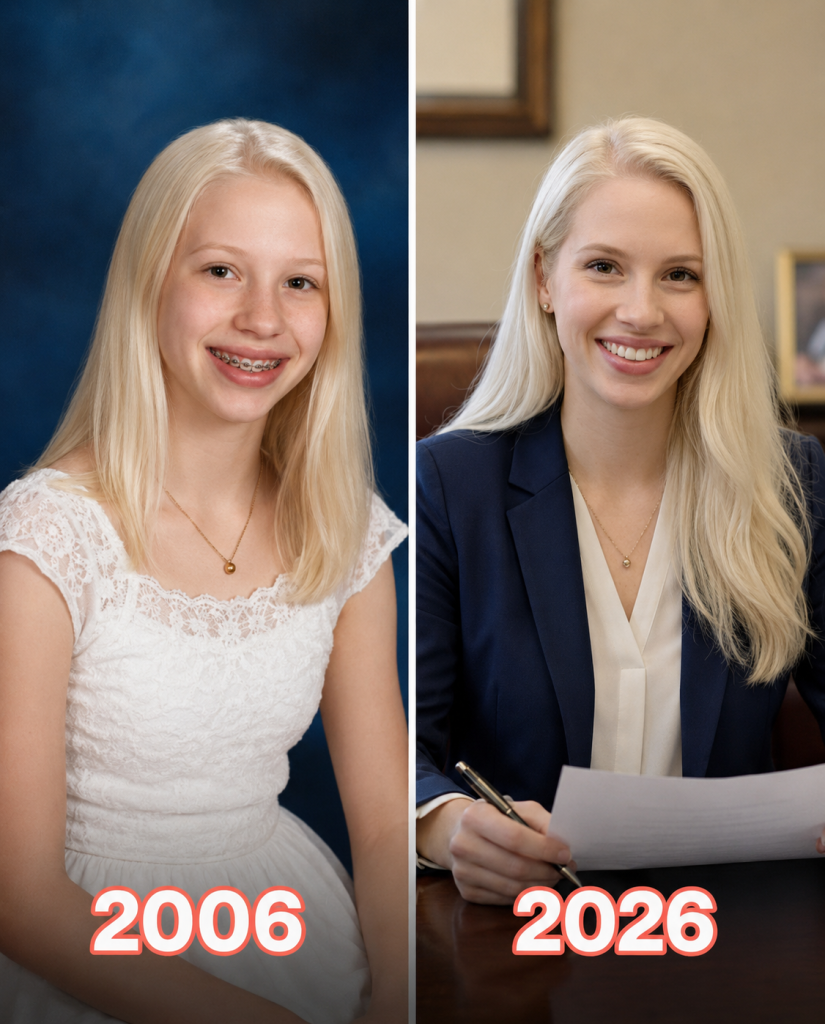
I built my life one decision at a time.
I went to community college first because that was what we could afford.
Then I earned scholarships.
Then a degree in finance.
Then an MBA.
I worked in small banks, then regional lending departments, then risk management.
I learned how money moved.
I learned how desperation sounded in a loan application.
I learned the difference between a bad borrower and a person who had simply run out of chances.
Eventually, I founded Whitmore Community Bank with two partners and a mission no one took seriously at first.
A bank that actually looked at people.
Not just numbers.
Not just scores.
People.
Farmers whose crops failed.
Parents drowning in medical bills.
Small businesses rejected by national banks because their zip codes made them look risky.
Within ten years, we had four branches across the county.
Within fifteen, I owned majority control.
By thirty-five, I was CEO.
By then, nobody called me Patch.
They called me Ms. Whitmore.
Or President Whitmore.
Or, if they were nervous, ma’am.
My office sat on the top floor of our main branch, overlooking the town where I had once walked home from school pretending not to hear laughter behind me.
Sometimes I saw East Ridge High from the window on clear days.
The red brick building was smaller than I remembered.
Most things are.
But memory has a way of enlarging the places where you were hurt.
Two weeks ago, a file landed on my desk.
It came from our emergency lending review queue, marked high-risk, personal medical loan, urgent.
I personally reviewed high-risk loans because I believed the system made too many assumptions about people at their worst moments.
The applicant’s name was printed at the top.
Mark H.
Same town.
Same birth year.
Same middle initial.
My hand froze above the file.
For a second, the office around me disappeared.
I was fifteen again.
A braid stuck to a desk.
Scissors closing near my scalp.
Laughter.
Patch.
I stared at the name until the letters blurred.
Then I opened the file.
Mark Hanson.
Forty years old.
Married.
One dependent child.
Employment unstable.
Former warehouse supervisor, recently reduced hours.
Credit score wrecked.
Maxed-out cards.
Two late car payments.
No real collateral.
No home equity.
Debt-to-income ratio terrible.
On paper, it was an easy denial.
Not even a close call.
Then I reached the purpose of the loan.
Emergency pediatric cardiac surgery.
My anger paused.
I read the medical notes attached to the file.
Daughter: Lily Hanson.
Age: eight.
Congenital heart defect.
Surgery scheduled in two weeks.
Insurance approved part of the procedure but denied several associated costs.
Specialist fees.
Travel.
Postoperative care.
Deposit required before scheduling could be confirmed.
Amount requested: $50,000.
I leaned back in my chair.
For a long time, I did not move.
The universe has a cruel sense of theater.
There, on my desk, was the boy who had once made me feel less than human.
Only he was not a boy anymore.
He was a father.
And his child needed help.
My assistant, Nia, knocked lightly on the open door.
“You wanted to see me?”
I closed the file.
“Yes. Is the applicant in the building?”
“He’s in the waiting area. He asked if there was any chance of an answer today.”
I looked out the window toward the old high school.
“What does he look like?”
Nia glanced at the file.
“Exhausted.”
That was not what I expected.
Not polished.
Not entitled.
Exhausted.
“Send him in.”
Nia hesitated.
“Are you sure? This one is pretty high-risk.”
“I know.”
She nodded and left.
A minute later, Mark Hanson walked into my office.
I almost did not recognize him.
The varsity linebacker was gone.
In his place stood a thin, tired man in a wrinkled gray suit that did not quite fit. His hair was thinning at the temples. His face was pale, his eyes shadowed. He held a folder in both hands like it was the only thing keeping him upright.
He did not recognize me at first.
Why would he?
Bullies remember the entertainment.
Victims remember the wound.
“Mr. Hanson,” I said.
“Yes, ma’am.”
His voice was hoarse.
He sat only after I gestured toward the chair.
“Thank you for seeing me. I know my credit isn’t good. I know how this looks. I just—”
He stopped.
His eyes moved to the nameplate on my desk.
CLARA WHITMORE
President & CEO
Then his face changed.
Recognition came slowly.
First confusion.
Then memory.
Then dread.
I folded my hands on top of his file.
“Sophomore chemistry was a long time ago, wasn’t it?”
Every bit of color left his face.
His mouth opened, then closed.
He looked from my face to the nameplate and back again, as if hoping the world might rearrange itself into something less terrible.
“I…” He swallowed. “I didn’t know.”
“No,” I said. “I imagine you didn’t.”
His fingers tightened around the folder.
“I’m sorry to waste your time. I’ll go.”
He started to stand.
“Sit.”
He froze.
The word was not loud.
It did not need to be.
He sat.
For a moment, neither of us spoke.
I studied him across the desk.
Twenty years ago, I had imagined this kind of moment many times.
Not exactly like this, but close.
Mark helpless.
Me powerful.
Him needing something from me.
In those fantasies, I always denied him.
Sometimes I laughed.
Sometimes I slid a rejection letter across the desk and said, “Get over it.”
Sometimes I called him by a nickname and watched him shrink.
But real life is rarely as clean as revenge fantasies.
Because in real life, there was an eight-year-old girl’s name in that file.
Lily.
Not Mark.
Lily.
“Tell me about your daughter,” I said.
His eyes lifted.
For the first time since entering my office, his face broke open.
Not with shame.
With fear.
“Her name is Lily,” he said. “She’s eight. She likes dinosaurs, even though everyone keeps buying her princess stuff. She says when she grows up, she wants to be a veterinarian for dragons.”
His voice cracked.
“She was born with a heart defect. We knew there might be surgery someday, but they kept saying later. Later became now.”
He looked down at his hands.
“My wife and I sold what we could. Used savings. Borrowed from family. Maxed cards. I took extra shifts until the warehouse cut hours. The hospital says the surgery date is held, but without the deposit…”
He could not finish.
I looked at the medical documents again.
“How much have you raised?”
“Just under twelve thousand.”
“And you need fifty.”
“Yes.”
“The bank denied you at the branch level.”
“I know.”
“Why appeal?”
He gave a small, broken laugh.
“Because saying no once doesn’t feel like enough when it’s your kid.”
That answer landed somewhere I did not expect.
I thought of my mother when I was fifteen.
The way she stormed into the principal’s office after Mark glued my hair.
She had been exhausted, underpaid, and outnumbered by school administrators who wanted the problem to disappear.
But she fought anyway.
Because saying no once had not been enough when it was her child.
Mark rubbed his hands over his face.
“I know what I did to you.”
I said nothing.
His shoulders hunched.
“I was cruel. Not stupid. Not joking. Cruel.”
That was the first honest thing he had ever said to me.
“I don’t expect you to forgive me,” he continued. “I wouldn’t. But please… don’t punish her for that.”
His eyes filled.
“She’s eight. She doesn’t know what kind of boy I was.”
I looked down at the file.
On my desk sat two stamps.
DENIED.
APPROVED.
Such simple words for things that could change lives.
I picked up the denial stamp first.
Mark watched my hand.
He tried to hide his expression, but I saw it.
The hope dying.
A flicker of resignation.
Maybe he thought he deserved it.
Maybe part of me agreed.
My thumb rested on the handle.
I remembered the glue.
The laughing.
The scissors.
The bald patch.
I remembered walking home with my scarf pulled low while boys shouted “Patch” from a truck.
I remembered the apology letter.
I hope you get over it.
Then I thought of Lily Hanson.
Eight years old.
Dinosaurs.
Dragons.
A heart that needed repairing.
I put down the denial stamp.
Mark inhaled sharply.
I picked up the approval stamp.
His eyes widened.
I signed the form.
Stamped it APPROVED.
Interest-free.
Emergency release pending signed condition.
Mark stared at the page like he did not understand English anymore.
“I’m approving the full amount,” I said.
His lips trembled.
“Ms. Whitmore—”
“But there is one condition.”
His face tightened with fear.
I pulled the contract toward me, turned to the bottom page, and wrote by hand in the space for additional terms.
Not financial.
Not collateral.
Not punishment.
A condition.
I slid the contract across the desk.
“You sign that, or you do not get a dime. You have to do one thing for me.”
Mark looked at the page.
His eyes moved over the handwritten note.
His mouth fell open.
He gasped.
The condition read:
Before this loan is released, you will visit East Ridge High School with me, stand in the chemistry classroom where you humiliated me, and speak to the current students about what bullying does to a person. You will tell them exactly what you did. You will say my name. And you will apologize where it happened.
Mark stared at the page as if it weighed more than the money.
“You want me to shame myself?” he whispered.
I leaned back.
“No. I want you to become the kind of man your daughter deserves to survive for.”
His eyes filled instantly.
For a moment, I saw the boy who had laughed while I cried.
Then I saw something else.
A father terrified of losing his child.
His hand shook as he picked up the pen.
“What if I can’t do it?”
“Then you walk away from this loan.”
He closed his eyes.
“I deserve that.”
“This is not about what you deserve.”
He looked at me.
I tapped Lily’s file.
“It is about what she needs. And what you need to face.”
Mark swallowed hard.
Then he signed.
Two days later, we stood outside East Ridge High School.
The building looked smaller than it had from my office window.
Smaller than my memory.
But my body did not know that.
My stomach tightened the moment we stepped through the front doors.
The hallway smelled different now.
New paint.
Floor cleaner.
Teenagers’ body spray.
But underneath it, somehow, I still smelled glue.
Mark walked beside me silently.
He wore the same gray suit, pressed this time.
His hair was combed.
His face looked like he had not slept.
The principal, Mrs. Alvarez, met us near the office.
She was younger than me by at least ten years, warm but serious. I had called ahead and explained enough.
Not everything.
Enough.
“We appreciate you both coming,” she said. “We’ve gathered the junior class in the science wing. We’ve had some issues this year with online harassment and intimidation.”
Mark looked at the floor.
I said, “Then this is the right time.”
We walked to the chemistry classroom.
Room 214.
The number had not changed.
My chest tightened.
For a moment, I could see my fifteen-year-old self sitting in the third row.
Brown braid down my back.
Purple notebook open.
Trying not to be noticed.
A girl who did not yet know someone had decided she would become a joke.
Mrs. Alvarez opened the door.
The classroom was brighter now.
New lab tables.
Smart board.
Posters about molecular bonds and lab safety.
But the windows were the same.
The ceiling lights were the same.
The angle of the door was the same.
My hands went cold.
Mark noticed.
His face tightened with shame.
“I’m sorry,” he said quietly.
“Not yet,” I replied.
Students filled the room.
Some sat on desks.
Some leaned against counters.
Teenagers always try to look bored when they are curious.
Mrs. Alvarez introduced us.
“This morning, Ms. Clara Whitmore, CEO of Whitmore Community Bank and an East Ridge graduate, is here with Mr. Mark Hanson, also an alumnus. They asked to speak to you about something that happened in this room twenty years ago.”
The students looked more interested now.
A few recognized my bank name.
One whispered, “My mom uses that bank.”
I stood near the front but did not speak first.
This was not my condition to fulfill.
Mark stood beside the teacher’s desk.
His hands shook.
He looked at the students, then at me.
For a terrible second, I thought he would run.
Then he took a breath.
“My name is Mark Hanson,” he began. “When I was your age, I was popular. I played football. Teachers liked me. People laughed at my jokes, even when they weren’t funny.”
A few students smirked.
Mark noticed.
His voice grew quieter.
“One day, in this classroom, I glued a girl’s braid to the desk behind her.”
The room went still.
No one smirked after that.
“Her name was Clara Whitmore,” he said.
He looked at me.
“She was smart. Quiet. Kind. She had never done anything to me.”
My throat tightened.
“I did it because I thought it would make people laugh. Because I liked feeling powerful. Because I was weak enough to think humiliating someone else made me important.”
A girl in the front row lowered her eyes.
Mark continued.
“The school nurse had to cut her hair off the desk. She had a bald patch for months. I called her Patch. Other people did too. I watched it happen. I enjoyed it.”
His voice broke.
I looked at the floor.
Not because I was ashamed.
Because the fifteen-year-old inside me was hearing the truth spoken aloud for the first time.
Not prank.
Not misunderstanding.
Cruelty.
“I wrote her an apology letter,” Mark said. “It said, ‘I hope you get over it.’”
A murmur moved through the room.
Mark nodded.
“Yeah. That’s who I was.”
He looked at the students.
“Some of you think the things you say now won’t matter in twenty years. The nickname. The post. The video. The group chat. The joke everyone shares. You tell yourself they’ll get over it because that makes it easier for you to keep doing it.”
He swallowed.
“But the person you hurt remembers. Their body remembers. Their confidence remembers. Their life changes shape around what you did.”
His eyes moved to me again.
“And you remember too. Even if you pretend you don’t.”
A boy near the back shifted uncomfortably.
Mark gripped the edge of the desk.
“I am here because my daughter needs heart surgery. Ms. Whitmore had every reason to deny my loan. Every reason to look at me and say I deserved nothing from her.”
The room grew silent enough to hear the air conditioner.
“But she didn’t punish my daughter for my cruelty. She approved the loan. Her only condition was that I come here and tell the truth.”
He turned fully toward me.
My heart pounded.
“Clara,” he said.
No one had said my name in that room with such seriousness before.
“I am sorry.”
His voice trembled.
“I am sorry I glued your hair to that desk. I am sorry I laughed while you were scared. I am sorry I called you Patch. I am sorry I made other people feel allowed to treat you like a joke. You were never Patch. You were a person I was too weak to respect.”
My eyes burned.
I had spent twenty years imagining an apology.
I had imagined it would feel victorious.
Sweet.
Satisfying.
Instead, it felt like grief leaving my body one piece at a time.
Mark continued.
“I can’t undo it. But I can tell the truth. And I can spend the rest of my life teaching my daughter not to become someone like me.”
A long silence followed.
Then one student began clapping.
Not loudly.
Just once.
Then another.
Soon the whole room was clapping.
Mark did not look proud.
He looked shattered.
And somehow, that mattered more.
Mrs. Alvarez asked if I wanted to speak.
I had not planned to.
But I stepped forward.
I looked at the students.
“When I was fifteen, I thought that day ruined me,” I said. “For a while, it did. I became afraid of being seen. Afraid of laughter. Afraid of my own reflection.”
Several students watched me with wide eyes.
“But what happened to me also taught me something. Pain can make you cruel if you feed it the wrong way. Or it can make you determined. I chose determined. Not immediately. Not perfectly. But eventually.”
I looked at Mark.
“Forgiveness is complicated. So is accountability. Today is not about pretending harm disappears because someone says sorry. It is about proving that people can face what they did and choose something different.”
A girl near the window raised her hand.
“Did you forgive him?”
The room froze.
Mark stared at the floor.
I thought before answering.
“No,” I said softly. “Not completely.”
The girl nodded slowly.
I continued.
“But I released myself from needing revenge. That is not the same thing. And today, he gave me something I needed more than revenge.”
“What?” she asked.
“The truth.”
After the assembly, Mark and I walked out to the parking lot together.
Neither of us spoke at first.
The sky was bright and cold.
He stopped beside his car.
“I thought you’d make me feel small,” he said.
I looked at him.
“I could have.”
“I know.”
“But your daughter needs you whole. Not humiliated. Whole.”
His eyes filled again.
“She’s a good kid.”
“I believe you.”
“She asked me yesterday if the bank lady was nice.”
“What did you say?”
He gave a broken smile.
“I said the bank lady was fair.”
I almost smiled.
“Good answer.”
He rubbed his face.
“I don’t know how to thank you.”
“You pay back the loan.”
“I will.”
“And you show up for your daughter.”
His expression changed.
Serious.
“I will.”
“And Mark?”
“Yes?”
“Do not waste the second chance she is getting.”
He nodded.
“I won’t.”
The funds were released that afternoon.
Lily Hanson had surgery twelve days later.
I know because Mark called my office from the hospital waiting room.
Not to ask for anything.
Just to tell me.
“She went in twenty minutes ago,” he said, voice shaking.
I sat back in my chair.
“How are you holding up?”
“I’m terrified.”
“That sounds appropriate.”
He gave a weak laugh.
“I deserve that.”
“No,” I said. “You deserve to be afraid because you love her. That is different.”
He went quiet.
Then he said, “Clara?”
“Yes?”
“I told my wife everything. About high school. About what you made me do.”
“How did she take it?”
“She cried. Then she said she was glad someone finally made me say it out loud.”
I smiled faintly.
“She sounds wise.”
“She is.”
“Then listen to her.”
“I’m trying.”
The surgery lasted six hours.
I did not expect to care.
But I did.
I checked my phone through meetings.
I ignored three emails.
I stared out my office window toward East Ridge High and thought about how strange life was.
A cruel boy.
A wounded girl.
A sick child.
A loan document.
A chemistry classroom.
All tied together by something that was not forgiveness exactly.
Maybe accountability.
Maybe mercy.
Maybe the complicated place where the two meet.
At 4:17 p.m., my phone rang.
Mark’s name appeared on the screen.
I answered before the second ring.
“She made it,” he said.
Then he started crying.
Not softly.
Not politely.
He sobbed.
I closed my eyes.
For a moment, all I could see was a little girl I had never met, opening her eyes after surgery because a doctor had repaired what was broken inside her chest.
“Good,” I whispered.
“Thank you,” Mark said. “Thank you. Thank you.”
I let him cry.
Then I said, “Go be with your daughter.”
“I will.”
Months passed.
Mark made his first payment early.
Then the second.
Then the third.
Each payment came with a short note.
Lily walked today.
Lily started tutoring again.
Lily wants a lizard now.
Lily says dragons are probably just misunderstood dinosaurs.
I did not respond to all of them.
But I read every word.
One afternoon, a small envelope arrived at the bank addressed to me in careful child handwriting.
Ms. Whitmore
Inside was a drawing.
A little girl standing beside a dragon with a bandage over its chest.
At the top, in purple crayon, it said:
Thank you for helping fix my heart.
I sat at my desk for a long time holding that picture.
Then I framed it.
It still hangs in my office, though most clients assume it came from a school fundraiser.
Only I know what it means.
A year after Mark’s loan approval, East Ridge High invited me to speak at their anti-bullying week.
This time, Mark came too.
Not because I required it.
Because he offered.
He had started volunteering with a local youth mentoring program. At first, I thought it was performative guilt.
Then I learned he kept showing up.
Week after week.
Even when no one praised him.
Especially then.
That day, he sat in the back of the auditorium while I spoke.
I told the students that cruelty often disguises itself as humor.
That silence from bystanders can become a second wound.
That power without kindness is just fear in costume.
When the assembly ended, a girl approached me.
She had short dark hair and sleeves pulled over her hands.
“My friends made a fake account about another girl,” she whispered. “I laughed at it. I didn’t make it, but I laughed.”
I waited.
Her eyes filled.
“I think I need to tell someone.”
I placed a hand gently on her shoulder.
“Yes,” I said. “I think you do.”
Across the room, Mark was speaking quietly with a boy in a football jacket.
The boy’s face was defensive at first.
Then ashamed.
Then thoughtful.
People can change.
Not always.
Not easily.
Not because they are owed the chance.
But sometimes, when made to stand in the exact place where they caused harm, they finally see the person they hurt.
And sometimes that seeing becomes the beginning of repair.
Not erasure.
Repair.
After the event, Mark walked me to my car.
“Do you ever wish you’d denied me?” he asked.
I looked at him.
“Honestly?”
“Yes.”
“On some days, yes.”
He nodded, accepting it.
“And on other days?”
I thought of Lily’s drawing.
“On other days, I’m glad I didn’t let the worst thing you did decide what kind of person I would be.”
Mark looked down.
“I don’t know if I can ever make up for it.”
“You can’t.”
He winced.
I continued.
“But you can stop adding harm to the world. That matters.”
He nodded.
“I’m trying.”
“I know.”
Two years have passed since Mark walked into my office with that loan file.
Lily is ten now.
She sent me a photo last month holding a stuffed dragon and wearing a T-shirt that said FUTURE VETERINARIAN.
Mark has never missed a payment.
Not one.
Sometimes he pays extra.
Sometimes only the minimum.
But always on time.
He still looks tired, but no longer hollow.
I see him around town sometimes.
At the grocery store.
At school events.
Once at the bank lobby, holding Lily’s hand.
The first time she met me, she looked up and asked, “Are you the lady who gave my dad homework?”
Mark turned bright red.
I laughed.
“Yes,” I said. “Very important homework.”
She nodded seriously.
“He said he deserved it.”
I looked at Mark.
He looked back at me, ashamed but steady.
“Maybe,” I said. “But he completed it.”
Lily smiled.
Then she handed me a sticker from her pocket.
It was a cartoon heart with wings.
“For your office,” she said.
I still have it tucked behind my framed drawing.
As for me, I no longer keep Mark’s old apology letter.
For years, it lived in a box at the back of my closet.
Three sentences.
It was a joke.
I hope you get over it.
I used to take it out when I needed to remember why I worked so hard.
Then one evening, after Lily’s surgery and after the chemistry classroom apology, I opened that box again.
The paper had yellowed.
The handwriting looked childish.
Smaller than I remembered.
I read it once.
Then I carried it to the kitchen sink, struck a match, and let it burn in a ceramic bowl.
Not because the past had disappeared.
It had not.
Not because Mark’s apology made everything fine.
It did not.
I burned it because I did not need it to prove what happened anymore.
I knew.
Mark knew.
A room full of students knew.
And somewhere, a little girl with a repaired heart was alive because I had chosen not to confuse justice with revenge.
People sometimes ask what I would do if Mark came in today for a regular business loan.
No sick child.
No emergency.
Just Mark.
Would I approve it?
The answer is simple.
I would review the application the same way I review all others.
Numbers.
Risk.
Purpose.
Character.
Evidence.
That is what fairness means.
Not forgetting.
Not pretending history never happened.
Fairness.
The day Mark Hanson applied for a $50,000 loan, I had the power to crush him.
No one would have blamed me.
On paper, denial made sense.
In memory, revenge made even more sense.
But the purpose line changed everything.
Emergency pediatric cardiac surgery.
That was the moment the file stopped belonging to Mark’s past and started belonging to Lily’s future.
So I approved it.
Interest-free.
One condition.
He had to return to the room where he once made me feel powerless and tell the truth in front of students who needed to hear it.
He gasped when he read that note.
Maybe because he expected cruelty.
Maybe because accountability felt worse.
But he signed.
He stood there.
He said my name.
And when he apologized, I realized something that fifteen-year-old Clara could never have understood.
Power is not making someone suffer because you can.
Power is deciding that pain will not turn you into the person who caused it.
I was never Patch.
I was Clara Whitmore.
A girl who survived.
A woman who built something.
A banker who approved a loan.
And a person who learned that sometimes the strongest revenge is not destruction.
Sometimes it is forcing the truth into daylight, saving an innocent child, and walking away with your head held high.
THE END! THANK YOU FOR READING!