
My Daughter-in-Law Used My Spare Key Like She Owned My House… So I Changed the Locks. She Thought I Was Being Dramatic Until She Learned What Else I Changed.
The first time I realized someone had been inside my house, I convinced myself I was imagining things.
That was the easiest explanation.
The other explanation was harder to accept.
Because if someone had entered my home without asking, it meant I had allowed something to happen that I never thought would happen.
I had allowed someone to confuse kindness with permission.
I had allowed someone to believe my silence meant agreement.
And worst of all, I had allowed someone to slowly take control of the one place where I was supposed to feel safe.
My home. The home my husband Robert and I bought thirty-two years earlier. The home where we raised our children. The home where we celebrated birthdays, holidays, graduations, and ordinary Tuesday nights that somehow became precious memories.
The home where Robert took his last breath while holding my hand.
After he passed away, everyone told me the same thing.
“Ardis, don’t stay alone too much.”
“Let David and Clara help you.”
“You’re lucky your son lives nearby.”
And I was grateful.
I truly was.
David was my only son. I loved him more than anything in the world.
When he was little, Robert and I built our entire life around giving him opportunities we never had.
We worked extra hours.
We saved every dollar we could.
We skipped vacations.
We repaired old furniture instead of buying new things.
Because that was what parents did.
You sacrificed today so your child could have a better tomorrow.
And David grew up into a good man.
At least, I thought he did.
After Robert died, David became more protective.
He called every few days.
He brought groceries.
He checked my car.
He told me, “Mom, you don’t have to do everything yourself anymore.”
I appreciated that.
I really did.
So when he and Clara offered to keep a spare key, I didn’t hesitate.
“Just in case,” David said.
“In case you fall.”
“In case there’s a storm.”
“In case we can’t reach you.”
It sounded reasonable.
It sounded loving.
So I handed them the key.
That was my mistake.
Because I thought I was giving my son a way to help me.
I didn’t realize I was giving my daughter-in-law a way to enter my life whenever she wanted.
The first sign was my mail.
One afternoon, I came home from grocery shopping.
I had a bag of apples in one hand and a carton of milk tucked against my arm.
I remember walking into the kitchen and immediately feeling something was wrong.
Nothing looked different.
Nothing was missing.
But something felt moved.
The house felt like someone had been there.
I placed the groceries on the counter and looked around.
The envelope basket where I always kept my mail was empty.
At first, I laughed at myself.
“Getting forgetful, Ardis,” I whispered.
I checked the dining room table.
Nothing.
The living room.
Nothing.
Then I found my mail stacked neatly on the hallway sideboard.
Perfectly aligned.
Bills on one side.
Advertisements on the other.
A birthday card from my sister placed on top.
Someone had organized it.
Someone had touched it.
Someone had decided they knew where my things belonged.
I stood there for a long moment.
Then I told myself:
Maybe David stopped by.
Maybe he thought he was helping.
Maybe he was worried.
I let it go.
The next day, something else happened.
The thermostat.
I walked past it and immediately noticed.
Seventy-two degrees.
I stared at the number.
That was impossible.
I kept my house at sixty-eight.
Always.
Robert used to tease me about it.
“Ardis, one day you’re going to turn this place into an ice museum.”
I would laugh and tell him, “Maybe then you’ll stop leaving your socks everywhere.”
Those little routines mattered after he was gone.
The temperature.
The chair by the window.
The coffee mug beside the sink.
The blue slippers under my bed.
They were tiny reminders that my life still belonged to me.
I changed the thermostat back.
Again, I ignored it.
Then came the slippers.
That was when I knew.
I woke up one morning, walked into my bedroom, and saw my blue slippers sitting in the hallway.
Not beside the bed.
Not where I left them.
Placed neatly.
The toes pointed toward the living room.
Like someone had arranged them.
Like someone was preparing my house for an inspection.
I stood there staring at those slippers.
And suddenly every little thing connected.
The mail.
The thermostat.
The moved items.
Someone had been coming into my home.
Someone with a key.
Someone who thought they were allowed.
And I already knew who it was.
Clara.
My daughter-in-law.
She lived ten minutes away.
She was always finding reasons to stop by.
At first, I thought it was sweet.
Then I noticed something.
She never called first.
She never knocked.
She just appeared.
One morning, I returned from my walking group earlier than usual.
When I opened the front door, I heard music playing.
My heart jumped.
For a second, I thought someone had broken in.
Then I heard Clara singing from my kitchen.
“Clara?”
She turned around with a smile.
“Oh! You’re home already.”
I looked at her.
Standing in my kitchen.
Opening my cabinets.
Putting groceries away.
Like she lived there.
“Clara, what are you doing?”
She smiled proudly.
“I brought you healthier food.”
I looked at the counter.
Organic vegetables.
Expensive crackers.
Different brands of everything I normally bought.
She had removed my canned tomatoes from their usual shelf.
She had moved Robert’s favorite peanut butter.
She had rearranged the pantry.
My pantry.
“Oh, Mom,” she said, laughing softly. “Don’t look so shocked. I’m just helping.”
I placed my purse down slowly.
“Clara, you used your key?”
She looked confused.
“Yes?”
Like the answer was obvious.
“Why?”
“Because you weren’t answering your phone.”
“I was walking.”
“I was worried.”
“I was gone for forty minutes.”
She sighed.
“You’re so independent sometimes.”
I looked around my kitchen.
The kitchen where Robert and I had cooked thousands of meals.
The kitchen where David learned to make pancakes.
The kitchen where I had stood crying after losing my husband.
And now Clara stood there deciding what belonged where.
“I need you to stop coming in without calling.”
Her smile disappeared slightly.
“I’m helping you.”
“I know you believe that.”
“Believe?”
“Yes.”
She crossed her arms.
“I’m trying to make things easier for you.”
“Then listen to me.”
The room became quiet.
“Please don’t enter my house unless I invite you.”
Her face changed.
Not sadness.
Not understanding.
Offense.
“You’re serious?”
“Yes.”
“I can’t believe this.”
I looked at her calmly.
“I can.”
She grabbed the bags.
“I was only trying to help.”
“I know.”
“And this is how you treat me?”
I didn’t answer.
Because I knew something then.
A person who truly helps you does not demand gratitude for ignoring your boundaries.
Clara left.
But she did not leave understanding.
That evening, David came over.
I knew immediately why.
He walked into the kitchen with the same expression he used when he was younger and wanted to avoid admitting he had broken something.
“Mom…”
I poured tea.
“Clara talked to you.”
“She’s upset.”
“I’m aware.”
“She was trying to help.”
“David.”
He stopped.
“Entering my house without permission is not helping.”
“She has a key.”
“For emergencies.”
“What if something happened?”
“Then she can call.”
He looked frustrated.
“Mom, why are you making this such a big deal?”
I slowly placed my cup down.
Because that sentence hurt more than anything Clara had done.
Why was I making this a big deal?
Because it was my home.
Because after losing my husband, I had spent years rebuilding my life.
Because every corner held memories.
Because I was still a person.
Not a problem to manage.
Not a project to improve.
Not an old woman waiting for younger people to take over.
I looked at my son.
“No, David. The question is why are you making my feelings so small?”
He didn’t answer.
And that silence told me more than words could.
David left that night without apologizing.
That was the part that hurt the most.
Not Clara.
Not the key.
Not even the fact that someone had been moving my things around inside my own home.
It was the fact that my son, the little boy I once carried on my shoulders, looked at me like I was creating a problem instead of experiencing one.
I stood in the kitchen after he left and stared at the empty chair across from me.
Robert used to sit there every morning.
Same chair.
Same coffee mug.
Same newspaper folded perfectly beside his plate.
He always said a home was not made from walls.
It was made from the people who respected the memories inside those walls.
That night, I realized something.
A house could still be yours legally while slowly becoming someone else’s emotionally.
And I refused to let that happen.
The next morning, I opened my laptop at the kitchen table.
For months, David and Clara had been paying a few small bills for me.
The water bill.
A portion of the electric bill.
They had offered.
At first, I thought it was sweet.
After Robert died, I was overwhelmed.
There were so many things to handle.
Insurance.
Accounts.
Paperwork.
Repairs.
The first time David said, “Mom, let us take care of a few things,” I felt loved.
I thought he was stepping into the role his father had left behind.
But as I looked at those accounts on my screen, something felt different.
Those payments were not just payments anymore.
They had become proof in Clara’s mind that she belonged.
She had started saying things like:
“We already help with the house.”
“We know what’s best.”
“We’re basically managing things.”
Managing.
That word stayed in my mind.
I didn’t need managing.
I needed respect.
So I opened every account.
I removed their access.
I updated my contact information.
I changed passwords.
I transferred everything back into my own name.
I printed every confirmation and placed it in a folder.
On the front, I wrote:
HOUSEHOLD RECORDS — ARDIS COLLINS.
Not because I was planning a fight.
Because I was planning peace.
Peace required clarity.
The next morning, Clara called.
Not texted.
Called.
I answered.
“Hello?”
“Did you change the utility accounts?”
Her voice was sharp.
“Yes.”
“Why?”
“Because they are my accounts.”
“We were helping you.”
“I appreciated it.”
“Then why would you remove us?”
“Because I want to handle my own responsibilities.”
There was silence.
Then she laughed.
A small, cold laugh.
“You’re being dramatic.”
I closed my eyes.
That word.
Dramatic.
People often use that word when they want you to stop protecting yourself.
“I’m setting boundaries, Clara.”
“Boundaries? Between family?”
“Yes.”
“You make everything sound so serious.”
“No. I’m finally taking it seriously.”
She became quiet.
Then she said:
“David is going to be upset.”
There it was again.
The warning.
Not concern.
Not understanding.
A reminder that my son could be used as pressure.
“I’m sure he will have feelings.”
“He won’t like this.”
“I’m not trying to make him happy by giving away my independence.”
She hung up.
That afternoon, I went outside and worked in my garden.
The roses along the fence needed trimming.
The basil was growing too wild.
The sun was warm.
And for the first time in weeks, my home felt peaceful again.
My mail stayed where I put it.
My thermostat stayed at sixty-eight.
My slippers stayed under my bed.
Small things.
But they mattered.
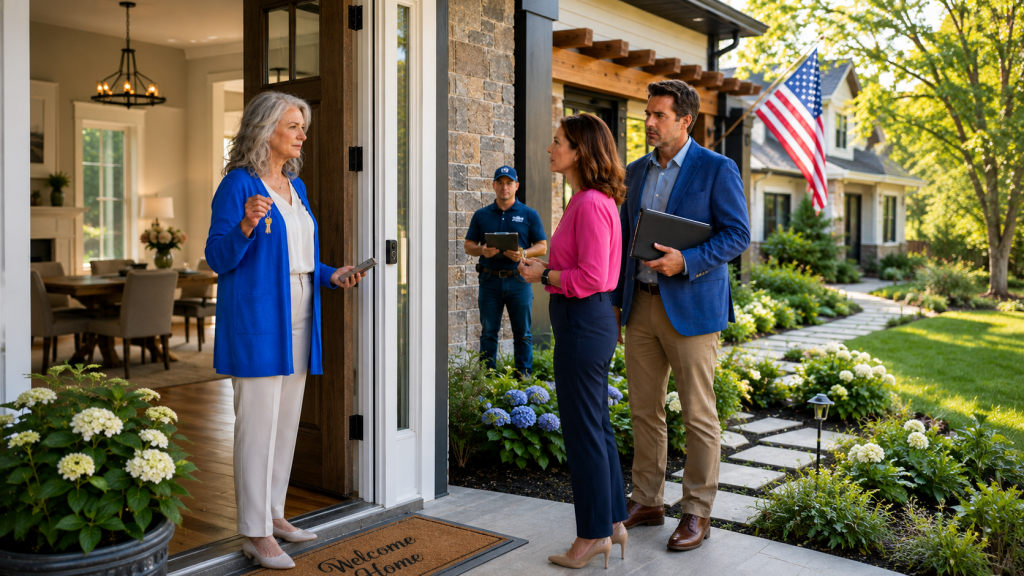
Then three days later, I saw Clara’s SUV.
I was kneeling beside my flower bed when I heard a car door close.
I looked up.
Clara was walking toward my house.
Beside her was a man carrying a clipboard.
A contractor.
My stomach tightened.
I stood slowly.
“Clara?”
She stopped.
“Oh, Mom.”
That smile appeared again.
The one that always came before she crossed a line.
“You’re home.”
“I live here.”
She ignored that.
“I wanted to surprise you.”
The contractor looked uncomfortable.
“Ma’am,” he said, “we were told we could measure the kitchen today.”
I looked at him.
“Who told you that?”
He looked at Clara.
She answered quickly.
“I did.”
I turned toward her.
“Why?”
She sighed like I was exhausting her.
“Because your kitchen needs updating.”
I stared at her.
“My kitchen?”
“Yes.”
She pointed toward the house.
“The cabinets are old. The counters are outdated. The layout isn’t practical.”
I looked back at the man.
Then at Clara.
“You scheduled renovations in my house?”
“We’re just getting measurements.”
“We?”
She hesitated.
“David agreed.”
Of course.
David.
I felt something inside me become very still.
“Did David ask me?”
“He knows what’s best.”
“No.”
My voice was calm.
Almost too calm.
“He knows what he prefers.”
Clara’s face hardened.
“Why are you fighting everything?”
“I’m not fighting.”
I stepped closer to the door.
“I am telling you no.”
The contractor lowered his clipboard.
“I can come back another time.”
“No,” I said.
“You don’t need to come back.”
Clara looked shocked.
“You’re embarrassing me.”
“No.”
I looked directly at her.
“You brought a stranger to my house without asking me.”
The porch became silent.
“You used a key to enter whenever you wanted.”
“You changed my things.”
“You arranged repairs without permission.”
I held out my hand.
“Give me the key.”
Her expression changed.
For the first time, she looked nervous.
“What?”
“The spare key.”
“You don’t trust me?”
“I trusted you.”
I paused.
“That was the problem.”
She slowly reached into her purse.
Then she stopped.
“I don’t have to give it back.”
My eyes narrowed slightly.
“Excuse me?”
“It belongs to David.”
“No.”
I shook my head.
“It belongs to this house.”
She smiled.
“You’re really going through with this?”
“Yes.”
She stared at me.
Then laughed.
“David is going to think you’ve lost your mind.”
Maybe she expected me to cry.
Maybe she expected me to apologize.
Maybe she expected the old Ardis.
The woman who kept quiet to avoid conflict.
But Robert’s voice came back to me.
A favor you didn’t ask for can still be a trespass.
I looked at her.
“Then David and I will have something important to discuss.”
She left angry.
The contractor followed.
And when the driveway was empty, I closed my front door.
Then I made one phone call.
A locksmith.
The next morning, the sound of drilling echoed through my entryway.
For years, that sound would have made me nervous.
That day, it felt like freedom.
The locksmith replaced every lock.
Front door.
Back door.
Garage entrance.
Side entrance.
When he handed me the new keys, I held them tightly.
One front door key.
One back door key.
No copies.
No hidden access.
No assumptions.
But I was not finished.
Because changing the locks only protected the outside of my home.
There was still something inside that needed changing.
Something much bigger.
After the locksmith left, I drove to the community office.
I needed to speak with Mr. Henderson, the property manager.
When I walked into his office, he looked surprised.
“Ardis, everything okay?”
I sat down and placed my folder on his desk.
“I need to update my records.”
He opened the folder.
And after reading the first page, his expression changed.
“Mrs. Collins…”
“Yes?”
“Are you aware that your son and daughter-in-law recently contacted the office?”
My heart stopped for a second.
“What did they ask?”
Mr. Henderson slowly looked up.
“They asked about adding their names to the emergency access paperwork.”
I stared at him.
“Adding their names?”
He nodded.
“And that wasn’t all.”
My hands tightened around my purse.
“What else?”
He turned the paper toward me.
“They asked what the process would be if the home needed to be transferred into a family trust.”
The room suddenly felt colder.
A family trust.
My house.
My home.
My decision.
And suddenly I understood.
The key was never the real problem.
It was only the first clue.
I sat there in Mr. Henderson’s office, staring at the paperwork in front of me.
For a moment, I couldn’t even speak.
Not because I didn’t understand.
Because I understood too much.
The spare key.
The unexpected visits.
The pantry changes.
The contractor.
The questions about the house.
They were not random.
They were pieces of the same puzzle.
Clara had not been trying to “help” me.
She had been slowly making herself comfortable in a place that was never hers.
And David…
I didn’t want to believe it.
I didn’t want to believe my own son was part of it.
“Did David come here himself?” I asked.
Mr. Henderson shook his head.
“Your daughter-in-law came first. Then your son called later.”
“What did they say?”
He hesitated.
“Nothing illegal. They asked general questions. About ownership. About future planning. About what happens if a homeowner becomes unable to manage things.”
Unable to manage things.
Those words hurt.
Because I knew exactly what they meant.
They were not asking how to support me.
They were asking what would happen if they decided I could no longer make my own choices.
I looked down at my hands.
Hands that had cooked thousands of meals.
Hands that had held my newborn son.
Hands that had held Robert’s hand during his final days.
Hands that still worked.
Still gardened.
Still signed my own documents.
Still belonged to me.
“I’m sorry,” Mr. Henderson said softly.
I looked up.
“Why are you sorry?”
“Because I know this is difficult.”
I nodded.
“It is.”
Then I closed the folder.
“But difficult doesn’t mean I ignore it.”
When I got home, I didn’t cry.
That surprised me.
A few months earlier, I would have cried.
I would have blamed myself.
I would have wondered what I had done wrong as a mother.
But that day, I felt something different.
Clarity.
I walked through every room of my house.
The living room where Robert and I danced on our twenty-fifth anniversary.
The hallway where we measured David’s height every birthday.
The kitchen where Robert burned pancakes every Sunday morning because he always got distracted reading the newspaper.
This house was not just property.
It was my story.
And nobody was going to rewrite it without me.
That evening, David called.
I watched his name appear on my phone.
For a few seconds, I simply stared.
The little boy in my memory and the man on my screen felt like two different people.
Finally, I answered.
“Hello.”
“Mom.”
His voice sounded tired.
“What happened?”
I almost laughed.
“What happened?”
“Yes. Clara said you changed the locks.”
“I did.”
“Why would you do that?”
“Because people were entering my house without permission.”
“She was helping.”
“David.”
“What?”
“She brought a contractor.”
Silence.
“She told you about that?”
“She told me she was improving the kitchen.”
“She was trying to surprise you.”
“I don’t want surprises that involve strangers measuring my home.”
He sighed.
“Mom, you’re making this bigger than it is.”
I closed my eyes.
Again.
That sentence.
Always that sentence.
“You keep saying that.”
“Because it’s true.”
“No, David.”
I walked toward the window.
“The problem is you keep deciding what is big and what is small.”
“Mom…”
“My feelings are not small because they inconvenience you.”
He became quiet.
Then his voice changed.
“Did someone put ideas in your head?”
I frowned.
“What does that mean?”
“Are you saying Clara is trying to take your house?”
The fact that he asked that question told me something.
He knew there was something to ask.
“I’m saying she is acting like she has rights she does not have.”
“She loves you.”
“Love does not give someone control.”
Another silence.
Then David said:
“You’re being unfair.”
I looked around the room.
At Robert’s photographs.
At the memories.
At the home my husband and I built together.
“Maybe.”
I swallowed.
“But I would rather be called unfair than wake up one day and realize I gave away my own voice.”
David didn’t answer.
Then he said:
“Clara is really hurt.”
I almost smiled sadly.
“Of course she is.”
“What’s that supposed to mean?”
“It means everyone keeps telling me how she feels.”
“And?”
“And nobody asks how I feel.”
That sentence finally made him quiet.
After a few seconds, he said:
“I need some time.”
“Take all the time you need.”
I hung up.
Then I did something I hadn’t done in months.
I opened Robert’s old wooden desk drawer.
Inside were his important papers.
Insurance documents.
Tax records.
Old letters.
And a small notebook with his handwriting on the cover.
I smiled when I saw it.
Robert wrote everything down.
Everything.
He believed memories mattered.
He believed promises mattered.
He believed details mattered.
I opened the notebook.
Most pages were ordinary.
Grocery lists.
Repair notes.
Things to fix around the house.
Then I reached a page near the back.
The handwriting was from about a year before he passed away.
The title at the top was:
“Things Ardis Should Always Remember.”
My eyes filled immediately.
I read the first line.
“Never let anyone convince you that being kind means giving up your choices.”
I touched the page.
That was Robert.
Always knowing exactly what I needed before I knew I needed it.
The next line said:
“People who truly love you will respect your no.”
I closed the notebook.
Because suddenly I knew.
I had spent months feeling guilty for saying no.
But Robert had spent our entire marriage teaching me that my voice mattered.
The next morning, I made another appointment.
This time, with an attorney.
Not because I wanted a war.
Because I wanted protection.
The attorney, Ms. Wallace, listened quietly as I explained everything.
The key.
The visits.
The accounts.
The contractor.
The questions about the house.
When I finished, she folded her hands.
“Mrs. Collins, do you currently have a will?”
“Yes.”
“Updated after your husband passed?”
“Yes.”
“Power of attorney?”
I hesitated.
“No.”
She nodded.
“That is important.”
“Why?”
“Because many families have good intentions. But sometimes intentions change when money, property, or control becomes involved.”
I looked out the window.
“That’s what scares me.”
“What?”
“That I’m not afraid of strangers.”
She looked at me.
“I’m afraid of the people who know exactly where I keep my spare key.”
The attorney helped me update everything.
My will.
My documents.
My emergency contacts.
My medical preferences.
Everything.
And before I left, she said something I would never forget.
“Mrs. Collins, planning for your future is not an insult to your family.”
I nodded.
“It’s an act of respect toward yourself.”
That evening, I came home and saw a package sitting on my porch.
No name.
No return address.
I opened it carefully.
Inside was a small envelope.
My hands froze when I saw the handwriting.
It was Robert’s.
But that was impossible.
Robert had been gone for almost two years.
I opened the letter.
Only one sentence was written inside.
“If you are reading this, someone is trying to make you feel like you don’t own your own life anymore.”
My heart started beating faster.
Because I knew Robert.
And I knew he never wrote something without a reason.
I turned the page over.
There was more.
My hands trembled as I looked at the second page.
For a few moments, I couldn’t bring myself to read it.
Not because I was afraid of what Robert had written.
Because I was afraid of how much he might have known.
Robert had always been observant.
He noticed things other people ignored.
A change in someone’s voice.
A forced smile.
A door left open.
A question that seemed innocent but wasn’t.
He used to tell me, “Ardis, people reveal themselves in small moments. Pay attention to the small moments.”
I always thought he was talking about strangers.
I never imagined he was talking about family.
I turned the page.
The handwriting continued.
“Ardis, if you are reading this, something has happened that made you question your own judgment. Don’t.”
I swallowed hard.
“You have always been too willing to believe the best in people. That is one of the things I love most about you. But remember this: kindness without boundaries becomes permission.”
I stopped reading.
Because that was exactly what had happened.
For months, I had been trying to be kind.
I had been trying to avoid hurting feelings.
I had been trying to keep peace.
And in the process, I had allowed people to hurt mine.
The letter continued.
“I set aside some documents because I know you. You will always put others first. You will always say, ‘It’s okay.’ Even when it isn’t.”
I wiped my eyes.
That was painfully true.
Robert knew me better than anyone.
“After I’m gone, this house is yours. Not because it is valuable. Because it is the place where our life happened. Never allow anyone to make you feel like protecting it makes you selfish.”
I held the paper against my chest.
For the first time in a long time, I felt like Robert was sitting beside me.
Not physically.
But in the way a person’s love can remain long after they are gone.
Then I noticed something.
At the bottom of the page was a date.
Three months before Robert passed away.
And below it was a note.
“Ardis, ask Michael at the bank about the account.”
Michael.
I knew that name.
He had been Robert’s financial advisor for almost twenty years.
I immediately called him.
He answered on the second ring.
“Ardis? Is everything okay?”
“I found a letter from Robert.”
There was silence.
Then his voice softened.
“I wondered when you would find it.”
My heart skipped.
“You knew about this?”
“Yes.”
“Why didn’t you tell me?”
“Because Robert asked me not to.”
I sat down.
“What was going on?”
Michael took a deep breath.
“Before Robert passed, he became concerned.”
“About what?”
“About your future.”
I almost laughed.
“My future?”
“Yes.”
“What did he think was going to happen?”
“He thought people might pressure you into making decisions you weren’t ready to make.”
The room went silent.
“Did he mention anyone?”
Michael paused.
“Ardis…”
“Please.”
Another pause.
“Your son visited him.”
I felt my stomach tighten.
“David?”
“Yes.”
“When?”
“A few months before Robert died.”
“What did they talk about?”
“I don’t know everything. Robert didn’t share private conversations. But afterward, he asked me to prepare some documents.”
“What kind of documents?”
“A protection plan.”
I stood up.
“Protection from who?”
Michael didn’t answer immediately.
And that silence was the answer.
“Michael.”
“I’m not saying your son wanted to hurt you.”
“But?”
“But Robert was worried that David was allowing other people to influence him.”
Other people.
Clara.
I closed my eyes.
“Did Robert think David wanted the house?”
“I think Robert worried someone wanted control over your assets before you were ready to give it.”
I sat there quietly.
The truth was painful.
But it also explained everything.
The key.
The access.
The questions.
The trust.
They were not random.
They were preparation.
That night, I barely slept.
The next morning, I received a text from Clara.
“We need to talk.”
I stared at the message.
Then another arrived.
“This has gone too far.”
Then another.
“You’re hurting David.”
I placed my phone down.
That sentence bothered me.
Not because it was cruel.
Because it was familiar.
Every time I protected myself, someone told me I was hurting someone else.
But nobody seemed to notice how much I had been hurt first.
An hour later, Clara appeared at my door.
Without calling.
Without asking.
But this time, her key didn’t work.
I watched from the window as she tried once.
Then twice.
Then three times.
Her confusion turned into anger.
She looked around.
Then she saw me standing inside.
I opened the door slightly.
“What are you doing?”
Her face changed.
“You changed the locks.”
“Yes.”
“You actually did it.”
“Yes.”
She laughed.
Not because it was funny.
Because she couldn’t believe I had followed through.
“You were serious.”
“I was.”
She shook her head.
“You’re being dramatic.”
I almost smiled.
“Clara, you keep using that word whenever I make a decision you don’t like.”
“Because you’re overreacting.”
“No.”
I looked directly at her.
“I’m reacting after being ignored.”
She stepped closer.
“Do you know what people are saying?”
“I don’t care.”
Her eyebrows lifted.
“You don’t care?”
“No.”
I held the door.
“I care about honesty. I care about respect. I care about my home.”
She lowered her voice.
“You’re pushing your own son away.”
That hurt.
She knew it would.
But this time, I didn’t let it control me.
“No, Clara.”
I shook my head.
“I’m asking my son to stand beside me instead of standing over me.”
Her expression changed.
For a moment, she had no answer.
Then she said:
“You’ll regret this.”
I looked at her.
“No.”
I closed the door gently.
“I regret waiting this long.”
That afternoon, something unexpected happened.
David came over.
Alone.
No Clara.
No excuses.
He stood on the porch looking different.
Older.
Tired.
Like he had spent days carrying something heavy.
“Mom.”
I opened the door.
“Come in.”
He stepped inside slowly.
His eyes moved around the house.
The same way mine had earlier.
Like he was remembering.
The pictures.
The furniture.
The memories.
Then he said something I never expected.
“I didn’t know.”
I looked at him.
“Didn’t know what?”
He swallowed.
“How far things had gone.”
I watched my son standing in the middle of the house where he had taken his first steps.
The same hallway where he used to race with his toy cars.
The same kitchen where he once sat on the counter and stole chocolate chips while I baked cookies.
For a moment, I saw the little boy again.
Not the frustrated man who had defended his wife.
Not the man who had dismissed my concerns.
Just my son.
“David,” I said quietly, “what do you mean you didn’t know?”
He looked down.
“I knew Clara wanted to help. I knew she had opinions. But I didn’t realize…”
He stopped.
“That she thought she could take over?”
He nodded.
I looked away.
Because hearing him admit it should have made me feel better.
But it didn’t erase the months I had spent feeling invisible.
“I should have listened to you,” he said.
Those words were simple.
But they carried a weight I had been waiting for.
I turned back.
“Yes.”
He looked surprised.
Maybe he expected me to say it was okay.
Maybe he expected me to comfort him.
But I had spent too many years making everyone else comfortable.
“It hurt me that you believed her feelings mattered more than mine.”
His eyes filled slightly.
“I’m sorry, Mom.”
I sat at the kitchen table.
The same table where Robert and I had spent countless mornings.
David sat across from me.
“I thought you were just being stubborn.”
“I know.”
“I thought you were afraid of change.”
I smiled sadly.
“I was afraid of losing control of my own life.”
He nodded.
“I understand now.”
I wished understanding had come sooner.
But sometimes people only understand a boundary after they finally meet one.
For a while, we sat quietly.
Then David said:
“Did you really update everything? The documents?”
“Yes.”
“Your will?”
“Yes.”
“Your emergency contacts?”
“Yes.”
He looked down.
“I guess that means you don’t trust me.”
I took a breath.
This was the moment.
The moment where I could either protect his feelings or tell the truth.
And I chose the truth.
“Trust is not something you lose because someone changes a lock.”
He looked at me.
“You lost my trust when you ignored my words.”
His face fell.
“But trust can be rebuilt.”
He looked up.
“How?”
“By respecting what I say.”
He nodded slowly.
“I can do that.”
“I hope so.”
That evening, David left without an argument.
Without trying to convince me.
Without defending Clara.
And for the first time in months, I felt like maybe my son was finding his way back.
But Clara was not finished.
Two days later, she sent me a long message.
She said she felt betrayed.
She said she had only wanted the best.
She said I had embarrassed her.
She said I had made her feel like an outsider.
I read the entire message.
Then I replied with only one sentence.
“I understand you wanted to help, but helping someone does not mean taking control away from them.”
I didn’t argue.
I didn’t explain.
I didn’t apologize for protecting myself.
A week passed.
Then another.
The house became peaceful again.
My mail stayed where I left it.
My thermostat stayed at sixty-eight.
My slippers stayed beside my bed.
My kitchen stayed exactly the way I liked it.
And somehow, those small things felt like victories.
Not because I had won against Clara.
Because I had finally stopped losing against myself.
A month later, David came by again.
This time, he knocked.
I opened the door.
He smiled.
“I remembered.”
I smiled back.
“Good.”
He held up a small bag.
“Coffee.”
I laughed.
“Still trying to make peace with coffee?”
He smiled.
“Your favorite.”
We sat on the porch.
The same porch where Robert used to sit in his blue chair.
The afternoon sun warmed the garden.
And for a while, things felt normal.
Then David said:
“Mom?”
“Yes?”
“I want to tell you something.”
I looked at him.
“Okay.”
He took a deep breath.
“After everything happened, I asked Clara why she was so focused on the house.”
My expression changed.
“What did she say?”
He looked uncomfortable.
“She said she was worried about the future.”
“The future?”
“Yes.”
I waited.
“She said eventually you would need help. She said it made sense for us to already be involved.”
I nodded slowly.
“And what did you say?”
“I asked her why helping you meant making decisions without you.”
I looked at my son.
“And?”
“She didn’t have an answer.”
That told me everything.
Because sometimes the truth is not found in what people say.
It is found in what they cannot explain.
Over the next few months, David worked hard to repair our relationship.
Not with expensive gifts.
Not with dramatic apologies.
With actions.
He called before visiting.
He asked instead of assuming.
He listened.
And slowly, trust started growing again.
Clara stayed distant.
Maybe she was angry.
Maybe embarrassed.
Maybe she still believed I had done something wrong.
But I learned something important.
Not every relationship can be repaired immediately.
Sometimes people need time to understand that your boundaries are not an attack.
They are a reminder that you are still your own person.
Six months later, I sat at my kitchen table with Robert’s notebook beside me.
I opened the page he had written years earlier.
“Never let anyone convince you that being kind means giving up your choices.”
I smiled.
Because I finally understood.
Kindness was not weakness.
Love was not surrender.
Family did not mean unlimited access.
And a home was not just a building.
It was the place where your voice should always matter.
The day I changed the locks, Clara thought I was being dramatic.
She thought I was making a small issue into a big one.
She thought the house was waiting for her.
But she was wrong.
The house was never waiting for her.
It was waiting for me to remember who I was.
I was Ardis Collins.
A wife.
A mother.
A grandmother.
A woman who had built a life with her own hands.
And I was finally done asking permission to protect it.
Because sometimes the strongest thing a person can do is not slam a door.
Sometimes it is simply making sure the door belongs to them.
THE END! THANK YOU FOR READING!