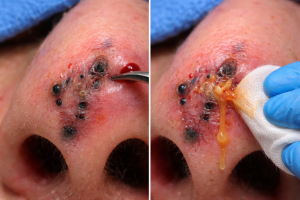
The nose is one of the most oil-prone areas of the face, making it highly susceptible to clogged pores, blackheads, and inflamed acne lesions. The images above demonstrate multiple stages of nasal skin concerns — including deep blackheads (open comedones), inflamed pustules, and irritated or infected lesions following manipulation.
While blackheads are common, improper handling can turn a minor pore blockage into a painful and potentially scarring infection.
Why the Nose Develops So Many Blackheads
The nose contains a high concentration of sebaceous (oil) glands. These glands naturally produce sebum to protect and hydrate the skin. However, when excess oil combines with:
-
Dead skin cells
-
Environmental debris
-
Makeup residue
-
Sweat
pores can become clogged.
When the pore remains open, oxidation causes the trapped material to darken — forming a blackhead.
What Happens When Blackheads Become Inflamed?
Blackheads are usually painless. However, inflammation may occur if:
-
The area is squeezed aggressively
-
Bacteria enter the pore
-
The skin barrier is damaged
-
Extraction is done without sterile technique
Inflamed blackheads can progress into:
-
Red swollen bumps
-
Painful pustules
-
Small abscesses
-
Bleeding lesions
Facial skin is delicate and highly vascular, which increases sensitivity and swelling.
Signs of Infection or Severe Inflammation
You should be cautious if you notice:
-
Rapid redness
-
Swelling around multiple pores
-
Tenderness
-
Bleeding during extraction
-
Yellow or white pus
-
Darkened scab formation
These signs suggest deeper irritation or bacterial involvement.
Risks of Home Extraction
Improper squeezing or using sharp tools at home may:
-
Push bacteria deeper
-
Spread infection to surrounding pores
-
Cause post-inflammatory hyperpigmentation
-
Lead to permanent scarring
-
Increase healing time
The nose is part of the central facial region, where infections should be treated carefully.
Professional Treatment Options
1. Medical Comedone Extraction
Performed with sterile instruments under proper lighting and hygiene conditions.
2. Topical Retinoids
Help prevent pore blockage and reduce recurrence.
3. Chemical Exfoliation
Gentle peels help reduce congestion.
4. Antibiotic Treatment
Used when infection or severe inflammation is present.
5. Acne Management Plans
Long-term skincare strategies reduce future outbreaks.
Prevention Tips for Nasal Acne
To reduce blackhead formation:
-
Cleanse twice daily with a gentle cleanser
-
Use oil-free and non-comedogenic products
-
Avoid touching or picking the nose
-
Exfoliate moderately (1–2 times weekly)
-
Change pillowcases frequently
-
Remove makeup completely
Consistency is more effective than aggressive treatment.
Special Considerations for Older Skin
In mature skin, pores may appear larger and oil distribution may change. Gentle care is especially important to avoid:
-
Skin tearing
-
Excess dryness
-
Delayed healing
-
Increased scarring risk
Dermatological supervision is recommended for persistent congestion.
When to See a Dermatologist
Seek professional care if:
-
Blackheads become painful
-
Swelling spreads
-
Bleeding continues
-
Dark scabbing forms
-
Over-the-counter treatments fail
Early intervention protects skin health and appearance.
Final Thoughts
Nasal blackheads are common and treatable, but improper extraction can lead to inflammation and infection. Gentle skincare, proper hygiene, and professional evaluation when needed are the safest approaches to maintaining clear and healthy skin.
If symptoms worsen or do not improve, consult a dermatologist for personalized treatment.