Skin conditions affecting the back can range from mild acne to severe, painful infections that significantly impact physical comfort and self-confidence. The image above shows widespread inflamed lesions, pustules, and nodules across the upper back — a presentation often associated with severe inflammatory acne or nodulocystic acne, sometimes complicated by secondary infection.
Understanding this condition is essential for early treatment and prevention of long-term scarring.
What Is Severe Back Acne?
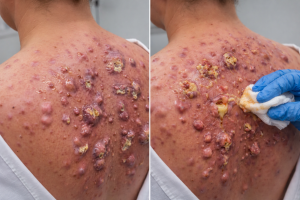
Severe back acne, sometimes called “bacne,” occurs when hair follicles become clogged with:
-
Excess oil (sebum)
-
Dead skin cells
-
Bacteria
When inflammation becomes deep and intense, it can lead to:
-
Large painful nodules
-
Cysts filled with pus
-
Thickened or scarred skin
-
Crusting and drainage
In advanced cases, lesions may merge and form widespread inflammatory plaques.
Why the Back Is Commonly Affected
The back is especially vulnerable to acne because:
-
It has a high density of oil glands
-
Sweat accumulates easily
-
Tight clothing traps heat and moisture
-
Friction from backpacks or sports gear irritates skin
-
It is harder to clean and monitor daily
These factors create an environment where bacteria can thrive.
Signs of Severe Inflammatory Acne
Warning signs include:
-
Painful, deep lumps under the skin
-
Yellow or green pus
-
Widespread redness and swelling
-
Thick crust formation
-
Persistent lesions lasting weeks
-
Dark marks or scars after healing
If left untreated, severe acne can cause permanent scarring and skin texture changes.
Possible Causes and Risk Factors
Several factors contribute to severe back acne:
1. Hormonal Imbalance
Hormones increase oil production, especially during puberty, stress, or certain medical conditions.
2. Excessive Sweating
Athletes and individuals in hot climates may experience more frequent breakouts.
3. Genetics
Family history can increase susceptibility.
4. Poor Skincare Routine
Using heavy products or failing to shower after sweating can worsen acne.
5. Bacterial Overgrowth
Certain bacteria naturally live on the skin but can multiply excessively.
When Acne Becomes Infected
If bacteria penetrate deeper into inflamed skin, secondary infection may occur. Signs include:
-
Increasing pain
-
Expanding redness
-
Thick drainage
-
Fever in severe cases
Medical evaluation becomes urgent in these situations.
Treatment Options
1. Topical Treatments
For moderate cases:
-
Benzoyl peroxide
-
Salicylic acid
-
Prescription retinoids
2. Oral Medications
For severe or widespread acne:
-
Oral antibiotics
-
Hormonal therapy (if indicated)
-
Isotretinoin for resistant cases
3. Professional Procedures
-
Sterile drainage of large cysts
-
Corticosteroid injections
-
Laser therapy for scars
Treatment should always be supervised by a healthcare professional.
Skincare Tips for Managing Back Acne
To reduce flare-ups:
-
Shower immediately after sweating
-
Use antibacterial body wash
-
Avoid tight clothing
-
Wash bedding regularly
-
Avoid picking or squeezing lesions
-
Choose oil-free skincare products
Consistency is key in preventing recurrence.
Long-Term Complications
Without treatment, severe back acne can lead to:
-
Permanent scarring
-
Thick keloid formation
-
Hyperpigmentation
-
Emotional distress or reduced self-confidence
Early medical care greatly improves outcomes.
When to See a Doctor
Seek professional help if:
-
Acne is painful or spreading
-
Over-the-counter treatments fail
-
Scarring begins to develop
-
Lesions persist for months
-
There are signs of infection
Dermatologists can tailor treatment to your specific skin type and severity.
Final Thoughts
Severe back acne is more than a cosmetic issue — it can be painful, emotionally challenging, and physically damaging if untreated. Early intervention, consistent skincare, and medical supervision can significantly improve skin health and prevent long-term complications.
If you are experiencing widespread or painful lesions, consult a qualified healthcare provider for proper diagnosis and treatment.