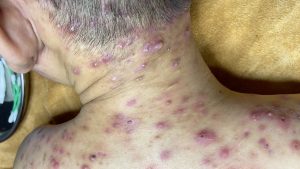
The image above shows extensive inflammatory skin lesions on the back of the neck, including multiple red nodules, pustules, crusted areas, and dark spots. This presentation suggests severe inflammatory acne or folliculitis, a condition that requires medical attention to prevent scarring and long-term skin damage.
The back of the neck is particularly prone to this type of condition due to hair follicles, sweat, friction from clothing, and oil production.
What Is Inflammatory Acne or Folliculitis?
Inflammatory acne occurs when pores become clogged with oil and dead skin cells, allowing bacteria to grow and trigger inflammation.
Folliculitis is inflammation or infection of hair follicles and can appear similar to acne.
Both conditions may produce:
-
Red, painful bumps
-
Pus-filled lesions
-
Swelling and tenderness
-
Crusting and scabbing
-
Darkened spots after healing
When lesions are deep and widespread, the condition is considered severe.
What the Image Shows
The image demonstrates:
-
Numerous inflamed nodules
-
Pustules with yellow-white centers
-
Areas of dried blood or crusting
-
Dark post-inflammatory marks
-
Thickened, irritated skin
These findings indicate a chronic, ongoing inflammatory process, not mild acne.
Why the Back of the Neck Is Vulnerable
Several factors contribute:
✔ Dense Hair Follicles
The area contains many follicles that can become blocked.
✔ Friction
Shirt collars, helmets, or hair rubbing against the skin can worsen inflammation.
✔ Sweat and Heat
Moisture creates an environment favorable for bacterial growth.
✔ Shaving or Haircuts
Close shaving may irritate follicles.
✔ Hormonal Influence
Increased oil production contributes to pore blockage.
Potential Complications
If left untreated, severe inflammatory acne may lead to:
-
Permanent scarring
-
Skin thickening
-
Dark marks (hyperpigmentation)
-
Painful cyst formation
-
Secondary infection
Early medical intervention helps prevent these outcomes.
Why Home Treatment May Not Be Enough
Over-the-counter products are often insufficient for severe cases. Attempting to squeeze or pick lesions can:
-
Increase inflammation
-
Spread infection
-
Cause deeper scarring
-
Delay healing
Professional evaluation is important when acne is painful or widespread.
Medical Treatment Options
Treatment may include:
✔ Prescription Topical Medications
Stronger anti-inflammatory or antibacterial creams.
✔ Oral Antibiotics
To reduce bacterial growth and inflammation.
✔ Hormonal Therapy
When acne is hormone-related.
✔ Advanced Dermatologic Treatments
In severe or resistant cases.
Consistent treatment significantly improves outcomes.
Skin Care and Prevention Tips
Supportive measures include:
-
Gentle cleansing
-
Avoiding tight collars
-
Showering after sweating
-
Not picking at lesions
-
Using non-comedogenic products
Regular dermatology follow-up is key.
When to See a Doctor
Seek professional care if:
-
Lesions are painful and deep
-
Scarring begins to form
-
Acne spreads rapidly
-
Fever or severe inflammation develops
-
Home treatments fail
Early treatment prevents permanent skin damage.
Conclusion
The image highlights severe inflammatory acne or folliculitis on the back of the neck, a condition that requires medical evaluation and proper treatment. While mild acne is common, severe cases can cause lasting scars if not managed appropriately.
Professional care ensures better healing, reduced inflammation, and long-term skin health.