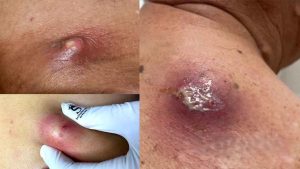
The image above shows a large, advanced skin abscess located on the upper back near the shoulder and neck region. The visible swelling, discoloration, and central area of infection indicate a serious bacterial process that requires immediate professional medical care. Conditions like this should never be managed at home.
What Is a Skin Abscess?
A skin abscess is a localized collection of pus that forms when bacteria invade the skin and underlying tissue. The body’s immune system responds by sending white blood cells to the area, creating a pocket filled with pus, dead tissue, and bacteria.
In the image, key features include:
-
A large raised lump beneath the skin
-
Redness and stretching of surrounding tissue
-
A central discolored area suggesting tissue breakdown
-
Signs of severe inflammation
These features indicate a deep and potentially dangerous infection.
How Does an Abscess Become This Severe?
Most large abscesses begin as something small, such as:
-
A blocked hair follicle
-
A skin cyst
-
A minor skin injury
When treatment is delayed or the area is repeatedly irritated, bacteria multiply and the infection spreads deeper. Over time, pressure builds, tissue becomes damaged, and the abscess enlarges significantly.
Risk factors may include:
-
Older age
-
Weakened immune system
-
Chronic skin conditions
-
Diabetes or circulation problems
-
Previous untreated skin infections
Why Abscesses on the Upper Back Are High Risk
The upper back and neck area contains important structures, muscles, and lymphatic pathways. Severe infections in this region can:
-
Spread rapidly to surrounding tissues
-
Cause extensive tissue damage
-
Lead to bloodstream infection (sepsis)
-
Require surgical intervention
The size and appearance of the abscess in the image strongly suggest that urgent medical treatment is necessary.
Why You Should Never Treat This at Home
Attempting to squeeze, puncture, or drain a large abscess at home can:
-
Push bacteria deeper into the body
-
Worsen the infection
-
Cause uncontrolled bleeding
-
Increase scarring
-
Delay proper healing
Home remedies are unsafe for infections of this severity.
Medical Treatment Options
Treatment typically involves a combination of:
✔ Surgical Drainage
A healthcare professional drains the abscess under sterile conditions to remove pus and reduce pressure.
✔ Antibiotic Therapy
Oral or intravenous antibiotics are often required to control the infection.
✔ Ongoing Wound Care
Regular cleaning, dressing changes, and monitoring promote healing and prevent recurrence.
✔ Monitoring for Complications
In advanced cases, short-term hospital care may be needed.
Healing and Recovery
With proper treatment:
-
Pain and swelling gradually decrease
-
Infection clears
-
Healthy tissue begins to regenerate
-
Healing may take weeks, depending on severity
Some scarring may remain, but early medical care reduces long-term damage.
When to Seek Immediate Medical Attention
Seek urgent care if you notice:
-
A rapidly growing painful lump
-
Skin turning dark, greenish, or black
-
Fever, chills, or weakness
-
Severe pain or foul-smelling drainage
These are warning signs of a potentially serious infection.
Conclusion
The image above highlights the dangers of advanced skin abscesses when left untreated. While many skin infections begin as minor issues, they can quickly progress into serious medical conditions. Professional evaluation and treatment are essential for safe healing and prevention of complications.
If similar symptoms occur, consult a qualified healthcare professional immediately.