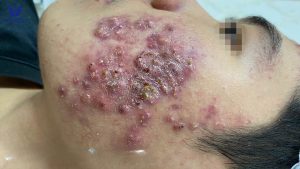
Facial skin conditions can significantly affect both physical comfort and emotional well-being. The image above shows a severe inflammatory skin reaction involving the cheek and jaw area, characterized by redness, swelling, crusting, and multiple raised lesions. Such presentations often indicate an advanced or untreated dermatological condition that requires medical attention.
Common Visible Features
The affected area shows:
-
Intense redness and inflammation
-
Thickened, irritated skin
-
Crusting and scabbing over lesions
-
Clusters of painful bumps or nodules
-
Uneven skin texture and possible discharge
These symptoms suggest a serious skin disorder rather than mild acne or temporary irritation.
Possible Causes
Several medical conditions can lead to this type of facial skin involvement, including:
-
Severe acne (nodulocystic or acne conglobata)
-
Bacterial skin infections
-
Chronic inflammatory conditions such as dermatitis or folliculitis
-
Autoimmune or immune-related skin disorders
-
Secondary infection due to scratching or delayed treatment
Only a qualified healthcare professional can provide an accurate diagnosis after proper examination.
Why Early Treatment Matters
Delaying treatment can lead to:
-
Permanent scarring
-
Skin discoloration
-
Persistent pain or discomfort
-
Worsening infection
-
Psychological distress due to appearance changes
Early medical intervention often improves outcomes and reduces long-term complications.
Treatment and Management
Treatment depends on the underlying cause but may include:
-
Prescription topical or oral medications
-
Antibiotics or anti-inflammatory drugs
-
Proper wound and skin care
-
Avoiding harsh products or self-treatment
-
Regular follow-up with a dermatologist
Self-medication or home remedies can worsen the condition and should be avoided.
Prevention and Skin Care Tips
-
Maintain good facial hygiene
-
Avoid touching or picking at lesions
-
Use dermatologist-approved skincare products
-
Seek professional help when symptoms persist or worsen
Conclusion
Severe facial skin conditions should never be ignored. The visible signs of inflammation, crusting, and widespread lesions highlight the importance of early diagnosis and proper medical care. With timely treatment and appropriate management, many individuals can achieve significant improvement and prevent lasting damage.
Videos
https://www.youtube.com/watch?v=LjzhMauV6IM