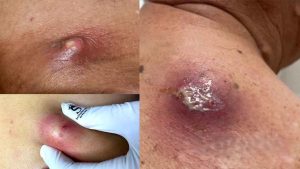
The image above shows a large, infected abscess on the back, characterized by intense redness, swelling, and visible pus at the center. This type of skin infection is serious and should never be ignored. Back abscesses often develop slowly, starting as small, painless lumps before progressing into painful, inflamed infections beneath the skin.
What Is a Back Abscess?
A back abscess is a localized pocket of infection that forms when bacteria invade the skin and become trapped. The body responds by sending white blood cells to fight the infection, resulting in the buildup of pus—a mixture of bacteria, dead tissue, and immune cells.
Abscesses on the back are common because:
-
The back has thick skin and many oil glands
-
Friction from clothing creates irritation
-
Sweat and bacteria accumulate easily
-
The area is hard to see and monitor
Once an abscess forms, it cannot heal properly without treatment.
How a Back Abscess Develops
Most abscesses begin as:
-
A clogged pore or hair follicle
-
A small cyst under the skin
-
A minor cut or insect bite
If bacteria enter and multiply, the area becomes infected. Over time, pressure builds beneath the skin, leading to swelling, pain, and pus formation—clearly visible in the image.
Key Signs of a Severe Infection
The abscess shown in the image displays classic warning signs:
-
Deep red or purple skin discoloration
-
A raised, tense, shiny surface
-
A central opening with thick yellow-white discharge
-
Surrounding inflammation and warmth
-
Increasing size and tenderness
These symptoms indicate that the infection is active and may continue to spread if untreated.
Why Back Abscesses Can Be Dangerous
Because abscesses form deep beneath the skin, they can:
-
Spread infection to nearby tissue
-
Enter the bloodstream
-
Cause fever and systemic illness
-
Leave permanent scars
In older adults or individuals with diabetes, immune disorders, or poor circulation, complications can be more severe.
Professional Medical Treatment
A severe abscess like this requires medical attention. The standard treatment includes:
-
Clinical Evaluation
A healthcare professional assesses the size, depth, and severity of the infection. -
Sterile Incision and Drainage
A small incision allows pus to escape safely, relieving pressure and pain. -
Removal of Infected Material
Thick pus and debris are thoroughly drained to prevent recurrence. -
Cleaning and Dressing
The cavity is cleaned and covered with sterile dressings. -
Antibiotics (When Needed)
Oral or topical antibiotics may be prescribed if the infection is extensive or spreading.
This controlled procedure dramatically improves healing and reduces complications.
Why You Should Never Squeeze a Back Abscess at Home
Attempting to squeeze or pop an abscess can make the condition worse by:
-
Forcing bacteria deeper into tissue
-
Increasing inflammation and pain
-
Causing severe bleeding
-
Creating larger scars
-
Delaying proper healing
Home treatment is unsafe for abscesses of this size and severity.
Recovery and Aftercare
After professional drainage, healing may take several days to weeks depending on size and depth. Proper aftercare is essential:
-
Keep the area clean and dry
-
Change dressings as instructed
-
Avoid pressure or friction on the back
-
Watch for signs of reinfection (increasing redness, pain, fever)
-
Complete all prescribed medications
Gradual improvement should be noticeable as swelling decreases and redness fades.
Preventing Future Back Abscesses
To reduce the risk of recurrence:
-
Shower regularly, especially after sweating
-
Wear loose, breathable clothing
-
Avoid squeezing pimples or cysts
-
Treat small skin infections early
-
Maintain good overall skin hygiene
Early intervention can stop minor issues from becoming severe infections.
Final Thoughts
The image highlights a serious back skin infection that requires proper medical care. While abscesses may start small, they can rapidly worsen if ignored or treated incorrectly. With timely professional drainage, appropriate aftercare, and good hygiene, most back abscesses heal successfully—relieving pain, preventing complications, and restoring healthy skin.