The final sound I heard before everything faded into darkness was my stepfather’s laughter.Not shouting.Not panic.Laughter.Victor Payne laughed as if hurting me was entertainment, as if my suffering was something placed in the middle of the living room for him to enjoy after dinner.His name was Victor Payne, though inside our house, everyone called him “sir.”Especially my mother.
She said it softly, carefully, with her eyes lowered and her shoulders tense, as if that one word could keep peace inside a home where peace had died years earlier.I was twenty-two years old, old enough to leave in theory, but theory does not always survive fear.People ask later why I stayed.
They ask it kindly sometimes.
Other times, they ask it like an accusation.
Why didn’t you leave?
Why didn’t you call someone?
Why didn’t you fight back?
The truth is simple and ugly.
Victor had spent years making the world outside feel impossible and the world inside feel inescapable.
He controlled the car keys.
He controlled the money.
He made sure my phone was checked.
He told neighbors I had “emotional issues.”
He told my mother I would ruin her life if I reported him.
And my mother believed whatever let her sleep at night.
Every evening, Victor found a reason to hurt me.
A dish placed too loudly in the sink.
A shirt folded the wrong way.
A glance he decided was disrespect.
Sometimes he did not bother with reasons at all.
He would sink into his recliner with a beer in his hand and say, “Violet, come here. I’m bored.”
That sentence made my stomach turn cold every time.
My mother would stand in the kitchen, gripping a towel, whispering the same thing she always whispered.
“Just do what he says.”
I used to think she said it because she wanted to protect me.
Later, I realized she said it because she wanted to protect herself from having to choose.
And every time she stayed silent, she chose him.
Victor enjoyed having an audience.
That was one of the worst parts.
He liked forcing me to stand in the middle of the living room while he insulted me.
“Look at her,” he would say to my mother. “Twenty-two years old and still useless.”
My mother never corrected him.
Never once said, “Don’t speak to my daughter that way.”
Never once stepped between us.
She just lowered her gaze and twisted her wedding ring, turning that little circle of gold around and around like it was a lock she had placed on her own courage.
By then, I had learned not to cry in front of him.
Crying made him satisfied.
Begging made him powerful.
Silence annoyed him.
So I became silent.
That bothered Victor more than anything.
“You think you’re brave?” he asked one evening.
He stepped close enough that I could smell alcohol on his breath.
I looked at him and said, “No. I think you’re predictable.”
The room changed.
My mother froze by the sink.
Victor’s smile disappeared.
For one second, I saw the truth in his face.
He did not hate me because I was weak.
He hated me because some part of me had refused to become as small as he wanted.
The first blow sent me against the kitchen counter.
The second knocked the breath from my chest.
My mother gasped, but she did not move.
Victor turned toward her.
“Tell her.”
My mother’s lips trembled.
“Apologize, Violet.”
I stared at her.
“For what?”
Victor moved so fast I barely registered it.
My head struck the tile.
The room spun.
My mother screamed my name, but even that sounded far away.
Then everything went black.
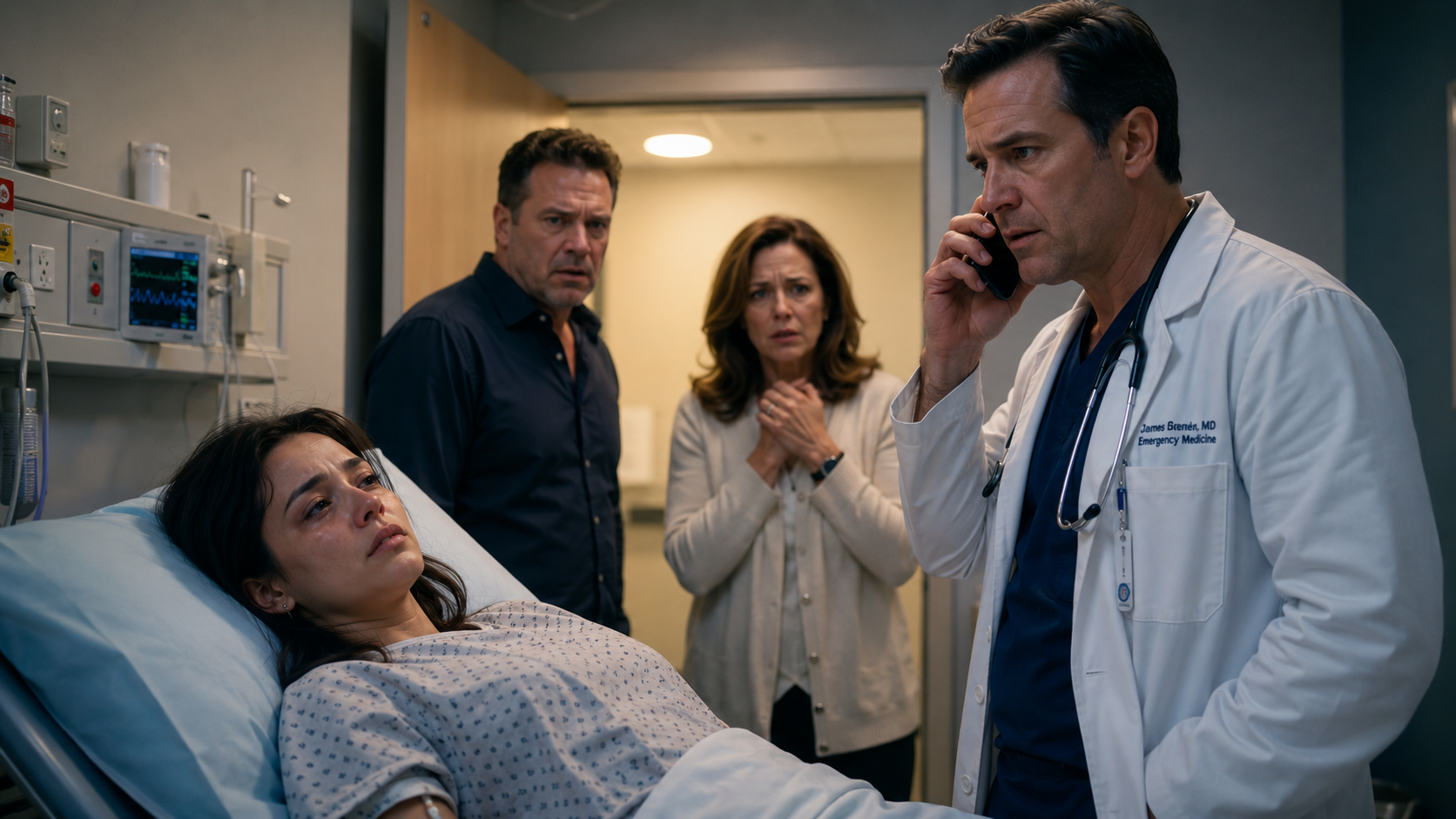
When I opened my eyes again, harsh hospital lights glared above me.
For a moment, I did not know where I was.
My mouth tasted like metal.
My body felt distant, like it belonged to someone else and I was only visiting.
Victor stood beside the bed wearing a face full of counterfeit concern.
My mother sat on the other side holding my hand.
But not gently.
Her fingers pinned mine down, pressing hard enough to warn me before I understood the warning.
Do not speak.
A doctor in a white coat walked into the room with a clipboard.
He was maybe in his forties, with tired eyes and a calm voice.
“I’m Dr. Nathan Reeves,” he said. “Can you tell me what happened?”
My mother answered before I could open my mouth.
“She slipped while taking a bath.”
The lie landed in the room like something rotten.
Victor nodded immediately.
“Bathroom floor was wet. She’s clumsy.”
The doctor looked at my mother.
Then at Victor.
Then at me.
His eyes moved over my face, my arms, the marks that Victor believed had faded enough to hide, and the older injuries that told a story no bathroom fall could explain.
Something changed in his expression.
Not shock exactly.
Recognition.
He had seen this before.
He set the clipboard down.
“Mrs. Payne,” he said, “I need to examine Violet privately.”
Victor’s face tightened.
“That’s not necessary.”
The doctor did not look at him.
“It is.”
My mother’s fingers squeezed mine.
“Violet gets anxious alone.”
I slowly turned my head toward her.
For the first time in years, I saw her clearly.
Not as a helpless woman trapped beside me.
Not as a victim who simply could not help.
As someone who had decided my pain was the price of her comfort.
The doctor pressed a button near the wall.
A nurse entered.
“Please escort the family to the waiting area.”
Victor laughed lightly.
“Doctor, you’re making this dramatic.”
Dr. Reeves turned to him.
“Sir, step away from the patient.”
Victor stopped smiling.
The nurse stood near the door, firm and silent.
My mother leaned closer.
“Violet,” she whispered, “tell them it was an accident.”
I looked at her hand on mine.
Then I pulled free.
“No,” I whispered.
Her face crumpled.
“Violet—”
“Not anymore.”
That was the moment my life changed.
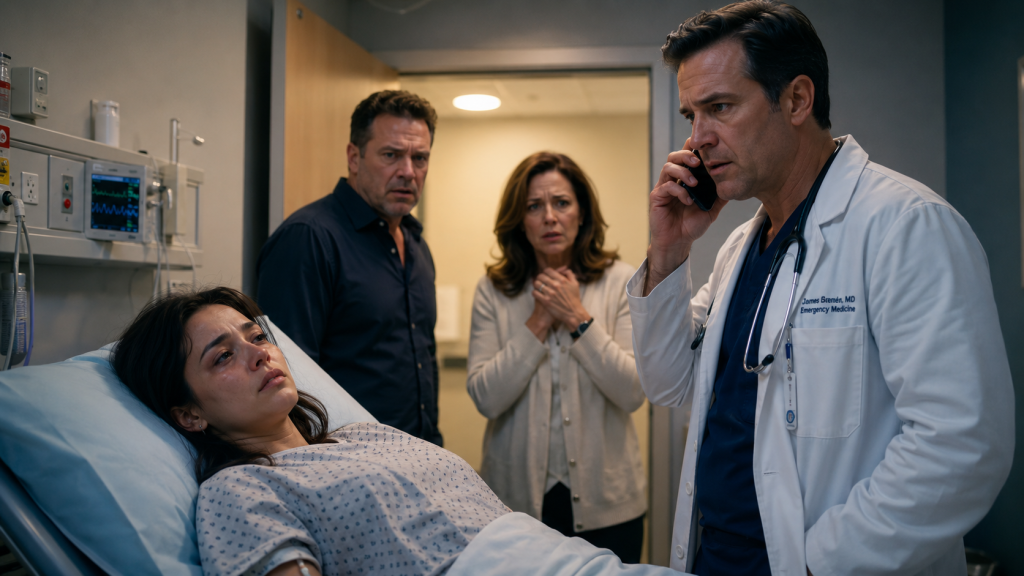
Dr. Reeves picked up the phone.
“I need police in Emergency Room Three,” he said. “Now.”
Victor’s face went pale.
For the first time that night, he stopped pretending.
“What did she say?” he demanded. “What did she tell you?”
The doctor moved between Victor and my bed like a wall.
“She has not said anything yet,” he replied. “But I have seen enough.”
Two hospital security officers arrived before the police did.
Victor started shouting about lawsuits.
My mother cried into her hands.
I lay there trembling, not because I regretted speaking, but because fear does not disappear the moment help arrives.
Fear lingers.
It asks if help will leave.
It asks if punishment is waiting at home.
It asks if truth will be enough.
But I had prepared for this moment longer than Victor knew.
I had not survived all those years by being careless.
For months, I had been recording.
Not every day.
Not every incident.
But enough.
His threats.
His laughter.
My mother telling me to apologize.
Victor saying no one would believe me because my own mother would deny it.
I saved the files in email drafts.
I sent copies to myself under subject lines that looked harmless.
Grocery list.
Work schedule.
Dentist appointment.
And one month earlier, when Victor had thrown my phone across the room and cracked the screen, I had gone to the library and sent everything to Mrs. Alvarez.
Mrs. Elena Alvarez had been my college counselor before I dropped out.
She had known something was wrong.
She noticed the long sleeves in summer.
The missed classes.
The way I flinched when someone raised a hand too quickly.
She begged me to let her help.
At first, I refused.
Then one afternoon, after Victor locked me in my room for missing his call, I emailed her.
Not everything.
Just enough.
Her reply came within twenty minutes.
Violet, I believe you. I will keep this safe. When you are ready, I will come.
I had read that sentence every night for weeks.
I believe you.
Those three words held me together when my own mother would not.
When the police entered the hospital room, one officer asked me gently what happened.
Victor shouted from the hallway.
“She’s unstable! She lies!”
The officer closed the door.
The room became quieter.
Dr. Reeves stood near the monitor.
A social worker came in too, a woman named Ms. Patel with kind eyes and a tablet in her hands.
“You’re safe here,” she said.
Safe.
I wanted to believe her.
My voice shook when I spoke.
“He hurt me.”
The officer nodded.
“Who?”
“My stepfather. Victor Payne.”
The words made the air feel different.
Real.
Official.
“He has been hurting me for years.”
Ms. Patel’s face softened, but she did not interrupt.
The officer asked careful questions.
Not the kind Victor asked, sharp and accusing.
Careful ones.
When.
Where.
How often.
Were there witnesses?
Did I have somewhere safe to go?
At the last question, I almost laughed.
My mother had made sure home was not safe.
Victor had made sure nowhere else felt possible.
“I have recordings,” I whispered.
The officer leaned forward slightly.
“Where are they?”
“In my email drafts. And my counselor has copies.”
“What counselor?”
“Mrs. Alvarez. Elena Alvarez.”
Ms. Patel immediately helped me call her.
Mrs. Alvarez answered on the second ring.
“Violet?”
The sound of her voice broke me.
I started crying then.
Not quiet tears.
Not controlled tears.
Real sobs that tore out of me from somewhere deep and tired.
Mrs. Alvarez was at the hospital within forty minutes.
She walked into the room wearing a gray cardigan, snow still melting on her shoulders, and came straight to my bedside.
She did not ask permission before taking my hand.
She just held it.
“I’m here,” she said.
For the first time that night, I believed someone was.
Victor was taken into custody before morning.
Not politely.
Not gently.
He fought at first.
He demanded my mother fix it.
He shouted that I had ruined everything.
Then one of the officers played a short audio clip from the files Mrs. Alvarez provided.
Victor’s own voice filled the hallway.
“Go ahead, Violet. Tell someone. Your mother will say you fell. She always does.”
My mother collapsed into a chair.
Victor stopped yelling.
That was the thing about truth.
When it finally spoke in his own voice, even he did not know how to answer it.
My mother was not arrested that night, but she was not allowed near me.
Ms. Patel explained things gently.
Protective order.
Victim advocate.
Temporary housing.
Statement.
Investigation.
Possible charges.
My head spun with the words.
Dr. Reeves returned after the scans.
He said I had a concussion and needed monitoring.
He said the older injuries had been documented.
Photographed.
Recorded.
Evidence.
That word felt strange.
My pain had become evidence.
Not drama.
Not clumsiness.
Not attitude.
Evidence.
Before he left, Dr. Reeves stood beside my bed and said, “I’m sorry no one called sooner.”
I looked at him.
“You did.”
His face tightened with emotion.
Then he nodded and left the room.
The next days blurred together.
Police interviews.
Medical exams.
Social workers.
Detectives.
A victim advocate named Jana who carried a binder full of resources and spoke to me like I was not broken.
Mrs. Alvarez stayed as much as hospital rules allowed.
She brought clean clothes.
A phone charger.
A soft blanket.
A notebook.
“You always wrote better when things felt impossible,” she said.
I held the notebook and cried again.
My mother called fourteen times.
I did not answer.
Then she sent a message.
Please tell them it got out of control. He didn’t mean to.
I stared at the screen until the words stopped looking like words.
He didn’t mean to.
Victor had meant every insult.
Every threat.
Every raised hand.
Every laugh.
But my mother still believed intention mattered more than damage.
I showed the message to Jana.
She saved it.
More evidence.
On the third day, a detective told me Victor was being charged with assault and abuse-related offenses.
There would be hearings.
There would be lawyers.
There would be people trying to make him look misunderstood.
I already knew that.
Victor had spent years practicing charm in public.
He knew how to hold doors for neighbors.
How to compliment church ladies.
How to shake men’s hands and say, “Family is everything.”
But recordings do not care about charm.
Medical records do not care about smiles.
And finally, neither did I.
My mother came to the hospital once.
Not into my room.
She stood outside the glass door with red eyes and a trembling mouth.
Ms. Patel asked if I wanted to see her.
I looked at the woman who had birthed me, raised me, and then handed my safety over to a man who enjoyed destroying it.
For years, I had wanted her to choose me.
In the hospital, I finally stopped waiting.
“No,” I said.
My mother covered her mouth and cried.
I turned away.
That was not cruelty.
That was survival.
A week later, I was discharged into a safe housing program arranged through the hospital and Mrs. Alvarez.
The apartment was small.
One bedroom.
Plain walls.
A secondhand couch.
A kitchen table with one chair.
But the first night I slept there, I woke at 2:00 a.m. and heard nothing.
No footsteps.
No television.
No bottle opening.
No recliner creaking.
No voice calling, “Violet, come here.”
Just quiet.
I sat up in bed and listened to silence until sunrise.
It was the most beautiful sound I had ever heard.
Court took months.
Victor pleaded not guilty.
Of course he did.
His lawyer suggested I was angry.
Unstable.
Ungrateful.
He said I had fabricated recordings.
He said I had emotional issues.
He said my mother would testify that I exaggerated.
But my mother did not testify the way Victor expected.
I do not know what changed.
Maybe seeing him arrested broke something.
Maybe hearing his own voice exposed what she had helped hide.
Maybe she realized that protecting him would not save her anymore.
On the stand, she cried and admitted she had lied.
“She did not slip,” my mother whispered. “I said that because Victor told me to.”
The courtroom went silent.
Victor stared at her with pure hatred.
For the first time in my life, my mother did not look away.
It did not erase what she had done.
It did not heal the years.
But it mattered.
Truth always matters, even when it arrives late.
Victor was convicted.
The sentence did not feel like celebration.
There was no music.
No sudden freedom washing everything clean.
Just a judge speaking, a gavel sounding, and Victor being led away without power for once.
My mother tried to speak to me outside the courtroom.
“Violet,” she said.
Mrs. Alvarez stood beside me.
So did Jana.
I looked at my mother.
She seemed smaller than I remembered.
“I’m sorry,” she whispered.
I waited.
This time, she did not add an excuse.
She did not say she was scared.
She did not say I should understand.
She only said it again.
“I’m sorry I didn’t protect you.”
My throat tightened.
I had dreamed of those words as a child.
Begged for them silently.
Needed them desperately.
Now that they had finally arrived, they felt both important and too late.
“I hope you get help,” I said.
Her face crumpled.
“Can I call you?”
“Not now.”
She nodded, crying.
But she did not argue.
That was the first respectful thing she had done for me in years.
I rebuilt slowly.
Not like in movies, where one brave moment turns a broken person into someone fearless.
Healing was smaller than that.
It was learning to sleep with the bedroom door open.
Learning not to flinch when a neighbor laughed loudly.
Learning to buy dishes without worrying someone would punish me for placing them wrong.
Learning to answer unknown numbers without shaking.
I went back to school part-time.
Mrs. Alvarez helped me apply.
The first day I walked onto campus again, my hands were sweating so badly I almost turned around.
Then I remembered Dr. Reeves picking up the phone.
I remembered my own voice saying, “He hurt me.”
I remembered silence in my apartment.
So I kept walking.
I studied social work.
Maybe that sounds predictable.
Maybe it was.
But I wanted to become the kind of person who recognized what others tried to hide.
The kind of person who asked one more question.
Who noticed long sleeves in summer.
Who believed shaking voices.
Who knew that “she slipped” can be a sentence full of lies.
A year after Victor’s conviction, I visited the hospital.
Not because I was sick.
Because I needed to stand in that emergency room hallway and remember.
Dr. Reeves still worked there.
When he saw me, he recognized me immediately.
“Violet,” he said.
I smiled.
A real smile.
“I wanted to thank you.”
He shook his head.
“You were the brave one.”
“For surviving, maybe,” I said. “But you made the call.”
He looked down for a second.
“I wish someone had made it earlier.”
“So do I,” I said. “But earlier is gone. You made it when you could.”
He nodded slowly.
Then I handed him a small card.
Inside, I had written:
Thank you for seeing what everyone else chose not to see.
He read it and had to blink several times before looking back at me.
After that, I visited Mrs. Alvarez.
She had retired from counseling and now kept too many plants in her kitchen.
She made tea.
We sat by her window.
“You look different,” she said.
“I feel different.”
“Good different?”
I thought about it.
“Free different.”
She smiled.
“That suits you.”
Sometimes freedom still frightened me.
That surprised me at first.
I thought once Victor was gone, everything would feel easy.
But freedom means choosing.
Choosing where to live.
What to study.
Who to trust.
When to answer.
When to walk away.
No one tells you how strange it feels to own your own life after someone else treated it like a toy.
But strange is not bad.
Strange can become beautiful.
Two years later, I moved into a brighter apartment with yellow curtains and a balcony where I grew basil, mint, and stubborn little tomato plants.
I graduated.
I began working with a nonprofit that helped people leaving violent homes.
On my first week, a young woman sat across from me wearing a hoodie in July.
She kept saying, “It’s not that bad.”
I did not argue.
I gently slid a cup of water toward her.
Then I said, “You don’t have to prove anything today. But I believe you.”
Her eyes filled instantly.
I recognized that look.
The shock of being believed.
The pain of it.
The relief.
And in that moment, I understood that Victor had not taken everything.
He had taken years.
Safety.
Peace.
My relationship with my mother.
But he had not taken my ability to become someone who could open doors for others.
My mother and I speak now, but carefully.
She went to counseling.
She left the house.
She writes letters sometimes.
Some I answer.
Some I do not.
She knows better than to ask for quick forgiveness.
She knows love without protection is not enough.
Victor exists somewhere far away from me, behind walls and consequences.
I do not build my life around hating him.
That would still make him central.
He is not central anymore.
I am.
My life is.
My quiet mornings.
My friends.
My work.
My plants.
My locked door.
My laughter, which returned slowly and felt unfamiliar at first.
Sometimes people say I am strong.
I do not always like that word.
Strong makes survival sound like a personality trait instead of what happens when there is no other option.
I prefer another word.
Free.
I am free.
And it began in a hospital room, under harsh white lights, when my mother lied for the last time and a doctor chose not to believe her.
He looked at the marks.
He looked at my face.
He looked at the story they handed him and saw the truth underneath.
Then he picked up the phone and called 911.
Victor stopped smiling that night.
My mother stopped hiding forever.
And I finally stopped being the girl in the living room waiting for someone else to save her.
I became the woman who told the truth.
And the truth opened the door.
THE END! THANKS FOR READING!