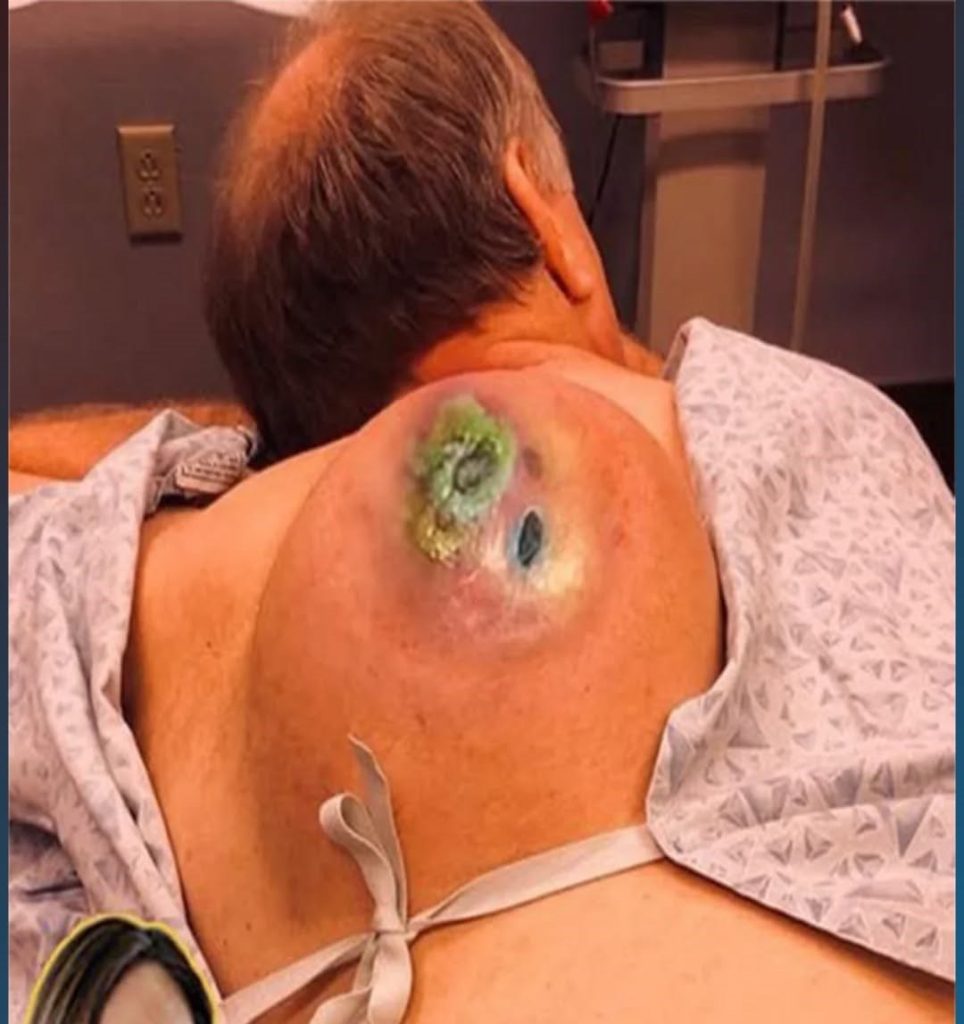
The image above shows a severe case of cutaneous myiasis, a condition in which fly larvae (maggots) infest human skin tissue. This is a serious medical condition that requires immediate professional treatment. While rare in urban healthcare settings, it can occur in tropical climates and areas with poor wound hygiene or limited medical care.
Cutaneous myiasis is not simply a skin infection — it is a parasitic infestation that can rapidly cause tissue destruction if left untreated.
What Is Cutaneous Myiasis?
Cutaneous myiasis occurs when certain species of flies lay eggs on:
- Open wounds
- Ulcers
- Surgical incisions
- Infected or necrotic tissue
- Poorly cleaned skin injuries
After the eggs hatch, the larvae burrow into the skin and begin feeding on tissue. In some cases, dozens of larvae can occupy a single wound cavity.
How Does It Develop?
Several risk factors increase the likelihood of infestation:
- Untreated wounds
- Poor personal hygiene
- Elderly or bedridden patients
- Diabetes or weakened immune system
- Exposure to flies in unsanitary environments
- Living in tropical or rural areas
Flies are strongly attracted to the odor of infected or necrotic tissue.
Signs and Symptoms
Cutaneous myiasis may present with:
- Visible movement within a wound
- Clusters of larvae inside a lesion
- Foul-smelling discharge
- Redness and swelling
- Pain or intense itching
- Tissue breakdown
- Fever in advanced infection
In severe cases, deep tissue damage can occur.
⚠️ If you notice movement or larvae in a wound, seek immediate medical care.
Potential Complications
Without prompt treatment, myiasis can lead to:
- Extensive tissue destruction
- Secondary bacterial infection
- Cellulitis
- Abscess formation
- Sepsis (life-threatening infection)
- Permanent scarring
In vulnerable patients, complications can be severe.
Medical Treatment
Cutaneous myiasis requires professional medical intervention.
Treatment typically includes:
- Careful removal of larvae under sterile conditions
- Thorough wound cleaning (irrigation and debridement)
- Antibiotic therapy if bacterial infection is present
- Pain management
- Proper wound dressing and monitoring
In some cases, medications may be used to assist in larval removal.
❌ Do NOT attempt to remove larvae at home. Improper removal can leave larvae behind and worsen infection.
Prevention
Preventive measures are critical, especially in high-risk areas:
- Keep wounds clean and properly covered
- Maintain good hygiene
- Seek early treatment for skin injuries
- Protect immobile or elderly individuals
- Use insect control measures in living areas
- Cover exposed skin in fly-prone environments
When to Seek Emergency Care
Go to a healthcare facility immediately if:
- You see larvae in a wound
- There is worsening redness or swelling
- The wound emits a strong odor
- Fever or chills develop
- Pain becomes severe
Final Thoughts
Cutaneous myiasis is a rare but serious parasitic condition that demands urgent medical care. Early recognition and prompt treatment greatly reduce complications. Proper wound hygiene and medical attention are the best defense against this condition.