A large swollen lump near the ear can be painful, frightening, and uncomfortable. The skin around the ear contains hair follicles, oil glands, and soft tissue that can become blocked or infected. When bacteria enter the skin or a clogged pore becomes inflamed, the area may swell, become red or purple, feel warm, and sometimes fill with pus.
In the reference photo, the swelling appears shiny, raised, and purple-red. This type of appearance can happen with an infected cyst, boil, abscess, or deep inflamed acne nodule. It is not possible to confirm the exact diagnosis from a photo alone, but the size, color, and tension of the swelling suggest that medical evaluation is important.
What Could Cause a Swollen Lump Near the Ear?
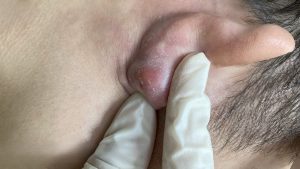
One possible cause is a skin abscess. An abscess is a pocket of pus that forms when the body fights an infection. Cleveland Clinic explains that an abscess can form almost anywhere in or on the body and fills with pus, fluid, germs, and dead tissue.
Another possible cause is a boil, also called a furuncle. A boil is usually a painful, pus-filled infection under the skin. Boils can occur on the face and around areas where hair follicles and oil glands are present. Mayo Clinic notes that carbuncles are clusters of boils that create deeper infection and may leave scars.
A third possibility is an infected sebaceous or epidermoid cyst. These cysts can stay small for a long time, but if they become infected, they may rapidly enlarge, turn red or purple, become painful, and produce pus or fluid.
Common Symptoms
A swollen infected lump near the ear may cause pain, tenderness, redness, warmth, tight shiny skin, pus, bleeding, itching, or pressure around the ear. Some people may also feel feverish or unwell if the infection spreads.
The lump may start as a small bump and slowly become larger. In some cases, it becomes soft in the center as pus collects. It may also become very painful when touched, when sleeping on that side, or when wearing headphones, earrings, or masks.
Why You Should Not Squeeze It
It is very important not to squeeze, cut, or puncture the lump at home. Squeezing can push infection deeper into the skin, increase swelling, cause bleeding, and increase the risk of scarring. Using a needle or sharp object at home can introduce more bacteria and make the infection worse.
A large abscess often needs professional treatment. Mayo Clinic states that doctors may drain a large boil or carbuncle by making an incision, and antibiotics may be prescribed for severe or recurrent infections.
When to See a Doctor
You should see a doctor soon if the lump is large, very painful, red, purple, warm, getting bigger, leaking pus, or located on the face. Cleveland Clinic advises seeing a healthcare provider if a boil is on the face, persists, or comes back.
Seek urgent medical care if there is fever, chills, spreading redness, severe pain, swelling around the ear or jaw, dizziness, weakness, or red streaks moving away from the lump. These can be warning signs that infection is spreading.
Possible Medical Treatment
Treatment depends on the cause. A doctor may examine the lump and decide whether it is a cyst, boil, abscess, acne nodule, or another skin condition. If pus is present, the doctor may perform safe drainage using sterile equipment. In some cases, a sample of pus may be tested to choose the correct antibiotic, especially if infections keep returning or do not respond to treatment.
Antibiotics may be needed if the infection is severe, spreading, recurrent, or associated with fever. For deep acne cysts or nodules, dermatologists have treatments that reduce pain and swelling; the American Academy of Dermatology notes that a painful cyst or nodule may sometimes be treated with a corticosteroid injection by a dermatologist.
Safe Care While Waiting for Medical Help
Keep the area clean and dry. Avoid squeezing or scratching it. Apply a warm, moist compress for 10 to 15 minutes several times daily using a clean cloth each time. Warm compresses may help reduce discomfort and encourage natural drainage in some boils, but they should not replace medical care if the swelling is large or worsening.
Avoid heavy creams, oils, alcohol, toothpaste, lemon juice, or harsh chemicals on the lump. Do not wear tight earrings, headphones, or anything that presses on the swollen area.
Prevention Tips
To reduce the risk of future lumps, keep the skin clean, avoid picking at bumps, clean earrings and earphones regularly, change pillowcases often, avoid sharing towels, and treat acne early. People who repeatedly get boils or abscesses should speak with a doctor because recurrent infections may need further evaluation.
Conclusion
A large swollen lump near the ear may be caused by an infected cyst, boil, abscess, or severe inflamed acne. Because the lump in the photo looks large, purple-red, and tense, it should be checked by a healthcare professional. Proper medical care can relieve pain, drain infection safely if needed, reduce scarring, and prevent the infection from spreading.
Important: This article is for education only and cannot diagnose the condition from the photo. For this type of swelling, especially near the face and ear, medical examination is strongly recommended.