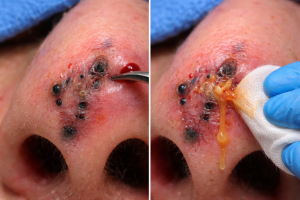
The nose is one of the most common areas for clogged pores and blackheads. In more advanced cases, blocked pores can become inflamed, infected, and painful — sometimes requiring professional medical treatment. The image above shows multiple deep blackheads (open comedones) on the tip of the nose, along with surrounding redness and signs of irritation during extraction.
Because the nose contains a dense concentration of oil glands and sensitive blood vessels, infections in this area must be handled carefully.
What Are Blackheads?
Blackheads, also known as open comedones, form when:
- Dead skin cells accumulate inside pores
- Excess oil (sebum) becomes trapped
- The pore remains open
- The trapped material oxidizes and turns dark
They commonly appear on:
- The nose
- Forehead
- Chin
- Cheeks
While small blackheads are usually harmless, deep and clustered comedones can become inflamed.
When Blackheads Become a Problem
In some cases, blackheads may:
- Grow larger over time
- Become deeply embedded
- Trigger inflammation
- Lead to secondary bacterial infection
- Cause pain or swelling
If bacteria enter the clogged pore, it may progress into:
- A pustule
- An abscess
- A localized skin infection
The redness and bleeding seen in the image suggest active inflammation during extraction.
Why the Nose Area Requires Extra Caution
The central face — especially the nose — lies within what doctors call the “danger triangle” of the face. This area has blood vessels that connect to deeper structures.
Improper squeezing or forceful extraction can:
- Spread infection
- Cause tissue damage
- Lead to scarring
- Increase swelling
Professional technique is important for safety.
Safe Treatment Options
1. Professional Extraction
Dermatologists or licensed skin professionals may:
- Cleanse and disinfect the skin
- Use sterile instruments
- Apply controlled pressure
- Minimize trauma to surrounding tissue
This reduces infection risk compared to home extraction.
2. Topical Treatments
To prevent recurrence, doctors may recommend:
- Salicylic acid
- Retinoids
- Benzoyl peroxide
- Gentle exfoliation
- Oil-control skincare
These treatments help regulate pore turnover.
3. Oral Medication (If Infection Develops)
If signs of infection appear — such as severe redness, swelling, or pus — antibiotics may be necessary.
Why You Should Avoid Aggressive Squeezing
Many people attempt to remove blackheads at home. However, forceful squeezing can:
- Push debris deeper
- Rupture blood vessels
- Cause bruising
- Trigger inflammation
- Lead to post-inflammatory hyperpigmentation
Gentle, consistent skincare is more effective long-term.
Preventing Severe Pore Blockage
To reduce the risk of deep comedones:
- Wash your face twice daily
- Avoid heavy, pore-clogging products
- Use non-comedogenic skincare
- Exfoliate gently 1–2 times weekly
- Avoid picking or squeezing
Regular maintenance prevents buildup.
When to See a Dermatologist
Seek medical advice if:
- Blackheads are painful
- Redness spreads
- Swelling increases
- Bleeding occurs
- Home care is not effective
- Recurrent infections develop
Persistent or severe cases may require medical-grade treatments.
Final Thoughts
While blackheads are common, severe clustered comedones on the nose can become inflamed and painful. Safe, professional management protects the delicate skin of the face and reduces the risk of complications.
Avoid aggressive home extraction and prioritize proper skincare to maintain healthy, clear skin.