A painful, swollen lump on the chin that becomes red, inflamed, and begins to drain pus is often a sign of a facial abscess or severely infected acne lesion. The image above shows a significantly inflamed chin lesion with visible drainage — a condition that requires proper medical evaluation to prevent complications and scarring.
Facial infections should always be taken seriously due to the sensitive anatomy and visibility of the area.
What Is a Facial Abscess?
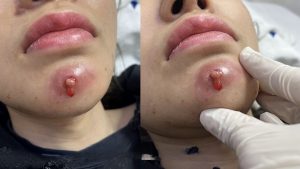
A skin abscess is a collection of pus that forms beneath the skin when bacteria invade tissue. On the chin, it often develops from:
-
Severe acne
-
Ingrown hairs
-
Blocked oil glands
-
Picking or squeezing pimples
-
Minor skin trauma
The immune system responds by sending white blood cells to fight the infection, leading to swelling, redness, and pus buildup.
Why Chin Infections Can Be Serious
The chin and surrounding facial area contain many blood vessels and nerves. Infections here can:
-
Become extremely painful
-
Spread to nearby tissue
-
Lead to noticeable scarring
-
Cause prolonged inflammation
While serious complications are uncommon, early treatment is important.
Signs and Symptoms of a Chin Abscess
Common symptoms include:
-
Rapid swelling
-
Redness and warmth
-
Throbbing pain
-
Skin tightness
-
Yellow or white pus
-
Occasional bleeding
-
Fever (in more severe cases)
The skin may appear shiny due to pressure from pus accumulation.
Why You Should Not Squeeze It
Attempting to pop or squeeze an abscess at home can:
-
Push infection deeper
-
Spread bacteria
-
Increase swelling
-
Cause permanent scarring
-
Prolong healing
Facial skin is delicate and highly prone to visible marks after trauma.
Professional Treatment Options
1. Incision and Drainage (I&D)
For larger abscesses, a healthcare provider may:
-
Apply local anesthesia
-
Make a small sterile incision
-
Drain accumulated pus
-
Clean the cavity
-
Apply a sterile dressing
This often provides immediate relief.
2. Antibiotic Therapy
Antibiotics may be prescribed if:
-
The abscess is large
-
Infection is spreading
-
Fever is present
-
The patient has underlying medical conditions
Completing the full course is essential.
3. Acne Management Plan
If the abscess developed from severe acne, long-term management may include:
-
Prescription retinoids
-
Oral medications
-
Hormonal therapy (if appropriate)
-
Skincare adjustments
Preventing Future Chin Abscesses
To reduce risk:
-
Avoid picking or squeezing acne
-
Use gentle cleansers
-
Keep shaving tools clean
-
Remove makeup thoroughly
-
Use non-comedogenic products
-
Seek treatment for persistent acne
Early acne control prevents severe infections.
When to See a Doctor
Seek medical attention if:
-
Swelling increases rapidly
-
Pain becomes severe
-
Fever develops
-
Redness spreads
-
The lesion does not improve
Prompt treatment minimizes scarring and complications.
Possible Complications
If untreated, a facial abscess may lead to:
-
Scarring
-
Skin discoloration
-
Recurring infection
-
Spread to surrounding tissue
Early medical care dramatically improves outcomes.
Final Thoughts
A painful, pus-filled lesion on the chin is not just a simple pimple. Facial abscesses require careful evaluation and treatment to prevent scarring and complications.
If you notice increasing redness, swelling, or drainage, consult a healthcare provider promptly rather than attempting self-treatment.