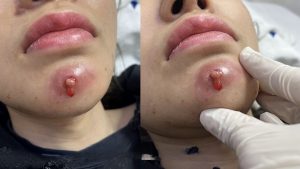
Facial skin infections can be both painful and distressing, especially when they appear in highly visible areas like the chin. The image above shows a severely inflamed lesion on the lower face with swelling, redness, and visible drainage — signs of a likely facial abscess or infected cyst.
Because the face contains delicate tissues and important blood vessels, infections in this area require careful medical attention.
What Is a Chin Abscess?+
A skin abscess is a pocket of pus that forms beneath the skin due to bacterial infection. On the chin, it may develop from:
-
Severe acne
-
Ingrown hairs
-
Blocked oil glands
-
Minor cuts or shaving irritation
-
Picking or squeezing pimples
When bacteria enter the skin, the immune system responds by sending white blood cells to fight the infection. This leads to inflammation and pus accumulation.
Symptoms of a Facial Abscess
A developing abscess may start as a small red bump, but it can quickly worsen. Common symptoms include:
-
Significant swelling
-
Redness and warmth
-
Pain or tenderness
-
Skin tightness
-
Yellow or white pus formation
-
Possible bleeding
-
Fever in severe cases
In facial infections, swelling may feel more intense due to sensitive nerve endings.
Why Facial Infections Require Extra Caution
The area around the nose and mouth is sometimes referred to as the “danger triangle” of the face because infections here can, in rare cases, spread deeper into facial veins.
Although complications are uncommon, untreated infections can lead to:
-
Spread of infection to surrounding tissue
-
Cellulitis
-
Scarring
-
Rare systemic infection
Prompt medical evaluation reduces risks significantly.
Why You Should Not Pop It at Home
Many people try to squeeze facial abscesses. This can:
-
Push bacteria deeper
-
Worsen inflammation
-
Increase scarring risk
-
Spread infection
-
Cause prolonged healing
Facial skin is delicate and prone to permanent marks if treated improperly.
Medical Treatment Options
1. Professional Incision and Drainage
For larger abscesses, a healthcare provider may:
-
Apply local anesthesia
-
Make a small sterile incision
-
Drain the pus
-
Clean the cavity
-
Apply a dressing
Relief often occurs immediately after drainage.
2. Antibiotic Treatment
Antibiotics may be prescribed if:
-
Swelling is extensive
-
Infection is spreading
-
The patient has fever
-
The abscess is large
-
The patient has underlying medical conditions
Completing the full antibiotic course is essential.
3. Post-Treatment Care
Proper aftercare includes:
-
Keeping the area clean
-
Avoiding makeup during healing
-
Not touching the wound
-
Following all medical instructions
-
Monitoring for increased redness or swelling
Healing time may range from several days to a few weeks depending on severity.
Preventing Chin Abscesses
To reduce risk:
-
Avoid picking at acne
-
Use gentle facial cleansers
-
Shave carefully using clean tools
-
Remove makeup thoroughly
-
Treat severe acne early
-
Maintain proper skincare routine
Consistency is key for prevention.
When to See a Doctor
Seek medical attention if:
-
Swelling increases rapidly
-
Pain becomes severe
-
Fever develops
-
Redness spreads
-
Drainage continues
-
The lesion does not improve
Early intervention leads to faster healing and minimal scarring.
Final Thoughts
A painful, swollen lump on the chin should never be ignored. What may begin as a small pimple can develop into a serious abscess if left untreated. Professional care ensures safe drainage, reduces scarring, and prevents complications.
If you notice signs of infection on your face, consult a healthcare provider promptly rather than attempting self-treatment.