A large, swollen lump on the shoulder that becomes red, painful, and filled with fluid is often a sign of a serious skin infection known as an abscess. The image above shows a significantly inflamed lesion on the upper back/shoulder area, with visible swelling and pus accumulation — a condition that requires prompt medical evaluation.
Understanding how abscesses form and how they are treated can help prevent complications and speed recovery.
What Is a Skin Abscess?
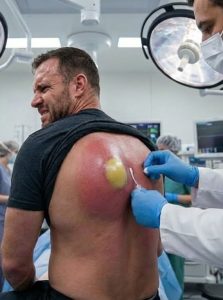
A skin abscess is a pocket of pus that develops beneath the skin due to bacterial infection. It typically occurs when bacteria enter the body through:
-
Small cuts or breaks in the skin
-
Blocked hair follicles
-
Ingrown hairs
-
Acne lesions
-
Friction from clothing or straps
The immune system sends white blood cells to fight the infection, resulting in inflammation and pus formation.
Signs and Symptoms of a Shoulder Abscess
A developing abscess may start as a small tender bump, but as infection progresses, symptoms can include:
-
Severe redness
-
Swelling that increases rapidly
-
Skin that feels warm or tight
-
Pain or throbbing sensation
-
Yellow or white fluid under the skin
-
Fever in more severe cases
In advanced cases, the skin may appear stretched and shiny due to pressure buildup.
Why the Shoulder Area Is Vulnerable
The shoulder and upper back are common areas for abscess formation because:
-
They contain many oil glands
-
Sweat accumulates easily
-
Tight clothing or straps create friction
-
The area is difficult to see and monitor
Friction and moisture create an ideal environment for bacterial growth.
Why You Should Not Attempt Home Drainage
Although it may be tempting to squeeze or puncture a large abscess at home, doing so can:
-
Push infection deeper into tissues
-
Spread bacteria to nearby areas
-
Cause scarring
-
Increase risk of systemic infection
Proper sterile technique and professional care are essential.
Medical Treatment Options
1. Incision and Drainage (I&D)
This is the most common treatment. A healthcare provider will:
-
Clean and sterilize the area
-
Apply local anesthesia
-
Make a small incision
-
Drain the pus
-
Irrigate the cavity
-
Apply sterile dressing
Relief is often immediate once pressure is released.
2. Antibiotic Therapy
Antibiotics may be prescribed if:
-
The abscess is large
-
Infection is spreading
-
Fever is present
-
The patient has diabetes or weakened immunity
Completing the full course of antibiotics is important.
3. Follow-Up and Wound Care
After treatment, proper care includes:
-
Keeping the wound clean
-
Changing dressings regularly
-
Monitoring for increased redness
-
Avoiding pressure on the area
Healing typically takes 1–3 weeks depending on severity.
Possible Complications
If untreated, a shoulder abscess can lead to:
-
Cellulitis (spread of skin infection)
-
Recurrent abscess formation
-
Scarring
-
Rare bloodstream infection
Early intervention greatly reduces these risks.
Prevention Tips
To reduce the risk of abscess formation:
-
Maintain good hygiene
-
Shower after sweating
-
Avoid tight or irritating clothing
-
Treat acne early
-
Avoid picking at skin lesions
-
Keep small wounds clean and covered
When to Seek Immediate Medical Attention
Consult a healthcare provider if you experience:
-
Rapid growth of swelling
-
Severe pain
-
Fever or chills
-
Spreading redness
-
Persistent drainage
Prompt treatment ensures faster recovery and fewer complications.
Final Thoughts
A large, inflamed lump on the shoulder should never be ignored. While some skin conditions resolve on their own, abscesses often require professional treatment. Early care prevents serious complications and helps restore skin health quickly.
If you notice signs of infection, seek medical evaluation rather than attempting self-treatment.