Skin lumps on the back are common, but when they become swollen, painful, and start draining unusual material, they may indicate a serious infection. The image above shows a large, inflamed lesion on the upper back with visible swelling and drainage — a presentation often associated with an infected cyst or abscess.
Understanding how these conditions develop and when to seek medical care is critical for preventing complications.
What Is a Skin Cyst?
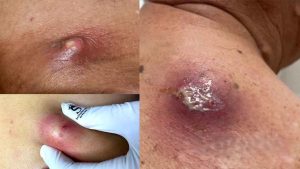
A skin cyst is a closed sac beneath the skin that may contain:
-
Keratin
-
Fluid
-
Pus
-
Dead skin cells
The most common type is an epidermoid cyst, which forms when skin cells grow inward instead of shedding normally.
Cysts typically:
-
Grow slowly
-
Feel round and firm
-
Are usually painless at first
-
May have a small central opening
However, when infected, they can change dramatically.
When a Cyst Becomes Infected
Infection can occur when bacteria enter the cyst through:
-
Friction from clothing
-
Repeated irritation
-
Attempted squeezing
-
Skin trauma
Once infected, the cyst may:
-
Swell rapidly
-
Become red and warm
-
Feel painful or tender
-
Produce thick discharge
-
Develop a foul odor
The surrounding skin often appears tight and shiny due to pressure buildup beneath the surface.
What Is an Abscess?
An infected cyst can develop into an abscess, which is a collection of pus trapped under the skin. The body sends immune cells to fight the infection, resulting in:
-
Increased inflammation
-
Accumulation of pus
-
Severe discomfort
Abscesses require medical evaluation, especially when they become large or begin draining spontaneously.
Why You Should Avoid Home Drainage
Attempting to squeeze or puncture a large cyst at home can:
-
Push bacteria deeper into tissue
-
Cause worsening infection
-
Lead to scarring
-
Increase risk of spreading infection
Proper sterile technique is essential to safely treat these lesions.
Medical Treatment Options
1. Incision and Drainage (I&D)
This is the most common treatment for an infected cyst or abscess. A healthcare professional will:
-
Clean and sterilize the area
-
Apply local anesthesia
-
Make a small incision
-
Drain accumulated pus
-
Irrigate the cavity
-
Apply sterile dressing
Patients often feel immediate relief once pressure is released.
2. Antibiotic Therapy
Antibiotics may be prescribed if:
-
Infection is spreading
-
Fever is present
-
The patient has underlying health conditions
-
The abscess is large or deep
Completing the full course of medication is essential.
3. Complete Cyst Removal
After the infection resolves, surgical removal of the cyst wall may be recommended to prevent recurrence.
Risk Factors
Certain factors increase the likelihood of cyst formation and infection:
-
Oily skin
-
Excessive sweating
-
Poor hygiene
-
Diabetes
-
Weakened immune system
-
Repeated friction on the back
The upper back is particularly vulnerable due to high oil gland density.
When to Seek Immediate Medical Care
Consult a healthcare provider if you experience:
-
Rapid swelling
-
Increasing redness
-
Severe pain
-
Persistent drainage
-
Fever or chills
-
Red streaks spreading outward
Delaying treatment may allow infection to spread.
Prevention Tips
To reduce the risk of infected cysts:
-
Maintain proper hygiene
-
Avoid picking or squeezing lumps
-
Wear breathable clothing
-
Shower after sweating
-
Treat small skin injuries promptly
-
Monitor any new skin growths
Early attention prevents complications.
Possible Complications
If untreated, an infected cyst may lead to:
-
Cellulitis (skin infection spread)
-
Recurring abscess formation
-
Scarring
-
Rare systemic infection
Prompt care significantly improves outcomes.
Final Thoughts
A large, inflamed lump on the back is not something to ignore. While many cysts begin as harmless growths, infection can quickly transform them into painful abscesses requiring medical treatment.
If you notice unusual swelling, redness, or drainage, seek professional evaluation rather than attempting self-treatment.
Your skin health matters — early intervention leads to faster healing and better long-term results.