The image above shows a severe and highly unusual skin presentation involving a clustered lesion embedded within the skin of the upper back. While such cases are rare, they highlight the importance of early medical attention for abnormal skin growths, infestations, or untreated wounds.
Conditions that involve deep skin damage or infestation can become serious if not addressed promptly by medical professionals.
What Are Severe Skin Lesions?
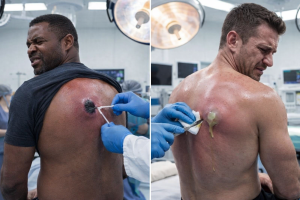
Severe skin lesions can appear as:
-
Large ulcerated areas
-
Clusters of abnormal growths
-
Embedded foreign organisms
-
Necrotic or damaged tissue
-
Deep infections
These lesions may develop due to untreated wounds, compromised immune systems, chronic illness, or rare parasitic infestations.
Possible Causes
While only a medical professional can provide a proper diagnosis, severe clustered skin lesions may be associated with:
1. Parasitic Infestation (Myiasis)
Myiasis occurs when fly larvae infest living tissue, usually in open wounds or neglected skin infections.
2. Chronic Untreated Infection
Long-standing abscesses or ulcers can worsen and attract environmental contamination.
3. Compromised Immune System
Individuals with weakened immunity are more susceptible to severe skin complications.
4. Poor Wound Care
Neglected cuts, surgical wounds, or chronic ulcers may become infected or contaminated.
Signs of Serious Skin Infection or Infestation
Seek immediate medical care if you notice:
-
Rapidly enlarging skin lesion
-
Persistent discharge or foul odor
-
Visible foreign bodies or movement in tissue
-
Severe redness and swelling
-
Fever or fatigue
-
Increasing pain
Early intervention prevents deeper tissue damage.
Why Immediate Medical Treatment Is Critical
Severe skin infestations or infections require:
-
Professional wound cleaning
-
Removal of foreign organisms
-
Sterile surgical care
-
Antibiotic or antiparasitic medication
-
Ongoing wound monitoring
Attempting home treatment can worsen the condition and increase the risk of complications.
Treatment Options
Depending on diagnosis, treatment may include:
-
Surgical debridement
-
Removal of larvae or infected tissue
-
Broad-spectrum antibiotics
-
Antiparasitic medications
-
Wound dressing and follow-up care
In advanced cases, hospitalization may be required.
Prevention Strategies
To reduce the risk of severe skin complications:
-
Clean and cover all wounds promptly
-
Maintain proper hygiene
-
Avoid exposure of open wounds to insects
-
Seek medical care for non-healing sores
-
Manage chronic conditions such as diabetes
-
Monitor skin regularly for unusual changes
Proper wound care is essential, especially in elderly individuals or those with limited mobility.
When to Seek Emergency Care
Immediate medical attention is necessary if:
-
There are visible organisms in the wound
-
Infection spreads rapidly
-
The patient develops fever or chills
-
Pain becomes severe
-
The wound produces foul-smelling discharge
Delaying care can lead to systemic infection.
Final Thoughts
Severe skin lesions and infestations are rare but serious medical conditions. They underscore the importance of hygiene, early treatment, and regular medical monitoring — especially for individuals at higher risk.
If you or someone you care for notices an unusual skin lesion, seek professional medical evaluation promptly. Early treatment dramatically improves outcomes and prevents complications.