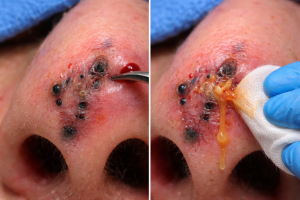
The nose is one of the most common areas for clogged pores and blackheads due to its high concentration of oil glands. In the image above, multiple dark comedones (blackheads) appear inflamed, with signs of infection and active drainage. This type of condition goes beyond typical cosmetic blackheads and may require professional care.
Understanding how blackheads become infected and how to treat them safely is essential for maintaining healthy skin.
What Are Blackheads?
Blackheads, also known as open comedones, form when:
-
Pores become clogged with oil (sebum)
-
Dead skin cells accumulate
-
The clogged pore remains open
-
Oxidation causes the surface to darken
They commonly appear on the nose, chin, and forehead.
When Blackheads Become Infected
Normally, blackheads are not painful. However, they can become inflamed or infected if:
-
They are squeezed aggressively
-
Bacteria enter the pore
-
The surrounding skin is irritated
-
Excess oil production continues
Signs of infection include:
-
Redness and swelling
-
Pain or tenderness
-
Pus formation
-
Bleeding during extraction
-
Skin warmth
Infected blackheads may develop into small abscesses or inflamed nodules.
Why the Nose Is High Risk
The nose is particularly prone to blackheads because:
-
It has large pores
-
Sebaceous glands are highly active
-
Oil production is naturally higher
-
The area is frequently touched
Improper removal methods can easily damage delicate nasal skin.
Dangers of At-Home Extraction
Attempting to remove blackheads using sharp tools or fingernails can:
-
Introduce bacteria
-
Cause scarring
-
Lead to deeper infection
-
Create broken capillaries
-
Trigger prolonged redness
Using non-sterile instruments increases infection risk.
Professional Treatment Options
For infected or stubborn blackheads, dermatology professionals may use:
1. Sterile Comedone Extraction
Performed with medical-grade tools in a controlled environment.
2. Topical Retinoids
Help prevent clogged pores and regulate skin cell turnover.
3. Chemical Peels
Exfoliate the skin and reduce pore congestion.
4. Antibiotic Treatment
If infection is present, topical or oral antibiotics may be prescribed.
Skincare Tips to Prevent Blackheads
To reduce recurrence:
-
Cleanse twice daily with a gentle cleanser
-
Use salicylic acid products
-
Apply oil-free moisturizers
-
Avoid heavy cosmetics
-
Exfoliate 1–2 times per week
-
Avoid excessive touching of the nose
Consistency is key to prevention.
When to See a Doctor
Consult a healthcare provider if:
-
Blackheads become painful
-
Swelling spreads
-
Pus continues to drain
-
Bleeding does not stop
-
The area becomes increasingly red
Prompt care prevents complications and long-term scarring.
Potential Complications
If left untreated, infected pores may lead to:
-
Localized abscess
-
Skin discoloration
-
Permanent scarring
-
Recurring infections
Early treatment ensures faster healing and healthier skin.
Final Thoughts
While blackheads are common and often harmless, they can become infected if handled improperly. Professional evaluation and safe extraction techniques reduce risks and protect the delicate skin of the nose.
Healthy skincare habits and timely medical care make all the difference in preventing complications.