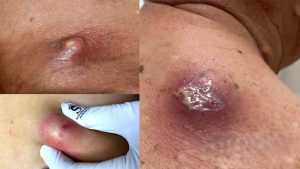
A painful, swollen lump on the shoulder can be alarming — especially when it becomes red, inflamed, and begins to drain pus. The image above shows a large, infected skin abscess with significant swelling and visible discharge, indicating a deep bacterial infection that requires medical attention.
Understanding what causes shoulder abscesses and how they are treated can help prevent serious complications and long-term skin damage.
What Is a Skin Abscess?
A skin abscess is a collection of pus that forms beneath the skin due to bacterial infection. It occurs when bacteria enter through:
-
Small cuts or skin cracks
-
Blocked oil glands
-
Hair follicles
-
Acne lesions
-
Friction or pressure
The immune system responds by sending white blood cells to fight the infection. As a result, pus accumulates, causing swelling and pain.
Why the Shoulder Is a Common Area
The shoulder area is prone to abscess formation because:
-
It experiences frequent friction from clothing or straps
-
Sweat accumulates easily
-
It contains many oil glands
-
It may be difficult to monitor visually
Repeated irritation can increase the risk of infection.
Signs and Symptoms of an Abscess
An abscess typically progresses through stages. Symptoms include:
-
Redness and warmth
-
Swelling and skin tightness
-
Increasing pain or throbbing sensation
-
A raised lump that feels firm or soft
-
Yellow or white pus drainage
-
Fever in severe cases
In the image, the pronounced redness and central discharge indicate a mature abscess under pressure.
Why You Should Not Drain It at Home
Many people attempt to squeeze or puncture abscesses themselves. This can:
-
Push infection deeper into tissues
-
Spread bacteria to nearby areas
-
Cause scarring
-
Lead to more severe infection
Professional treatment ensures sterile technique and complete drainage.
Medical Treatment Options
1. Incision and Drainage (I&D)
This is the most common and effective treatment. A healthcare provider will:
-
Clean the area
-
Apply local anesthesia
-
Make a small incision
-
Drain the pus completely
-
Flush the cavity
-
Place sterile dressing
Patients often feel immediate relief once pressure is released.
2. Antibiotic Therapy
Antibiotics may be prescribed if:
-
The infection is spreading
-
There are multiple abscesses
-
The patient has diabetes or weakened immunity
-
Fever is present
Completing the full course is essential.
3. Follow-Up Care
Proper aftercare includes:
-
Keeping the wound clean and dry
-
Changing dressings as instructed
-
Monitoring for increasing redness
-
Avoiding pressure on the area
Healing typically takes 1–3 weeks depending on severity.
Risk Factors
Some individuals are more prone to abscess formation:
-
People with diabetes
-
Weakened immune system
-
Excessive sweating
-
Poor hygiene
-
Chronic skin conditions
-
Obesity
Identifying underlying causes can prevent recurrence.
Potential Complications
If untreated, an abscess may lead to:
-
Spread of infection (cellulitis)
-
Recurrent abscess formation
-
Scarring
-
Rare bloodstream infection
Early medical care significantly reduces these risks.
Prevention Tips
To reduce the likelihood of shoulder abscesses:
-
Maintain good hygiene
-
Shower after sweating
-
Avoid tight or rough clothing
-
Treat acne promptly
-
Avoid picking or squeezing skin lesions
-
Keep cuts clean and covered
When to Seek Immediate Medical Attention
Consult a healthcare professional if:
-
The lump grows rapidly
-
Pain worsens
-
Redness spreads outward
-
Fever develops
-
Drainage persists
Prompt treatment prevents complications and speeds recovery.
Final Thoughts
A painful, swollen lump on the shoulder is not something to ignore. What may start as a small irritation can quickly develop into a serious infection. Professional evaluation and proper treatment ensure safe healing and reduce the risk of recurrence.
If you notice signs of infection, seek medical care rather than attempting home remedies.