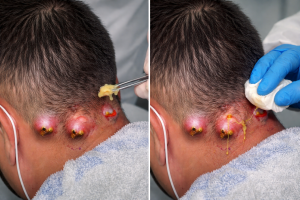
Skin infections can become extremely painful, especially when they develop in sensitive areas such as the back of the neck. The image above shows multiple inflamed boils with visible pus accumulation, a condition that requires prompt medical attention to prevent worsening infection or complications.
Understanding what causes these painful lumps and how they are treated can help individuals recognize warning signs early and seek appropriate care.
What Are Boils?
A boil (furuncle) is a deep skin infection that begins in a hair follicle or oil gland. It develops when bacteria — most commonly Staphylococcus aureus — enter the skin through small cuts, friction, or blocked follicles.
Boils typically:
-
Start as small, red, tender bumps
-
Gradually enlarge and fill with pus
-
Become increasingly painful
-
Develop a yellow or white center
-
May rupture and drain
When several boils form close together, the condition is called a carbuncle, which is more severe and often requires medical treatment.
Why Do Boils Form on the Neck?
The back of the neck is a common location for boils because:
-
It contains many hair follicles
-
Sweat and oil accumulate easily
-
Friction from collars or clothing irritates the skin
-
Poor ventilation traps moisture
-
Shaving or trimming hair can cause micro-injuries
In the image, multiple large, swollen lesions indicate a deeper infection affecting several follicles simultaneously.
Signs of a Serious Infection
You should seek medical attention if you notice:
-
Increasing redness and swelling
-
Severe pain
-
Thick yellow or green drainage
-
Skin that feels warm to the touch
-
Multiple boils forming at once
-
Fever or fatigue
-
Swollen lymph nodes
When several boils cluster together, the infection may extend deeper into surrounding tissue.
Why You Should Not Squeeze Boils at Home
Many people attempt to squeeze or puncture boils themselves. This can:
-
Push infection deeper into tissue
-
Spread bacteria to nearby areas
-
Cause scarring
-
Lead to bloodstream infection (rare but dangerous)
Medical professionals use sterile techniques to safely drain infected areas and reduce complications.
Medical Treatment Options
1. Incision and Drainage (I&D)
For large or multiple boils, a healthcare provider may:
-
Clean the area thoroughly
-
Apply local anesthesia
-
Make a small incision
-
Drain accumulated pus
-
Clean and dress the wound
This procedure often provides immediate pain relief by reducing pressure.
2. Antibiotic Therapy
Oral antibiotics may be prescribed when:
-
Multiple lesions are present
-
Infection spreads
-
The patient has diabetes or weakened immunity
-
Fever is present
Completing the full antibiotic course is essential.
3. Follow-Up Care
Proper aftercare includes:
-
Keeping the area clean and dry
-
Changing dressings regularly
-
Avoiding pressure or friction
-
Monitoring for new lesions
Healing may take 1–3 weeks depending on severity.
Risk Factors
Certain individuals are more prone to recurrent boils:
-
People with diabetes
-
Individuals with weakened immune systems
-
Those with poor hygiene
-
Excessive sweating
-
Close contact with infected individuals
-
Shaving irritation
Recurrent boils may require medical evaluation for underlying conditions.
Preventing Neck Boils
To reduce the risk:
-
Shower after heavy sweating
-
Avoid tight collars
-
Use clean shaving tools
-
Wash bedding and towels regularly
-
Avoid sharing personal items
-
Treat small cuts promptly
Maintaining proper skin hygiene plays a major role in prevention.
When to Seek Immediate Care
Seek urgent medical attention if:
-
The infection spreads rapidly
-
Red streaks appear near the area
-
Fever develops
-
Pain becomes severe
-
Boils recur frequently
Early intervention prevents complications and speeds recovery.
Final Thoughts
Multiple infected boils on the neck are more than just a cosmetic concern — they can be extremely painful and potentially dangerous if left untreated. Professional medical care ensures safe drainage, proper healing, and reduced risk of recurrence.
If you notice rapidly growing, painful skin lumps, consult a healthcare provider rather than attempting home treatment.
Your skin is your first line of defense — protect it with proper care and timely treatment.