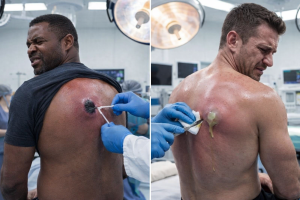
Skin infections can escalate quickly when left untreated. The image above shows a man receiving medical treatment for a large, inflamed abscess on his upper back. The redness, swelling, and visible drainage are signs of a serious infection that requires professional care.
Understanding what an abscess is, why it forms, and how it is treated can help you recognize symptoms early and avoid complications.
👉What Is a Skin Abscess?
A skin abscess is a painful, swollen pocket of pus caused by a bacterial infection. It develops when bacteria enter the skin through:
-
Small cuts or scratches
-
Blocked hair follicles
-
Acne lesions
-
Infected cysts
-
Excessive sweating or friction
The immune system responds by sending white blood cells to fight the infection, which leads to the accumulation of pus.
🌞Signs and Symptoms of an Infected Abscess
An abscess is more than just a simple pimple. Common symptoms include:
-
Intense redness and swelling
-
Severe tenderness or throbbing pain
-
Warm skin around the area
-
Thick yellow or green drainage
-
Skin tightness or stretching
-
Fever in more severe cases
In the image, the surrounding skin is inflamed and shiny — typical signs of pressure buildup beneath the skin due to infection.
💫Why Professional Treatment Is Important
Attempting to squeeze or drain an abscess at home can:
-
Spread bacteria deeper into the skin
-
Worsen inflammation
-
Cause permanent scarring
-
Lead to bloodstream infection (rare but serious)
Medical professionals use sterile tools and proper techniques to ensure safe drainage and reduce risk.
🔑Common Treatment Methods
1. Incision and Drainage (I&D)
This is the most common and effective treatment. The procedure involves:
-
Cleaning and numbing the area
-
Making a small surgical opening
-
Draining the pus completely
-
Flushing the cavity
-
Sometimes placing sterile packing to promote healing
Relief is often immediate once pressure is released.
2. Antibiotic Therapy
Doctors may prescribe antibiotics if:
-
The infection is spreading
-
The abscess is large
-
The patient has a weakened immune system
-
There are signs of fever or systemic infection
Antibiotics help eliminate remaining bacteria after drainage.
3. Follow-Up Care
After treatment, patients should:
-
Keep the area clean and dry
-
Change dressings regularly
-
Complete prescribed medications
-
Monitor for recurring redness or swelling
Healing may take 1–3 weeks depending on severity.
🔆What Causes Back Abscesses?
The back is a common location for abscesses because:
-
It has many oil glands
-
Sweat accumulates easily
-
Friction from clothing can irritate skin
-
It is difficult to monitor and clean thoroughly
People with acne-prone or oily skin are at higher risk.
✍When to Seek Medical Attention
You should see a healthcare provider if:
-
The lump grows rapidly
-
Pain becomes severe
-
Redness spreads outward
-
You develop fever or chills
-
Drainage continues for several days
Delaying treatment can allow infection to worsen.
🔔Prevention Tips
While not all abscesses can be prevented, you can reduce risk by:
-
Practicing good hygiene
-
Showering after heavy sweating
-
Avoiding picking or squeezing pimples
-
Wearing breathable clothing
-
Treating acne properly
-
Keeping cuts clean and covered
Early intervention is key to preventing complications.
🌙Possible Complications if Left Untreated
Ignoring an abscess can lead to:
-
Deeper tissue infection (cellulitis)
-
Recurring abscess formation
-
Scarring
-
Rare bloodstream infection
Prompt medical care significantly reduces these risks.
💨Final Thoughts
A painful, swollen lump on the back should never be ignored. What may start as a small skin irritation can quickly turn into a serious abscess requiring surgical drainage.
If you notice redness, swelling, or pus formation, consult a medical professional promptly. Early treatment leads to faster healing, less pain, and better long-term skin health.