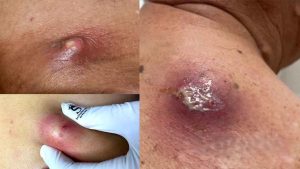
The image above shows a large, swollen, inflamed lesion on the upper shoulder. The area appears red, raised, and filled with thick discharge—signs that are commonly associated with a skin abscess.
A skin abscess is a localized collection of pus caused by bacterial infection. These infections can develop quickly and may become painful if not treated properly.
✍What Is a Skin Abscess?
A skin abscess forms when bacteria enter the skin through:
-
A small cut
-
A blocked hair follicle
-
Acne
-
Friction or irritation
-
An ingrown hair
The body responds by sending white blood cells to fight the infection. This leads to the formation of pus, which contains bacteria, dead cells, and inflammatory fluid.
🔆Signs and Symptoms
Common signs of a skin abscess include:
-
Redness around the area
-
Swelling
-
Warmth to the touch
-
Pain or tenderness
-
Thick white or yellow discharge
-
Skin that feels tight or stretched
In more severe cases, fever or spreading redness may occur.
👉Why the Shoulder Area Is Common
The upper back and shoulder are prone to abscess formation because:
-
They contain many oil glands
-
Friction from clothing can irritate the skin
-
Sweat and bacteria accumulate easily
-
Acne can develop in this region
If a blocked pore becomes infected, it can turn into a painful abscess.
🎺Risks of Ignoring an Abscess
If left untreated, an abscess may:
-
Grow larger
-
Spread infection to surrounding tissue
-
Lead to cellulitis (skin infection)
-
Cause permanent scarring
-
Result in systemic infection in severe cases
Early treatment prevents complications.
🔥Why You Should Not Squeeze It at Home
Attempting to squeeze or puncture an abscess yourself can:
-
Push bacteria deeper
-
Worsen inflammation
-
Cause severe pain
-
Lead to scarring
-
Spread infection
Proper medical drainage must be done under sterile conditions.
🔑Medical Treatment Options
Treatment typically includes:
✔ Incision and Drainage
A healthcare professional safely opens the abscess to remove pus.
✔ Antibiotics
Prescribed if infection is severe or spreading.
✔ Proper Wound Care
Cleaning, dressing changes, and monitoring healing.
Most abscesses improve quickly after professional treatment.
⭐Prevention Tips
To reduce the risk of future abscesses:
-
Keep skin clean and dry
-
Shower after sweating
-
Avoid tight clothing
-
Do not pick at acne
-
Treat early signs of infection promptly
🌙When to See a Doctor
Seek medical attention if:
-
The abscess is very painful
-
It continues growing
-
Redness spreads
-
Fever develops
-
The lesion does not improve
Prompt care ensures safe healing and reduces scarring.
💨Conclusion
The image demonstrates a typical example of a severe skin abscess. While these infections can look alarming, they are treatable with proper medical care. Avoid home remedies that involve squeezing or puncturing the lesion, and consult a healthcare professional for safe and effective treatment.