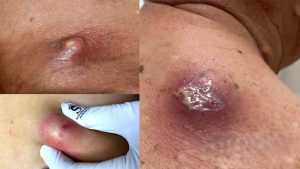
The image collage above shows different stages of a skin abscess, progressing from a small inflamed bump to a larger, painful lesion with visible pus drainage. These images demonstrate how a minor skin problem can rapidly develop into a serious infection if not treated properly.
Understanding the signs, causes, and treatment options for abscesses is essential for preventing complications.
What Is a Skin Abscess?
A skin abscess is a localized collection of pus beneath the skin, usually caused by bacterial infection. It forms when:
-
A hair follicle becomes blocked
-
A small skin injury allows bacteria to enter
-
A cyst becomes infected
-
Acne progresses to a deeper infection
The body sends white blood cells to fight the infection, leading to swelling, redness, warmth, and pus formation.
Stages of Abscess Development Shown in the Images
1️⃣ Early Inflamed Lesion
The small raised bump with redness and a visible yellow center represents the early stage. At this point:
-
The area is painful and tender
-
Swelling is localized
-
Pus begins forming beneath the surface
Early treatment can sometimes prevent progression.
2️⃣ Growing Abscess
The larger, red, swollen bump shows increasing pressure beneath the skin. Signs include:
-
Tense, shiny skin
-
Expanding redness
-
Significant tenderness
-
Central softening
This stage often requires medical evaluation.
3️⃣ Advanced Abscess With Drainage
The image showing thick pus discharge represents a mature abscess. At this stage:
-
Pressure inside the lesion is high
-
Pus may drain spontaneously
-
Surrounding skin may turn darker red or purple
-
Risk of spreading infection increases
Professional drainage is typically required.
Why Abscesses Become Severe
Abscesses may worsen due to:
-
Delayed treatment
-
Attempting to squeeze or pop at home
-
Poor hygiene
-
Weakened immune system
-
Chronic medical conditions
When bacteria multiply unchecked, tissue damage increases.
Why Home Treatment Is Risky
Attempting to drain an abscess yourself can:
-
Push bacteria deeper
-
Cause scarring
-
Spread infection
-
Lead to cellulitis
-
Increase risk of bloodstream infection
Medical professionals use sterile techniques to safely manage abscesses.
Medical Treatment Options
Treatment depends on severity and may include:
✔ Incision and Drainage
A controlled medical procedure to remove pus safely.
✔ Antibiotic Therapy
Used when infection spreads or multiple lesions are present.
✔ Wound Care
Regular cleaning and dressing changes.
✔ Monitoring
Follow-up visits to ensure complete healing.
Healing and Recovery
With proper treatment:
-
Swelling gradually reduces
-
Pain improves
-
Pus clears
-
Healthy tissue regenerates
Delayed care increases the risk of scarring and complications.
When to Seek Immediate Medical Care
Seek urgent medical attention if:
-
The abscess grows rapidly
-
Fever develops
-
Red streaks appear on the skin
-
Severe pain occurs
-
Drainage has a foul odor
Early treatment prevents serious outcomes.
Conclusion
The images clearly demonstrate the progression of a skin abscess from mild inflammation to advanced infection. While abscesses often begin as small bumps, they can quickly become serious without professional care.
Prompt medical evaluation ensures safe treatment, faster recovery, and reduced risk of complications.