An infected skin abscess is a serious condition that occurs when bacteria enter the skin and cause a localized collection of pus. The image above shows a large, inflamed abscess on the upper back, characterized by redness, swelling, and a yellow pus-filled center. This type of infection often requires professional medical treatment and should not be ignored.
👉 What Is a Skin Abscess?
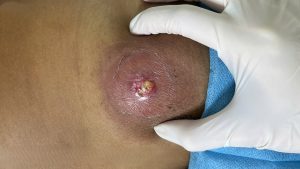
A skin abscess is a painful lump under the skin filled with pus. It usually develops when bacteria—most commonly Staphylococcus aureus—enter the body through a small cut, hair follicle, or blocked sweat gland. The immune system responds by sending white blood cells to fight the infection, leading to pus formation.
Abscesses can appear anywhere on the body but are common on the back, neck, armpits, buttocks, and thighs.
⚡ Causes of Infected Abscesses
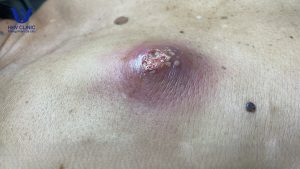
Several factors can increase the risk of developing a skin abscess, including:
-
Poor hygiene or excessive sweating
-
Ingrown hairs or shaving injuries
-
Minor cuts, wounds, or insect bites
-
Weakened immune system (diabetes, HIV, cancer treatment)
-
Skin conditions such as acne or eczema
-
Close contact with someone who has a bacterial skin infection
In some cases, bacteria resistant to common antibiotics (such as MRSA) may be involved, making treatment more complex.
🥐 Symptoms and Warning Signs
An infected abscess often starts as a small, tender lump and gradually worsens. Common symptoms include:
-
Red, swollen, and warm skin around the area
-
Severe pain or pressure
-
Yellow or white pus visible under the skin
-
Fever or chills in more serious cases
-
Fatigue or general feeling of illness
In the image, the abscess is clearly advanced, with intense redness and visible pus, indicating a severe infection that requires immediate medical attention.
✨ Why Medical Treatment Is Necessary
Large or deep abscesses should never be squeezed or drained at home. Doing so can spread the infection deeper into the tissue or bloodstream, leading to complications such as cellulitis or sepsis.
Medical treatment usually involves:
-
Incision and drainage (I&D): A sterile procedure where a healthcare professional opens the abscess to remove pus safely
-
Antibiotics: Prescribed when the infection is severe, spreading, or accompanied by fever
-
Wound care: Proper cleaning, dressing changes, and follow-up visits
In a clinical setting, sterile instruments and protective equipment are used to prevent further infection, as seen in the image.
⭐ Recovery and Aftercare
After drainage, healing may take several days to weeks depending on the size of the abscess. Proper aftercare is essential and may include:
-
Keeping the wound clean and dry
-
Changing dressings as instructed
-
Completing the full course of antibiotics
-
Monitoring for signs of reinfection (increased redness, pain, or fever)
Most patients recover fully when treated promptly and correctly.
⚡ How to Prevent Skin Abscesses
While not all abscesses can be prevented, these steps can reduce risk:
-
Maintain good personal hygiene
-
Clean and cover cuts or wounds promptly
-
Avoid sharing personal items like towels or razors
-
Manage chronic conditions such as diabetes
-
Seek medical advice for recurring skin infections
🔆 When to See a Doctor
You should seek medical care immediately if:
-
The abscess is large, painful, or rapidly growing
-
You have a fever or feel unwell
-
The infection does not improve within a few days
-
The abscess is on the face, spine, or near joints
🔊 Conclusion
An infected skin abscess is more than a simple skin problem—it is a medical condition that can become dangerous if left untreated. The image highlights the importance of professional care, proper hygiene, and early intervention. With timely treatment, most abscesses heal well and do not cause long-term complications.