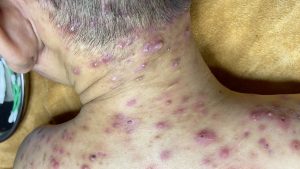
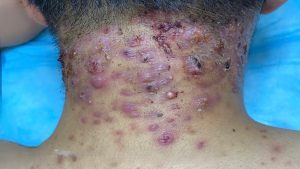
The images above show severe inflammatory skin conditions affecting the back, neck, and scalp region. These conditions are often linked to severe acne, infected hair follicles (folliculitis), or acne keloidalis nuchae. Without proper treatment, these disorders can lead to pain, scarring, and chronic skin damage.
👉What Is Severe Inflammatory Acne?
Severe inflammatory acne is a serious skin condition where hair follicles become blocked and infected, leading to painful nodules, pustules, and abscesses. Unlike mild acne, this form penetrates deep into the skin and often results in scarring.
It commonly affects:
-
Upper back
-
Neck and nape of the neck
-
Shoulders
-
Scalp and hairline
🌙Common Conditions Seen in the Images
1. Severe Nodulocystic Acne
-
Large, painful lumps beneath the skin
-
Filled with pus and inflammatory fluid
-
Often leaves permanent scars
2. Folliculitis
-
Infection of hair follicles caused by bacteria
-
Appears as red bumps with white or yellow pus
-
Can spread rapidly if untreated
3. Acne Keloidalis Nuchae
-
Chronic inflammation at the back of the neck
-
Thickened skin with raised scars
-
Common in men with coarse or curly hair
🌞Causes and Risk Factors
Several factors contribute to severe inflammatory acne and follicular infections:
-
Bacterial infection (Staphylococcus aureus)
-
Excess oil production
-
Blocked hair follicles
-
Frequent shaving or close haircuts
-
Friction from collars, helmets, or tight clothing
-
Excessive sweating
-
Poor hygiene
-
Hormonal imbalance
-
Weakened immune system
🔑Signs and Symptoms
-
Painful red or purple bumps
-
Swelling and warmth
-
Pus-filled lesions
-
Crusting or bleeding
-
Itching or burning sensation
-
Thickened or scarred skin
-
Foul-smelling discharge in severe cases
⚠️ Warning: Fever, spreading redness, or increasing pain may indicate a serious infection.
🔥Complications
If untreated, these conditions can lead to:
-
Permanent scarring
-
Keloid formation
-
Recurrent infections
-
Skin discoloration
-
Emotional distress and reduced confidence
🔆Treatment Options
1. Medical Treatment (Recommended)
A dermatologist may prescribe:
-
Oral antibiotics
-
Topical antibiotic creams
-
Anti-inflammatory medications
-
Retinoids
-
Corticosteroid injections
-
Laser therapy (for scarring)
-
Surgical drainage for abscesses
2. Home Care Support (Not a Cure)
-
Wash affected areas with gentle antibacterial soap
-
Keep skin dry and clean
-
Avoid shaving irritated areas
-
Wear loose, breathable clothing
-
Do not squeeze or pick lesions
❌ Never pop severe acne or infected follicles, as this can spread infection and worsen scarring.
🎁Prevention Tips
-
Maintain daily skin hygiene
-
Avoid tight collars and friction
-
Use clean razors or avoid shaving the neck area
-
Shower after sweating
-
Treat early signs of acne promptly
-
Follow medical advice consistently
⭐When to See a Doctor
Seek professional care if:
-
Lesions are painful or spreading
-
Pus or bleeding persists
-
Scars are forming
-
Home treatments fail
-
Fever or chills occur
☎Final Thoughts
Severe inflammatory acne and follicular infections are more than cosmetic problems—they are medical conditions that require timely treatment. Early intervention can prevent long-term scarring and improve skin health. If symptoms worsen or persist, professional medical care is essential.