Introduction
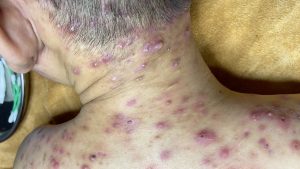
The image above shows a severe inflammatory skin condition affecting the back of the neck, characterized by multiple inflamed nodules, pustules, crusting, and areas of scarring. This presentation is commonly associated with severe acne variants, infected hair follicles, or chronic inflammatory skin disorders. Such conditions can be painful, emotionally distressing, and may lead to permanent scarring if not properly treated.
This article explores the possible causes, clinical features, risk factors, complications, and treatment approaches for this type of severe skin inflammation.
🌞What Is Happening to the Skin?
The skin in the affected area shows:
-
Multiple inflamed nodules and pustules
-
Crusting and scab formation, suggesting secondary infection
-
Thickened, swollen skin
-
Signs of chronic inflammation
-
Possible early keloid or hypertrophic scarring
-
Involvement of hair follicles, especially along the hairline and neck
This pattern is often linked to conditions such as:
-
Severe inflammatory acne
-
Chronic folliculitis
-
Acne keloidalis nuchae
-
Bacterial skin infections
-
Recurrent ingrown hairs with infection
⚡Common Causes and Risk Factors
1. Blocked and Infected Hair Follicles
Hair follicles can become blocked by oil, dead skin cells, and bacteria. When inflammation worsens, painful nodules and abscesses may form.
2. Bacterial Infection
Bacteria, especially Staphylococcus species, can infect damaged follicles, leading to pus, crusting, and delayed healing.
3. Shaving and Hair Grooming
Frequent close shaving, friction from collars or helmets, and ingrown hairs can irritate the skin and trigger inflammation.
4. Excessive Oil Production
Overactive sebaceous glands increase the risk of clogged pores and infection.
5. Genetic and Skin Type Factors
People with coarse or curly hair and certain genetic backgrounds may be more prone to chronic follicular inflammation.
🔑Symptoms and Clinical Features
-
Painful, tender bumps on the neck
-
Redness and swelling
-
Pus-filled lesions
-
Bleeding or crusted sores
-
Itching or burning sensation
-
Thickened skin over time
-
Formation of permanent scars or raised lesions
In severe cases, the condition may spread or worsen if left untreated.
🔥Potential Complications
If not properly managed, this condition can lead to:
-
Permanent scarring or keloids
-
Chronic skin infections
-
Skin discoloration (hyperpigmentation)
-
Reduced self-esteem and psychological stress
-
Recurrent flare-ups
Early medical intervention is important to prevent long-term damage.
🔆Diagnosis
A healthcare professional may diagnose this condition based on:
-
Visual examination of the skin
-
Medical history and grooming habits
-
Bacterial culture if infection is suspected
-
In some cases, a skin biopsy to rule out other disorders
🔊Treatment Options
1. Topical Treatments
-
Antibiotic creams or gels
-
Antiseptic cleansers
-
Anti-inflammatory agents
2. Oral Medications
-
Oral antibiotics for severe infection
-
Anti-inflammatory medications
-
In certain cases, oral retinoids under medical supervision
3. Lifestyle and Skin Care Adjustments
-
Avoid close shaving or tight collars
-
Use gentle, non-comedogenic skin products
-
Keep the area clean and dry
-
Avoid picking or squeezing lesions
4. Advanced Treatments
-
Corticosteroid injections for severe inflammation
-
Laser therapy for scarring and hair follicle reduction
-
Surgical drainage for abscesses (performed by professionals)
✨Prevention Tips
-
Maintain good hygiene
-
Avoid friction on the neck area
-
Use clean shaving tools or avoid shaving altogether
-
Seek early treatment when symptoms begin
-
Follow dermatologist-recommended skincare routines
🌙When to See a Doctor
You should seek medical care if:
-
Lesions are painful or spreading
-
There is pus, fever, or signs of infection
-
Scars are forming
-
The condition does not improve with basic care
💨Conclusion
Severe inflammatory acne and follicular infections on the neck are serious skin conditions that require proper medical attention. While they can be challenging to manage, early diagnosis and consistent treatment can significantly reduce symptoms, prevent complications, and improve skin health.
If you or someone you know experiences similar symptoms, consulting a qualified healthcare professional is strongly recommended.