Introduction
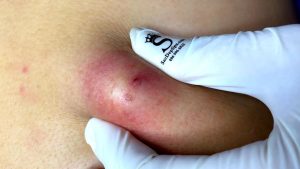
The image depicts a severely infected skin lesion actively discharging thick, yellow-green purulent material. This appearance is most consistent with an infected epidermoid (sebaceous) cyst or skin abscess, a common but potentially serious dermatological condition. Such infections occur when bacteria invade a blocked hair follicle or oil gland, leading to inflammation, pus formation, pain, and tissue damage.
This article provides an in-depth explanation suitable for educational, clinical, or health-awareness content, including causes, symptoms, diagnosis, treatment, and prevention.
🔊What Is an Infected Epidermoid (Sebaceous) Cyst?
An epidermoid cyst is a benign, slow-growing lump beneath the skin formed when keratin becomes trapped. When bacteria enter the cyst—often through minor trauma, squeezing, or friction—it can become infected and evolve into an abscess.
Once infected, the cyst may:
-
Swell rapidly
-
Turn red or purple
-
Become painful and warm
-
Fill with pus (dead white blood cells, bacteria, tissue debris)
🎺Visual Characteristics Seen in the Image
The image shows several hallmark features of advanced infection:
-
Thick, yellow-green pus (indicates active bacterial infection)
-
Surrounding redness and inflammation (erythema)
-
Ruptured cyst wall, allowing contents to escape
-
Manual drainage using sterile gauze and gloves, suggesting a clinical procedure
This level of infection cannot be treated with home remedies alone.
⚙Common Causes
Infected cysts and abscesses may develop due to:
-
Blocked sebaceous (oil) glands
-
Ingrown hairs
-
Excessive sweating or friction
-
Poor hygiene
-
Skin trauma or repeated squeezing
-
Weakened immune system (e.g., diabetes, chronic illness)
The most common bacteria involved is Staphylococcus aureus, including antibiotic-resistant strains in some cases.
🎵Symptoms and Warning Signs
Seek medical attention if any of the following occur:
-
Increasing pain or swelling
-
Rapid growth of the lesion
-
Fever or chills
-
Foul-smelling discharge
-
Red streaks spreading from the site
-
Failure to improve within 48–72 hours
Left untreated, infection can spread to surrounding tissue (cellulitis) or enter the bloodstream (sepsis), which is life-threatening.
🔑Diagnosis
A healthcare professional usually diagnoses this condition through:
-
Visual examination
-
Palpation of the lesion
-
Culture of pus (in recurrent or severe cases)
-
Ultrasound (if deeper involvement is suspected)
♦Medical Treatment Options
1. Incision and Drainage (I&D)
The gold standard treatment for an abscess.
-
Performed under sterile conditions
-
Removes pus and reduces pressure
-
Often provides immediate pain relief
2. Antibiotic Therapy
Prescribed when:
-
Infection is severe
-
Patient has fever or systemic symptoms
-
Abscess is large or recurrent
3. Complete Cyst Removal (After Infection Resolves)
If the cyst wall remains, the cyst may recur. Surgical excision is recommended once inflammation subsides.
🎆What NOT to Do
🚫 Do not squeeze or pop cysts at home
🚫 Do not use non-sterile tools
🚫 Do not ignore worsening symptoms
🚫 Do not rely solely on topical creams for deep infections
Improper handling can worsen infection and cause permanent scarring.
🎊Prevention Tips
-
Maintain proper skin hygiene
-
Avoid picking or squeezing skin lesions
-
Treat minor skin injuries promptly
-
Manage underlying conditions (e.g., diabetes)
-
Seek early medical care for painful or growing lumps
🎇Conclusion
The image illustrates a severe, actively draining infected skin cyst, a condition that requires professional medical management. While common, such infections should never be underestimated. Early diagnosis and appropriate treatment prevent complications, reduce scarring, and ensure complete recovery.