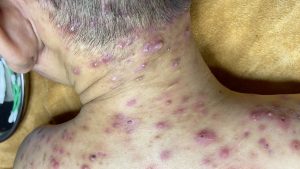
Skin conditions affecting the neck and upper back can be physically uncomfortable and emotionally distressing, especially when they are painful, inflamed, or recurrent. The image above shows multiple raised, red-to-purple nodules and pustules distributed across the back of the neck, hairline, and upper shoulders. Some lesions appear swollen, tender, and crusted, suggesting an active inflammatory process.
This article explores possible causes, common symptoms, risk factors, and general care approaches for this type of skin presentation.
Visual Characteristics Observed
Based on the image, the skin shows:
-
Multiple inflamed nodules and pustules
-
Red, purple, and darkened lesions
-
Some draining or crusted spots
-
Clustering along the hairline and posterior neck
-
Signs of chronic inflammation (scarring or dark marks)
These features are commonly associated with inflammatory follicular skin disorders.
Possible Causes (Educational Overview)
Several skin conditions can present in this way. A healthcare professional is required for diagnosis, but common possibilities include:
1. Severe Folliculitis
-
Infection or inflammation of hair follicles
-
Often caused by bacteria, friction, sweat, or shaving
-
Can progress from small bumps to painful pus-filled lesions
2. Acne Keloidalis Nuchae
-
A chronic inflammatory condition affecting the back of the neck
-
Commonly starts as small bumps and can progress to larger nodules and scarring
-
More frequent in areas with coarse hair and repeated irritation
3. Hidradenitis Suppurativa (HS)
-
Chronic inflammatory skin disease
-
Characterized by painful nodules, abscesses, and scarring
-
Often worsens with heat, sweating, and friction
4. Bacterial Skin Infection
-
Deeper skin infections can cause boils or abscesses
-
May be associated with pain, swelling, and drainage
Contributing Risk Factors
Several factors may increase the likelihood or severity of these skin lesions:
-
Frequent shaving or close haircuts
-
Tight clothing or collars causing friction
-
Excessive sweating and heat
-
Poor airflow to the skin
-
Bacterial overgrowth
-
Genetic predisposition
-
Chronic inflammation or immune response
Symptoms Commonly Reported
Individuals with similar skin conditions often experience:
-
Pain or tenderness
-
Itching or burning sensations
-
Swelling and redness
-
Drainage of pus or fluid
-
Dark marks or scars after healing
-
Recurrent flare-ups in the same area
General Care and Management (Non-Diagnostic)
While treatment depends on the underlying cause, general skin care approaches may include:
Skin Hygiene
-
Gently cleansing the area with a mild, non-irritating cleanser
-
Avoiding harsh scrubbing
Reducing Irritation
-
Avoid tight collars, helmets, or rough fabrics
-
Reduce shaving or use gentler hair-removal methods
Moisture and Heat Control
-
Keep the area dry and well-ventilated
-
Shower after sweating
Medical Evaluation
-
Persistent, painful, or spreading lesions should be evaluated by a dermatologist
-
Prescription treatments may include:
-
Topical or oral antibiotics
-
Anti-inflammatory medications
-
Retinoids
-
Steroid injections (in specific cases)
-
When to Seek Medical Help
Immediate medical attention is recommended if:
-
Lesions are rapidly worsening
-
Severe pain or fever develops
-
Pus or blood drainage increases
-
Scarring becomes extensive
-
Symptoms persist despite basic care
Conclusion
Inflammatory skin conditions of the neck and upper back can significantly impact comfort and quality of life. Early recognition, proper skin care, and professional evaluation are essential to prevent complications such as scarring or chronic inflammation.