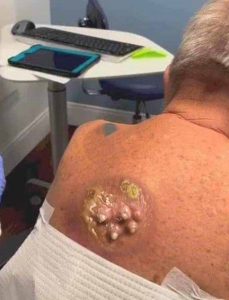
The image shows a large, raised, inflamed lesion on the upper back, characterized by clustered nodules, pus-filled areas, crusting, and surrounding skin inflammation. Such presentations often indicate a severe localized skin infection or inflammatory condition that requires prompt medical attention.
What Could This Be?
While only a medical professional can provide a definitive diagnosis, lesions with this appearance are commonly associated with conditions such as:
-
Infected epidermoid (sebaceous) cysts
-
Skin abscesses
-
Boils (furuncles) or clusters of boils (carbuncles)
-
Chronic inflammatory skin disorders
These conditions typically occur when bacteria enter hair follicles or blocked oil glands, leading to deep infection and pus accumulation.
Why These Lesions Develop
Several factors may contribute to the development of severe skin infections:
-
Blocked pores or cyst rupture
-
Bacterial infection, often involving Staphylococcus species
-
Reduced immune response (age, chronic illness, or medication use)
-
Poor circulation or delayed wound healing
-
Repeated friction or pressure on the skin
Signs of Serious Infection
Features that suggest a more serious condition include:
-
Rapid growth of the lesion
-
Pain, warmth, and swelling
-
Pus drainage or foul odor
-
Skin discoloration around the area
-
Fever or general discomfort (not visible but clinically important)
Medical Management
Treatment depends on severity and underlying cause but may include:
-
Surgical drainage of the lesion
-
Oral or intravenous antibiotics
-
Wound cleaning and dressing changes
-
Laboratory testing to identify infection
-
Follow-up care to prevent recurrence
Attempting to squeeze or treat such lesions at home can worsen the infection and increase the risk of scarring or systemic spread.
Prevention and Skin Care
To reduce the risk of severe skin infections:
-
Maintain good skin hygiene
-
Avoid manipulating cysts or lumps
-
Seek early medical care for painful or growing lesions
-
Manage chronic conditions that affect immunity
-
Keep pressure-prone areas clean and dry
Conclusion
Large, infected skin lesions on the back are more than a surface-level problem. They often indicate a deep infection that requires professional medical treatment. Early intervention can prevent complications, reduce healing time, and improve outcomes.