What Is a Skin Abscess?
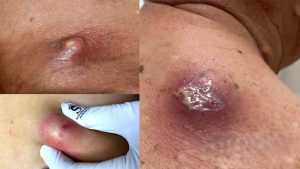
A skin abscess, commonly known as a boil, is a painful, swollen area filled with pus that develops under the skin. It usually occurs when bacteria enter the body through a hair follicle, cut, or small wound and cause an infection. As the body fights the infection, pus builds up, leading to redness, swelling, and tenderness.
The images above show different stages of a skin abscess, ranging from early inflammation to a fully developed, pus-filled lesion.
Common Causes of Skin Abscesses
Skin abscesses are most often caused by bacterial infections, especially Staphylococcus aureus. Common contributing factors include:
-
Poor hygiene
-
Blocked hair follicles
-
Ingrown hairs
-
Excessive sweating
-
Friction from tight clothing
-
Weakened immune system
-
Diabetes
-
Obesity
-
Minor cuts or insect bites
Certain areas such as the neck, armpits, thighs, buttocks, and groin are more prone to abscess formation.
Signs and Symptoms
A skin abscess typically develops gradually and may include:
-
A red, swollen, painful lump
-
Warmth around the affected area
-
Increasing size over time
-
A white or yellow center filled with pus
-
Shiny or stretched skin
-
Fever or fatigue in severe cases
-
Spontaneous drainage of pus
As seen in the images, advanced abscesses may rupture, releasing thick pus and leaving an open wound.
Stages of a Skin Abscess
-
Early Stage – Redness, mild swelling, and tenderness
-
Inflammatory Stage – Increased pain, warmth, and firmness
-
Suppurative Stage – Visible pus accumulation
-
Rupture/Drainage Stage – Pus drains naturally or after treatment
-
Healing Stage – Wound closes and skin repairs
Treatment Options
1. Home Care (For Small, Early Abscesses)
-
Apply warm compresses 3–4 times daily
-
Keep the area clean and dry
-
Avoid squeezing or popping the abscess
-
Wash hands before and after touching the area
⚠️ Never attempt to drain a deep or painful abscess at home, as this can spread the infection.
2. Medical Treatment
Seek medical care if the abscess is large, painful, worsening, or accompanied by fever. Treatment may include:
-
Incision and drainage (I&D) by a healthcare professional
-
Antibiotics if the infection is severe or spreading
-
Wound dressing and follow-up care
In some cases, untreated abscesses can lead to complications such as cellulitis or bloodstream infections.
When to See a Doctor
You should seek medical attention if:
-
The abscess is larger than 2 cm
-
Pain becomes severe
-
Fever develops
-
Red streaks appear on the skin
-
The abscess does not improve within a few days
-
You have diabetes or a weakened immune system
Prevention Tips
To reduce the risk of skin abscesses:
-
Maintain good personal hygiene
-
Shower after sweating
-
Avoid sharing towels or razors
-
Wear loose-fitting clothing
-
Treat minor cuts promptly
-
Manage chronic conditions like diabetes
-
Keep skin clean and moisturized
Conclusion
Skin abscesses are common but should never be ignored. Early care can prevent complications and promote faster healing. While small boils may resolve with proper home care, larger or painful abscesses require professional medical treatment. Recognizing the symptoms early and seeking appropriate care is key to preventing serious infections.
⚠️ Medical Disclaimer:
This article is for educational purposes only and does not replace professional medical advice. Always consult a qualified healthcare provider for diagnosis and treatment.