1
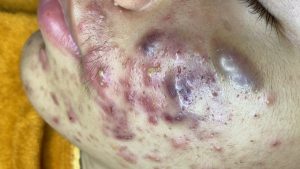
The image above shows severe nodulocystic acne, a painful and advanced form of acne characterized by deep, inflamed nodules, pus-filled cysts, and widespread skin irritation. Unlike mild acne, this condition can cause permanent scarring if not treated correctly and early.
👉What Is Nodulocystic Acne?
Nodulocystic acne is a severe inflammatory acne disorder that develops deep within the skin. It forms large, painful lumps (nodules and cysts) that often merge together and can rupture beneath the surface, causing significant inflammation.
✍Common Causes
-
Excess oil (sebum) production
-
Deeply clogged pores
-
Acne-causing bacteria (Cutibacterium acnes)
-
Hormonal imbalance
-
Genetic predisposition
-
Delayed or improper acne treatment
✍Visible Signs and Symptoms
-
Large, painful nodules under the skin
-
Pus-filled cysts
-
Red, purple, or dark inflamed patches
-
Crusting or scabbing
-
Skin tenderness and swelling
-
High risk of permanent scarring
✍Why This Type of Acne Is Dangerous to Ignore
Without proper treatment, severe acne can:
-
Leave permanent scars and skin texture damage
-
Cause chronic inflammation and recurring breakouts
-
Lead to skin infections
-
Affect emotional well-being and self-confidence
Home remedies, squeezing, or aggressive scrubbing often worsen inflammation and increase the risk of scarring.
✍Treatment Options
Effective treatment requires professional care and may include:
-
Oral or topical antibiotics
-
Retinoids
-
Anti-inflammatory medications
-
Hormonal therapy (when appropriate)
-
Professional dermatological procedures
Treatment plans are personalized based on severity and skin type.
✍When to See a Dermatologist
You should seek medical help if:
-
Acne is painful and widespread
-
Large cysts or nodules appear
-
Pus, crusting, or skin discoloration develops
-
Over-the-counter products no longer work
✍Prevention and Skin Care Tips
-
Avoid touching or picking acne lesions
-
Use gentle, non-comedogenic skincare products
-
Cleanse twice daily without scrubbing
-
Seek early professional treatment
🎁Final Thoughts
Severe nodulocystic acne is a medical condition, not just a cosmetic issue. Early diagnosis and professional treatment can reduce pain, prevent scarring, and restore healthier skin. If symptoms resemble those shown in the image, consulting a dermatologist is essential.
👉Videos
2
👉Understanding Severe Acne and How It Can Be Treated
The image above shows severe acne, a condition that goes beyond common pimples. This type of acne causes large, painful lumps and pus-filled bumps deep under the skin. It is a medical condition and often needs treatment from a healthcare professional.
⚡What Is Severe Acne?
Severe acne happens when pores become deeply blocked with oil, dead skin, and bacteria. This leads to inflamed nodules and cysts that can be painful and slow to heal. These breakouts often appear on the face but can also affect the chest, back, and shoulders.
🌙Common Signs You May Notice
-
Large, painful bumps under the skin
-
Pus-filled pimples
-
Red, swollen, or dark patches
-
Crusting or scabbing on the skin
-
Skin that feels sore or tender
🌞Why Treatment Is Important
If severe acne is not treated properly, it can:
-
Leave permanent scars
-
Cause long-lasting skin discoloration
-
Lead to repeated infections
-
Affect confidence and emotional well-being
Trying to pop or squeeze acne can make it worse and increase scarring.
⭐How Is Severe Acne Treated?
Treatment is different for each person and may include:
-
Prescription creams or gels
-
Oral medications to reduce bacteria and inflammation
-
Treatments to control oil production
-
Professional skin procedures
A dermatologist will choose the safest and most effective plan for your skin.
💧When Should You See a Doctor?
You should seek medical care if:
-
Acne is painful or worsening
-
Large lumps or cysts appear
-
Pus or scabs are present
-
Store-bought treatments are not helping
Early treatment gives the best results and helps prevent scarring.
🔥How You Can Help Protect Your Skin
-
Wash your face gently twice a day
-
Avoid touching or picking at acne
-
Use skincare products labeled “non-comedogenic”
-
Follow your treatment plan as directed
💨Reassurance for Patients
Severe acne is treatable, and many people see great improvement with proper care. You are not alone, and help is available. If your skin looks like the image shown, a dermatologist can guide you toward clearer, healthier skin.