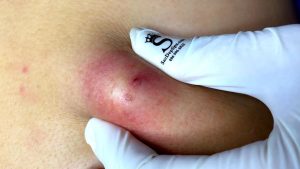
The image above shows a large, swollen, and inflamed skin boil, also known medically as a furuncle. The lesion appears tense, red, and painful, with a central point indicating trapped infection beneath the skin. Gloved hands are applying pressure, suggesting a controlled medical or professional extraction attempt.
What Is a Boil (Furuncle)?
A boil is a deep bacterial infection of a hair follicle that spreads into surrounding skin tissue. As the infection progresses, pus accumulates, causing the skin to become swollen, warm, and extremely tender.
Boils commonly occur on areas of the body that experience:
-
Friction
-
Sweating
-
Hair growth
-
Pressure from clothing
Visible Signs in This Case
From the image, several classic features of a severe boil are present:
-
Intense redness and inflammation
-
Shiny, stretched skin, indicating internal pressure
-
Central punctum, where pus may eventually drain
-
Localized swelling, suggesting deep infection
-
Painful appearance, typical of advanced boils
This type of boil is not a simple pimple and should never be squeezed aggressively at home.
Common Causes
Boils are most often caused by bacterial infection, especially Staphylococcus aureus. Risk factors include:
-
Poor skin hygiene
-
Excessive sweating
-
Ingrown hairs
-
Tight or dirty clothing
-
Weakened immune system
-
Diabetes
-
Recurrent skin infections
Why Squeezing Is Dangerous
Although pressure is being applied in the image, untrained squeezing can be extremely harmful. Risks include:
-
Forcing bacteria deeper into the tissue
-
Spreading infection to surrounding skin (cellulitis)
-
Causing severe pain and tissue damage
-
Permanent scarring
-
Bloodstream infection (sepsis)
Professional drainage is performed only when the boil is ready and under sterile conditions.
Proper Medical Treatment
Safe treatment of large boils may include:
-
Warm compresses to encourage natural drainage
-
Sterile incision and drainage by a professional
-
Antibiotics if the infection is severe or spreading
-
Pain management
-
Proper wound dressing and follow-up care
Attempting self-treatment often delays healing and worsens the infection.
Aftercare and Healing Process
Once treated correctly:
-
Redness and swelling gradually decrease
-
Pain reduces within days
-
The wound heals over 1–3 weeks
-
Scarring is minimized with proper care
Patients must keep the area clean and avoid pressure or friction during healing.
When to Seek Immediate Medical Help
Urgent medical care is needed if:
-
Fever or chills develop
-
Redness spreads rapidly
-
Pain worsens instead of improving
-
Multiple boils appear
-
The boil does not drain or heal
Prevention Tips
To reduce the risk of future boils:
-
Maintain good personal hygiene
-
Shower after sweating
-
Avoid sharing towels or clothing
-
Treat small skin injuries promptly
-
Manage underlying health conditions
-
Avoid squeezing painful skin lumps
Conclusion
This image highlights a severe, inflamed boil requiring professional care. While pressure may release pus, improper handling can lead to serious complications. Early medical treatment ensures safe drainage, faster healing, and reduced risk of scarring or infection spread.