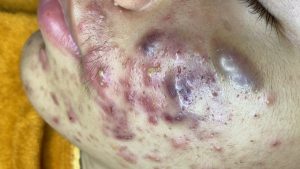
The image above shows a case of severe inflammatory acne with cysts, nodules, and secondary skin infection, most commonly affecting the chin and jawline area. This type of condition is not ordinary acne and often indicates a deeper skin disorder that requires medical attention.
What Is Severe Inflammatory Acne?
Severe inflammatory acne is characterized by:
-
Painful nodules and cysts beneath the skin
-
Red, swollen, and inflamed areas
-
Pus-filled lesions and crusting
-
Thickened skin and dark discoloration
-
High risk of permanent scarring
Unlike mild acne, this condition involves deep inflammation of hair follicles and sebaceous (oil) glands. When bacteria become trapped inside blocked pores, the infection can spread beneath the skin surface.
Possible Causes
Several factors can contribute to this severe skin condition:
-
Hormonal Imbalance
Excess androgen hormones increase oil production, leading to clogged pores. -
Bacterial Infection
Overgrowth of Cutibacterium acnes or secondary bacteria can worsen inflammation. -
Improper Acne Extraction
Squeezing or picking pimples can push bacteria deeper, causing abscesses. -
Poor Hygiene or Contaminated Tools
Using unsterilized instruments may introduce infection. -
Genetic Predisposition
Some individuals are more prone to severe acne due to heredity. -
Weakened Immune System
Stress, illness, or poor nutrition can reduce skin defense.
Risks and Complications
If left untreated, severe acne like this may result in:
-
Permanent deep scars and pitted skin
-
Chronic skin infections
-
Hyperpigmentation (dark marks)
-
Facial disfigurement
-
Psychological distress, anxiety, or low self-esteem
What NOT to Do
❌ Do not squeeze or pop cysts
❌ Do not use harsh scrubs or alcohol-based products
❌ Do not apply random home remedies
❌ Do not ignore worsening symptoms
These actions can significantly worsen inflammation and infection.
Recommended Treatment Options
✔ Dermatologist consultation is essential
Medical treatment may include:
-
Oral antibiotics to control infection
-
Isotretinoin (for severe cases, under strict supervision)
-
Corticosteroid injections for large cysts
-
Medicated cleansers and topical treatments
-
Professional drainage using sterile medical techniques
Home Care and Prevention Tips
-
Wash face gently twice daily
-
Use non-comedogenic skincare products
-
Avoid touching the face frequently
-
Maintain a healthy diet low in sugar and dairy
-
Stay hydrated
-
Manage stress and sleep properly
When to Seek Immediate Medical Help
Seek professional care if you notice:
-
Rapid swelling
-
Severe pain
-
Fever
-
Spreading redness
-
Pus with foul odor
These are signs of serious infection.
Conclusion
The condition shown in the image represents advanced inflammatory acne with infection, not a cosmetic issue but a medical one. Early treatment can prevent long-term damage and scarring. With proper medical care, lifestyle adjustments, and patience, significant improvement is possible.