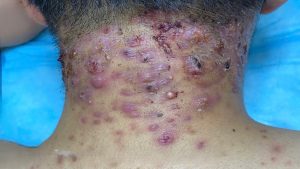
The image shows a severe inflammatory skin condition affecting the back of the neck, characterized by multiple red nodules, pustules, scabs, crusting, and signs of active infection. This presentation is commonly associated with severe folliculitis, infected acne, or acne keloidalis nuchae, a condition that primarily affects hair-bearing areas of the neck.
What Is Happening to the Skin?
This condition develops when hair follicles become blocked and infected, usually by bacteria such as Staphylococcus aureus. As the infection progresses, it leads to:
-
Painful red bumps and pustules
-
Swollen, inflamed nodules
-
Oozing pus and blood
-
Thick scabs and crust formation
-
Dark spots and scarring after healing
Repeated inflammation and scratching can worsen the condition and cause permanent scarring or keloid formation.
Common Causes and Risk Factors
Several factors increase the risk of developing severe neck folliculitis and infected acne:
-
Frequent shaving or close haircuts
-
Ingrown hairs
-
Excessive sweating and heat
-
Poor hygiene or contaminated tools
-
Tight collars or helmets causing friction
-
Weakened immune system
-
Hormonal imbalance
Men with coarse or curly hair are especially prone to this condition.
Symptoms to Watch For
-
Persistent pain or tenderness
-
Rapid spread of bumps
-
Yellow or bloody discharge
-
Fever or general discomfort (in severe cases)
-
Thickened or raised scar tissue
If left untreated, the infection may spread deeper into the skin and become more difficult to manage.
Treatment Options
Medical treatment is strongly recommended for cases like the one shown in the image.
Common treatments include:
-
Oral antibiotics for bacterial infection
-
Topical antibiotic or antiseptic creams
-
Anti-inflammatory medications
-
Antibacterial washes
-
Corticosteroid injections for severe swelling or keloids
⚠️ Do not squeeze or attempt home extraction, as this can spread the infection and worsen scarring.
Home Care and Prevention Tips
-
Avoid shaving the affected area until healed
-
Keep the skin clean and dry
-
Use clean towels and pillowcases
-
Avoid tight clothing around the neck
-
Disinfect hair-cutting tools regularly
-
Seek early treatment for new bumps
When to See a Doctor
Seek medical attention immediately if:
-
Pain becomes severe
-
Pus continues to spread
-
Fever develops
-
Scarring worsens
-
Home care shows no improvement
Early intervention can prevent long-term damage and disfigurement.
Final Thoughts
The condition shown in the image represents a serious skin infection that should not be ignored. With proper medical care, inflammation can be controlled, infection cleared, and further scarring prevented. Awareness, hygiene, and early treatment are key to maintaining healthy skin on the neck and scalp.