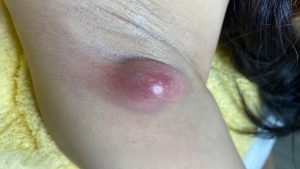
The image above shows a severely inflamed armpit (axillary) infection, marked by swelling, redness, tenderness, and multiple pus-filled openings. This is not a simple pimple—it represents a deeper skin infection that requires careful attention. The armpit is a high-risk area for infections due to sweat, friction, hair follicles, and bacteria buildup.
Why the Armpit Is Prone to Infection
The armpit contains:
-
Numerous sweat glands
-
Dense hair follicles
-
Constant moisture and warmth
-
Frequent skin-to-skin friction
These conditions make it easy for bacteria to enter blocked pores or hair follicles. Once trapped, bacteria multiply quickly, leading to inflammation, pus formation, and painful abscesses.
What This Condition May Indicate
Based on the appearance—multiple draining points, deep discoloration, and surrounding redness—this may involve one or more of the following:
-
Infected hair follicles (folliculitis)
-
Boils (furuncles)
-
Skin abscess
-
Recurring inflammatory condition such as hidradenitis suppurativa
When multiple lesions cluster together in the armpit, it often suggests a chronic or worsening infection, not a single isolated event.
Warning Signs Visible in the Image
The image clearly shows signs of advanced infection:
-
Swollen, raised tissue
-
Red and irritated surrounding skin
-
Multiple pus-filled openings
-
Yellow, white, and greenish discharge
-
Darkened skin indicating deep inflammation
These symptoms suggest the infection is active and may continue to spread if not treated properly.
Why This Is a Serious Condition
Untreated armpit infections can:
-
Spread deeper into surrounding tissue
-
Travel through lymph nodes
-
Cause fever and systemic illness
-
Leave permanent scars or tunnels under the skin
-
Recur repeatedly over time
In people with diabetes, obesity, smoking habits, or weakened immunity, complications can be more severe and harder to treat.
Proper Medical Treatment
A condition like this should not be squeezed or treated at home. Medical treatment usually includes:
-
Clinical Evaluation
A healthcare provider assesses the depth, severity, and spread of infection. -
Sterile Drainage
If pus is trapped, a controlled incision allows safe drainage and pain relief. -
Thorough Cleaning
Infected material is removed to reduce bacterial load. -
Antibiotic Therapy
Topical or oral antibiotics may be prescribed depending on severity. -
Ongoing Monitoring
Recurrent cases may need long-term management to prevent flare-ups.
This approach reduces pain, prevents complications, and promotes proper healing.
Why You Should Never Squeeze an Armpit Abscess
Squeezing lesions like those shown in the image can:
-
Force bacteria deeper into the skin
-
Increase swelling and pain
-
Cause severe scarring
-
Create chronic draining wounds
-
Delay proper healing
The armpit contains important lymphatic structures, making improper handling especially dangerous.
Recovery and Aftercare
Healing depends on severity, but proper care includes:
-
Keeping the area clean and dry
-
Avoiding shaving until healed
-
Wearing loose, breathable clothing
-
Changing dressings as instructed
-
Watching for signs of worsening infection (fever, spreading redness, increasing pain)
Recovery may take days to weeks, especially in recurrent cases.
Preventing Future Armpit Infections
To reduce recurrence:
-
Maintain daily hygiene with gentle cleansers
-
Avoid tight clothing and excessive friction
-
Keep the area dry
-
Do not pick or squeeze bumps
-
Address early symptoms promptly
-
Seek medical advice for recurring armpit lumps
Early treatment can prevent chronic skin conditions from developing.
Final Thoughts
This image highlights a serious and painful armpit skin infection that goes far beyond a simple pimple. Multiple draining lesions and deep inflammation indicate an advanced condition that requires medical care—not home remedies. With proper treatment, careful aftercare, and preventive measures, healing is possible and future flare-ups can be reduced. Ignoring or mishandling this condition can lead to long-term discomfort, scarring, and repeated infections.