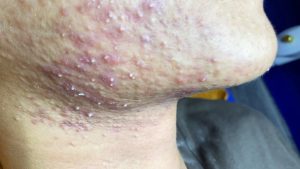
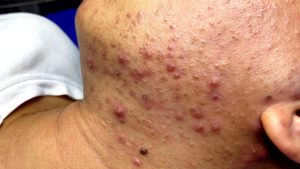
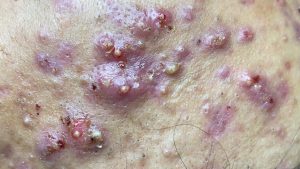
The image above shows a heavily congested chin area with numerous blackheads, enlarged pores, and signs of irritation. This type of condition develops slowly over time and is often linked to hormonal activity, oil imbalance, and repeated pore blockage. The chin is one of the most common areas for stubborn blackheads, especially when congestion is left untreated.
Understanding Blackheads on the Chin
Blackheads, also called open comedones, form when oil (sebum), dead skin cells, and debris become trapped inside pores. When the pore remains open, the trapped material oxidizes on contact with air, turning dark or black.
The chin is particularly prone to this problem because:
-
It contains many active sebaceous (oil) glands
-
It is influenced by hormonal fluctuations
-
It is frequently touched (hands, phone contact)
-
Shaving, makeup, or heavy skincare products may clog pores
Over time, repeated blockage causes pores to stretch and allows multiple blackheads to cluster closely together, as seen in the image.
Why the Blackheads Appear Dark and Deep
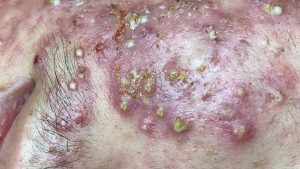
In the image, many comedones appear dark gray, black, or bluish, indicating:
-
Long-standing buildup deep within the pore
-
Thickened, compacted sebum
-
Reduced natural exfoliation
-
Mild inflammation beneath the skin surface
These deeper blackheads are often firm and resistant to simple cleansing methods.
Signs of Inflammation and Skin Stress

The surrounding redness and uneven texture suggest that the skin is under stress. This may result from:
-
Chronic congestion
-
Previous squeezing or picking
-
Bacterial growth within blocked pores
-
Friction from masks or clothing
If untreated, this condition can progress into painful acne lesions or lead to permanent scarring.
Professional Extraction Process
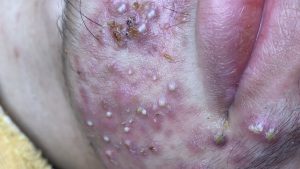
For severe chin congestion like this, professional extraction is usually the safest and most effective option. The process typically includes:
-
Deep Cleansing
The skin is thoroughly cleaned to remove surface oil, bacteria, and impurities. -
Pore Softening
Steam or warm compresses help loosen hardened sebum inside the pores. -
Precise Pore Opening
A sterile lancet may be used to gently open clogged pores without tearing the skin. -
Controlled Extraction
Gentle, even pressure is applied to release compacted blackheads safely. -
Disinfection and Calming
Antibacterial and soothing products are applied to reduce redness and prevent infection.
This controlled approach minimizes trauma and protects the surrounding tissue.
Risks of DIY Extraction
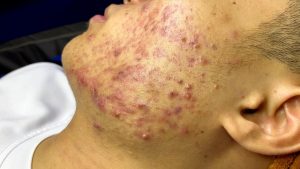
Attempting to squeeze blackheads at home—especially in a congested area like the chin—can cause:
-
Bleeding and bruising
-
Spread of bacteria
-
Increased inflammation
-
Permanent scars or dark marks
-
Enlarged pores
The chin has sensitive skin and many blood vessels, making improper extraction especially risky.
Post-Extraction Care and Healing
After extraction, the skin may appear red and tender for a short time. Proper aftercare is essential for healing:
-
Avoid touching or picking the area
-
Keep the skin clean and dry
-
Use gentle, non-comedogenic skincare products
-
Avoid exfoliation and harsh treatments for several days
-
Apply soothing or antibacterial products if recommended
With proper care, redness typically subsides within a few days.
Preventing Future Chin Blackheads
To reduce recurrence:
-
Cleanse twice daily with a gentle cleanser
-
Exfoliate lightly 1–2 times per week
-
Avoid heavy oils and pore-clogging products
-
Clean makeup tools and phone screens regularly
-
Manage hormonal triggers when possible
-
Maintain consistent skincare habits
Prevention works gradually but is key to long-term skin clarity.
Final Thoughts
This image highlights how untreated blackheads on the chin can become dense, inflamed, and deeply embedded over time. While professional extraction can dramatically improve skin texture and comfort, lasting results depend on consistent skincare and prevention. With the right care, even severely congested chin skin can heal and return to a smoother, healthier appearance.
Full Videos: