Severe skin infections on the back are painful, distressing, and can significantly affect a person’s quality of life. The image above shows an advanced case characterized by widespread inflamed bumps, pus-filled lesions, scabbing, and discoloration—clear signs that the skin’s protective barrier has been compromised. Understanding what causes this condition, how it progresses, and the proper way to treat and prevent it is essential for recovery and long-term skin health.
What Is a Severe Back Skin Infection?
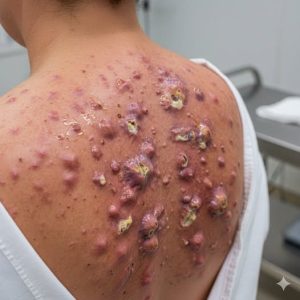
A severe back skin infection occurs when bacteria, fungi, or other microorganisms penetrate hair follicles or damaged skin, leading to intense inflammation. These infections often appear as clusters of pimples, boils, cysts, or abscesses that may ooze pus, form crusts, and leave scars if not treated properly.
Unlike mild back acne, severe infections are usually painful, spread rapidly, and may be accompanied by swelling, warmth, or fever.
Common Causes
Several factors can contribute to severe infections on the back:
-
Bacterial overgrowth (often entering through clogged pores or small cuts)
-
Untreated or severe back acne
-
Excessive sweating and friction from tight clothing or backpacks
-
Poor hygiene or delayed cleansing after sweating
-
Weakened immune system
-
Improper extraction or picking of pimples
-
Use of contaminated towels, razors, or clothing
When bacteria multiply in blocked hair follicles, the infection can quickly worsen and spread across large areas of the back.
Key Symptoms to Watch For
Severe back skin infections often present with the following symptoms:
-
Large, painful red or purple bumps
-
Pus-filled lesions or abscesses
-
Yellow or greenish crusting
-
Skin tenderness and warmth
-
Swelling and thickened skin
-
Dark spots or scars after healing
-
Possible fever or fatigue in advanced cases
If pain increases or systemic symptoms like fever appear, medical attention is crucial.
Why Professional Treatment Is Important
Severe infections should never be treated with home popping or squeezing. Improper handling can push bacteria deeper into the skin, increasing the risk of:
-
Worsening infection
-
Permanent scarring
-
Bloodstream infection
-
Prolonged healing
Dermatologists or healthcare professionals may recommend:
-
Prescription oral or topical antibiotics
-
Antibacterial or medicated washes
-
Drainage performed under sterile conditions
-
Anti-inflammatory treatments
-
Follow-up care to prevent recurrence
Early medical intervention significantly improves outcomes.
Healing and Recovery Process
Recovery depends on severity and treatment consistency. During healing:
-
Lesions gradually flatten and dry
-
Redness and swelling reduce
-
Scabs fall off naturally
-
New skin forms underneath
Post-inflammatory dark marks may remain but usually fade over time with proper skincare.
Prevention Tips for Back Skin Infections
Preventing recurrence is just as important as treatment:
-
Shower immediately after sweating
-
Wear loose, breathable clothing
-
Avoid sharing towels or clothing
-
Use non-comedogenic body products
-
Keep bedding and clothes clean
-
Do not pick or squeeze back lesions
-
Maintain a healthy diet and hydration
-
Seek early treatment for back acne
Consistency in hygiene and skincare plays a major role in long-term prevention.
Final Thoughts
Severe back skin infections are more than a cosmetic issue—they are a medical condition that requires prompt and proper care. With professional treatment, patience, and preventive measures, the skin can heal and regain its strength. If you or someone you know experiences similar symptoms, seeking medical advice early can prevent complications and support a healthier recovery.