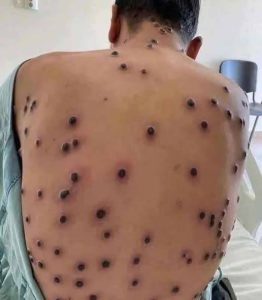
The image above shows a back covered with numerous dark, raised skin lesions of varying sizes. Such widespread skin involvement is uncommon and often alarming, both for the individual affected and for viewers. This type of condition highlights the importance of understanding skin health, recognizing warning signs, and seeking timely medical care.
Understanding What You’re Seeing
The lesions appear as multiple rounded, darkened bumps scattered across the entire back, with some showing redness or irritation around their base. This pattern suggests a chronic or progressive skin condition, rather than a single isolated issue like a pimple or cyst.
These lesions may be:
-
Long-standing growths that developed slowly over time
-
Inflamed or infected nodules that have worsened due to friction, pressure, or poor healing
-
Benign skin tumors or cyst-like formations, though only a medical professional can confirm this
It’s important to note that an image alone is not enough for diagnosis. Similar visual patterns can occur in very different medical conditions.
Possible Contributing Factors
Several factors may contribute to extensive skin lesions like these:
-
Genetic predisposition – Some skin conditions are inherited and gradually become more noticeable with age.
-
Chronic inflammation – Repeated irritation or untreated infections can lead to thickened or darkened lesions.
-
Immune system involvement – A weakened immune response may allow skin abnormalities to multiply or persist.
-
Delayed medical attention – When early lesions are ignored, they can spread, enlarge, or become complicated.
Potential Health Risks
Leaving such a condition untreated can lead to:
-
Persistent pain or discomfort
-
Recurrent skin infections
-
Bleeding or ulceration from friction
-
Scarring and reduced skin function
-
Psychological distress and reduced quality of life
In severe cases, some skin lesions may require evaluation to rule out serious underlying disease.
Why Professional Evaluation Is Essential
A dermatologist or qualified healthcare provider can:
-
Perform a physical examination
-
Use imaging or biopsy if needed
-
Determine whether lesions are benign, infectious, or require surgical management
-
Create a personalized treatment plan
Self-treatment, squeezing, cutting, or applying unverified remedies can significantly worsen the condition and increase the risk of infection.
Treatment and Management Options
Depending on the cause, management may include:
-
Medical therapy to reduce inflammation or infection
-
Minor surgical procedures for removal of problematic lesions
-
Long-term monitoring for changes in size, color, or pain
-
Lifestyle and skin-care adjustments to reduce irritation
Early intervention often leads to better outcomes and fewer complications.
Final Thoughts
This image serves as a powerful reminder that skin changes should never be ignored, especially when they are widespread or progressively worsening. The skin is the body’s largest organ, and visible abnormalities can reflect deeper health issues.
If you or someone you know experiences similar symptoms, seeking professional medical care is the safest and most responsible step. Early diagnosis not only improves treatment success but also helps restore comfort, confidence, and overall well-being.