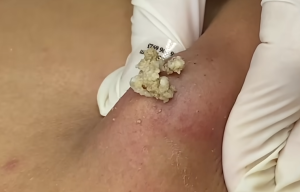
Skin extractions like the one shown in the image often draw attention because they reveal what the body has been holding beneath the surface. While visually striking, these procedures are rooted in basic dermatology and play an important role in relieving discomfort, preventing infection, and restoring healthy skin. This article explores what this type of lesion usually is, why it forms, how extractions are performed, and what proper aftercare looks like.
What Is Being Removed?
In many cases, material like this comes from an epidermoid cyst, sometimes also referred to as a sebaceous cyst. These cysts develop when skin cells that should normally shed move deeper into the skin and multiply. Over time, they produce keratin—a thick, whitish or yellowish substance with a paste-like or crumbly texture.
When bacteria enter the cyst, it can become inflamed or infected, leading to redness, swelling, pain, and pressure. At that point, drainage or extraction becomes necessary.
Why Do These Cysts Become Inflamed?
Several factors can contribute to cyst inflammation:
-
Blocked pores or hair follicles
-
Excess oil production
-
Skin trauma or friction
-
Bacterial infection
-
Delayed treatment
As pressure builds inside the cyst, the surrounding skin may appear stretched, shiny, and irritated. This is often when people seek professional help.
The Extraction Process
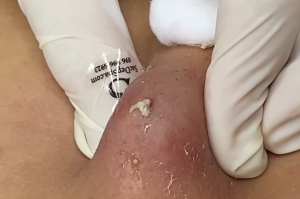
A proper extraction is not simply squeezing the skin. In a clinical or professional setting, the process usually involves:
-
Cleansing the area to reduce the risk of infection
-
Sterilizing tools and gloves
-
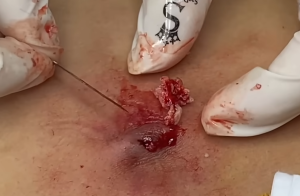
Creating a small opening if needed to allow contents to drain
-
Gentle, controlled pressure to release the trapped material
-
Removing residual contents to reduce recurrence
-
Disinfecting the site after drainage
The thick, clustered material seen in the image is typical of long-standing cysts where keratin has compacted over time.
Why Professional Removal Matters
Attempting to remove cysts at home can lead to complications such as:
-
Worsening infection
-
Scarring or skin damage
-
Incomplete removal and recurrence
-
Spread of bacteria to surrounding tissue
Professionals understand skin anatomy and use techniques that minimize trauma while maximizing complete drainage.
Aftercare and Healing
Once the extraction is complete, proper aftercare is essential:
-
Keep the area clean and dry
-
Apply topical antiseptics or prescribed medication
-
Avoid touching or picking at the site
-
Watch for signs of infection such as increasing redness, warmth, or pus
-
Follow up if swelling or pain returns
Healing time varies depending on the size and depth of the cyst, but most sites improve significantly within days to weeks.
When to Seek Medical Attention
You should consult a healthcare professional if:
-
The lesion is painful or rapidly growing
-
Fever or systemic symptoms occur
-
The cyst repeatedly returns
-
The area becomes very red, hot, or swollen
These may indicate a deeper infection that requires antibiotics or further treatment.
Final Thoughts
Skin extractions like this may look dramatic, but they highlight the importance of proper skin care and timely treatment. Understanding what’s happening beneath the skin helps remove fear and misinformation, replacing it with awareness and respect for the body’s complex healing processes. When handled correctly, extractions can bring relief, prevent complications, and support healthier skin in the long term.