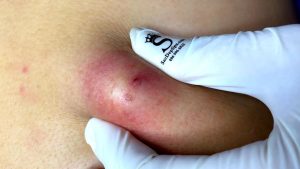
Skin infections can begin as small, harmless-looking bumps but may quickly progress into painful, dangerous conditions if ignored. The image above shows an advanced skin abscess—a localized infection where pus has collected beneath the skin due to bacterial invasion. This condition requires careful attention and proper medical care to prevent complications.
What Is a Skin Abscess?
A skin abscess is a pocket of pus that forms when bacteria enter the skin through a hair follicle, cut, insect bite, or blocked oil gland. The body’s immune system responds by sending white blood cells to fight the infection, which leads to the buildup of pus—made up of bacteria, dead tissue, and immune cells.
In the image, the swollen, reddened skin with visible yellow-white pus indicates a mature abscess that is actively infected.
Common Causes
Skin abscesses may develop due to:
-
Poor hygiene
-
Ingrown hairs
-
Shaving or skin trauma
-
Blocked sweat or oil glands
-
Weakened immune system
-
Diabetes or chronic illness
-
Bacterial infections, especially Staphylococcus aureus
When bacteria multiply rapidly, the infection spreads deeper, causing inflammation, pain, and swelling.
Warning Signs and Symptoms
A severe skin abscess often presents with:
-
Red, swollen, and shiny skin
-
Intense pain or tenderness
-
Warmth around the affected area
-
Visible pus or drainage
-
Foul odor from the wound
-
Fever or fatigue (in advanced cases)
The protruding pus seen in the image suggests that pressure inside the abscess has increased significantly, which can lead to spontaneous rupture or further spread of infection.
Why You Should Never Squeeze It
Attempting to squeeze or puncture an abscess at home is dangerous. This can:
-
Push bacteria deeper into the skin
-
Spread infection to nearby tissue
-
Cause scarring
-
Lead to bloodstream infection (sepsis)
Professional drainage using sterile tools is the safest approach.
Proper Medical Treatment
Treatment usually includes:
-
Incision and drainage (I&D) by a healthcare professional
-
Antibiotics, if the infection is severe or spreading
-
Wound cleaning and dressing to promote healing
-
Follow-up care to ensure the infection does not return
Early treatment reduces pain, prevents complications, and speeds recovery.
Prevention Tips
To reduce the risk of skin infections:
-
Keep skin clean and dry
-
Avoid sharing personal items like razors
-
Treat cuts and wounds promptly
-
Avoid popping pimples or boils
-
Maintain a strong immune system with good nutrition
When to Seek Medical Help
You should seek medical care immediately if:
-
The abscess is growing rapidly
-
Pain becomes severe
-
You develop fever or chills
-
Pus continues to spread
-
The infection is on the face, scalp, or spine
Final Thoughts
The image highlights the seriousness of untreated skin infections. What starts as a minor bump can become a painful, potentially dangerous abscess if neglected. Prompt medical attention, proper hygiene, and awareness are key to preventing long-term damage.
Never ignore signs of infection—early care saves skin, health, and lives.