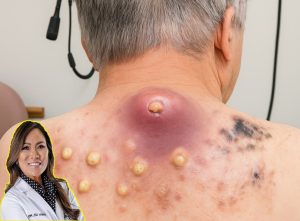
Skin infections and cystic outbreaks on the back are relatively common, but in some cases they can become severe, painful, and medically urgent. The image above shows a person with multiple large and small pus-filled bumps spread across the upper back and shoulder area. One prominent lesion in the center appears significantly swollen, purple-red, and tense, indicating deep inflammation beneath the skin. Surrounding the large lesion are several smaller yellowish nodules, likely filled with fluid or pus. A person in a medical coat appears in the lower-left of the image, suggesting a clinical consultation or dermatological evaluation.
This scenario highlights the importance of understanding skin infections, how they progress, when they become dangerous, and the need for professional care rather than self-treatment.
Understanding the Appearance of the Lesions
The back displays:
-
A large inflamed swelling with a central yellow head, possibly containing pus
-
Several smaller raised bumps, also yellow at the surface
-
Redness and discoloration, suggesting irritation or infection
-
Areas of darkened skin, which may indicate past inflammation, scarring, or pigmentation changes
Such symptoms often suggest a buildup of fluid or infection beneath the skin surface. While exact diagnosis must come from a medical professional, these features are consistent with conditions such as:
-
Severe acne outbreaks
-
Boils or abscesses
-
Cystic lesions
-
Infected sebaceous cysts
-
Carbuncles (clustered boils)
-
Bacterial skin infection
How Skin Infections Like These Develop
Skin lesions like the one shown can form when:
1. Hair follicles become blocked
Oil, sweat, and dead skin can trap bacteria inside pores.
2. Bacteria multiply beneath the skin
Common skin bacteria can cause infection when trapped.
3. Inflammation builds up
The immune system responds by sending white blood cells, forming pus.
4. Pressure increases
As pus accumulates, the area swells, reddens, and becomes painful.
If infection spreads to deeper tissue, a single bump may grow in size or multiply into clusters, making movement painful and increasing health risks.
Symptoms to Watch For
Common signs include:
-
Swelling or raised lumps
-
Pain or tenderness
-
Warmth in the area
-
White or yellow pus points
-
Fever or fatigue in severe cases
-
Darkened skin or scars after healing
If left untreated, infections can worsen and spread into the bloodstream, which may become life-threatening.
Possible Complications
Without proper care, serious skin infections may lead to:
| Potential Risk | Explanation |
|---|---|
| Spread of infection | Bacteria can move into deeper tissues |
| Scarring or keloids | Permanent marks after healing |
| Sepsis (rare but serious) | Infection enters bloodstream |
| Tissue damage | Continuous inflammation harms skin structure |
| Recurrent outbreaks | Especially if caused by chronic conditions |
When to Seek Medical Attention
This type of lesion should not be squeezed or drained at home, as doing so could worsen the infection.
One should visit a healthcare provider if:
-
The lump is painful, red, or rapidly growing
-
Fever, chills, or fatigue appear
-
Lesions recur frequently
-
Pus has a bad odor or changes color
-
There are multiple clusters (as seen in the image)
A dermatologist or doctor may need to perform a sterile drainage procedure or prescribe medication.
Professional Treatment Options
Doctors may recommend:
1. Incision and Drainage
To release pus safely and reduce pressure.
2. Antibiotics
If infection is bacterial or widespread.
3. Cleaning and dressing the wound
To prevent reinfection during healing.
4. Anti-inflammatory treatment
To reduce pain and swelling.
5. Follow-up appointments
To monitor healing and prevent recurrence.
Home Care Tips (After Medical Evaluation)
These may help support recovery, with professional approval:
-
Keep the area clean and dry
-
Use warm compresses to promote drainage
-
Avoid popping or squeezing bumps
-
Wear loose, breathable clothing
-
Maintain hygiene to prevent future blockage
-
Improve diet, reduce sugar and oil-heavy foods
-
Shower after heavy sweat or exercise
Prevention & Long-term Skin Health
To lower risk of future outbreaks:
-
Practice regular skin cleansing routines
-
Avoid sharing towels or razor blades
-
Treat acne early to prevent infection
-
Manage stress and hormonal imbalance
-
Maintain a healthy immune system through nutrition and hydration
Conclusion
The image demonstrates a severe skin infection with multiple pus-filled swellings, a condition that requires medical diagnosis and professional treatment rather than self-care. With proper attention, most skin infections can be treated effectively, but prompt action is essential to avoid complications. Anyone encountering similar symptoms should seek medical guidance to ensure safe recovery and prevent recurrence.