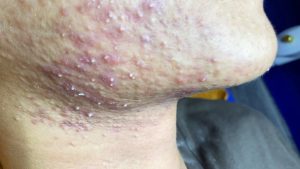
Acne does not appear the same for everyone. While some people struggle with deep cystic lesions, others develop clusters of small bumps that spread across the jawline, chin, and neck. The image above shows a close-up view of numerous tiny inflamed pimples and whiteheads concentrated under the chin and along the neck, creating a rough texture and visible irritation. This type of breakout may be linked to clogged pores, bacteria, or in many cases, fungal acne or folliculitis.
This article takes an in-depth look at what this skin condition may represent, the main triggers behind it, and how to treat and prevent similar breakouts.
What Does the Skin Condition in the Image Suggest?
The appearance is characterized by:
-
Multiple small, uniform bumps (papules and pustules)
-
Redness and irritation across the chin and neck
-
White-tipped pustules visible on the surface
-
Rough skin texture with mild inflammation
Although it may resemble typical acne, breakouts like these often match the symptoms of fungal acne (Malassezia folliculitis) or bacterial folliculitis, especially when clustered and itchy.
Difference Between Regular Acne and Fungal Acne
| Feature | Bacterial/Normal Acne | Fungal Acne |
|---|---|---|
| Pimple size | Mixed – small to large | Mostly small & uniform |
| Location | Face, back, chin, cheeks | Often forehead, jawline, neck, chest |
| Cause | Clogged pores + bacteria | Yeast overgrowth in hair follicles |
| Response to treatment | Improves with acne medication | Needs antifungal products |
| Itchiness | Not always itchy | Often itchy |
Possible Causes of the Breakouts
1. Fungal Acne (Malassezia Folliculitis)
Caused by yeast trapped in hair follicles — often triggered by sweat and humidity.
2. Bacterial Folliculitis
Occurs when bacteria infect hair follicles, leading to pus-filled bumps.
3. Clogged Pores from Excess Oil
Sebum and dead skin buildup can cause whiteheads similar to those visible.
4. Irritation from Shaving
Neck and jawline breakouts are common due to:
-
Ingrown hairs
-
Dirty razors
-
Friction from shaving
5. Skincare or Cosmetic Product Reaction
Non-comedogenic products matter.
6. Hormonal Imbalance
Especially common in teens, adults with stress, or women during menstrual cycles.
7. Sweat, Heat & Tight Clothing
Can trap bacteria and yeast, worsening inflammation.
Treatment Options
1. Daily Gentle Cleansing Routine
Use mild cleansers that remove oil without stripping moisture.
Recommended ingredients:
-
Salicylic acid (exfoliates inside the pores)
-
Benzoyl peroxide (anti-bacterial)
-
Tea tree oil (natural antibacterial & antifungal)
2. Antifungal Products (If Fungal Acne)
Look for:
-
Ketoconazole shampoo (used as face wash 2–3x/week)
-
Sulfur soap
-
Nizoral or antifungal creams
3. Warm Compresses
Helps soften clogged pores and reduce inflammation.
4. Avoid Squeezing Pimples
Popping increases risk of:
-
Scarring
-
Infection spread
-
Dark hyperpigmentation
5. Improve Shaving Hygiene
-
Use sharp, clean razors
-
Shave in direction of hair growth
-
Apply soothing aftershave
6. Medical Treatments
If breakouts persist:
-
Dermatologists may prescribe antibiotics, antifungals, or retinoids
-
Professional chemical peels or extraction sessions may be recommended
Home Care Routine Example
Morning Routine
-
Cleanser with salicylic acid
-
Light, oil-free moisturizer
-
Sunscreen (non-comedogenic)
Night Routine
-
Gentle cleanser
-
Treatment cream (benzoyl peroxide/retinoid)
-
Moisturizer with niacinamide
2–3 times weekly
-
Clay mask or sulfur treatment
-
Antifungal wash if suspected fungal acne
Prevention Tips
To reduce recurrence:
-
Shower and cleanse skin after sweating
-
Avoid heavy oils and comedogenic products
-
Change pillowcases often
-
Keep beard area clean (if applicable)
-
Manage stress & sleep well
-
Maintain a balanced diet (reduce sugar & dairy)
When to See a Dermatologist
Seek professional care if:
-
Pimples do not improve after 4–6 weeks of treatment
-
The area becomes painful, hot, or spreads rapidly
-
Marks or scars begin to form
-
You suspect fungal acne but OTC products fail
A dermatologist can perform skin evaluation, prescribe stronger medication, and guide proper treatment for long-term recovery.
Conclusion
The condition shown in the image is consistent with small inflammatory acne or folliculitis, potentially fungal or bacterial in nature. With proper skincare, hygiene, and targeted treatment, significant improvement is possible. Understanding the root cause and choosing the right products is key — and for persistent cases, professional medical support is the best path to clear, healthy skin.